This post may contain affiliate links to products I use and highly recommend. You can read my full disclosure . As an Amazon Associate I earn from qualifying purchases.
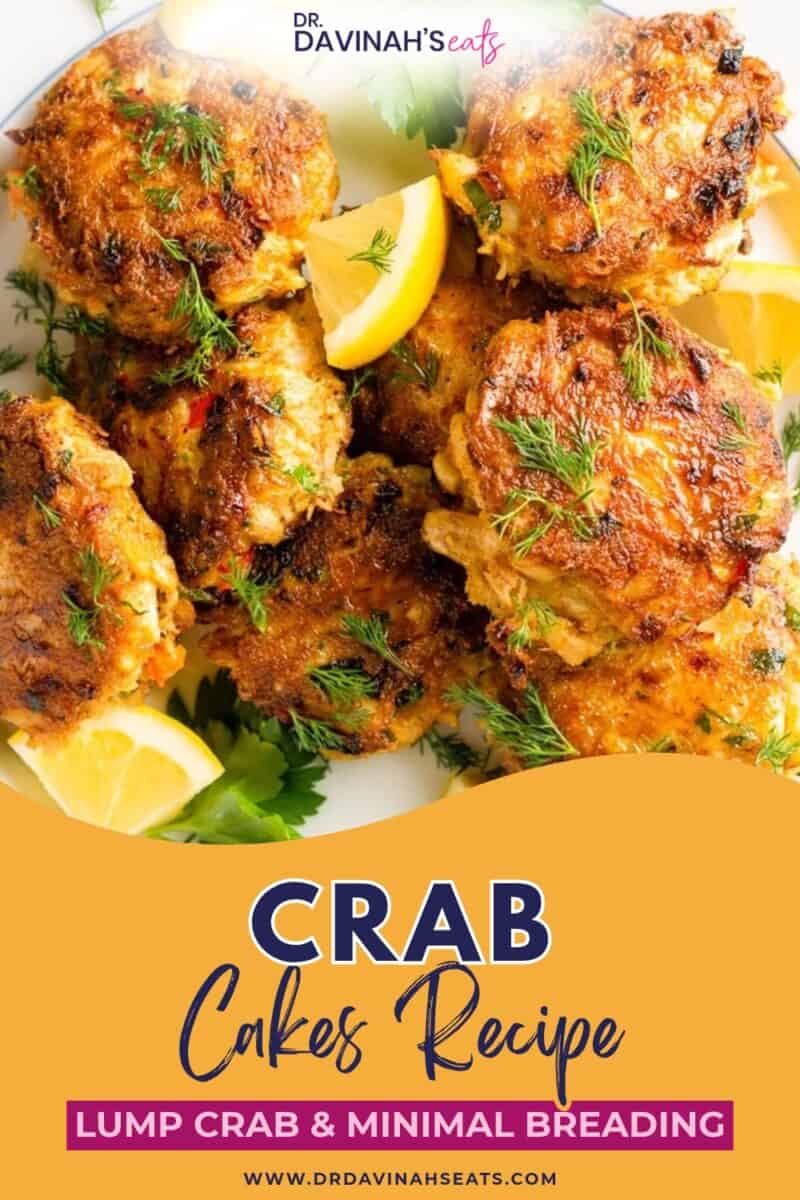
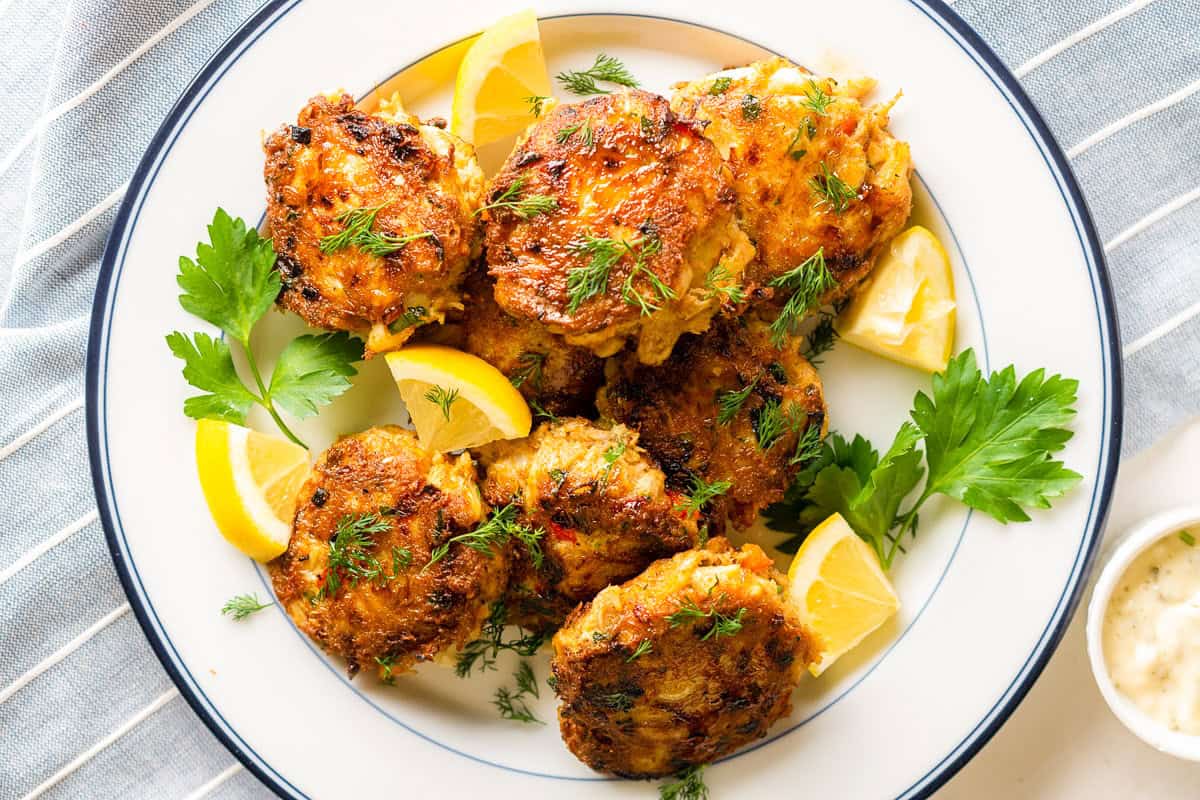
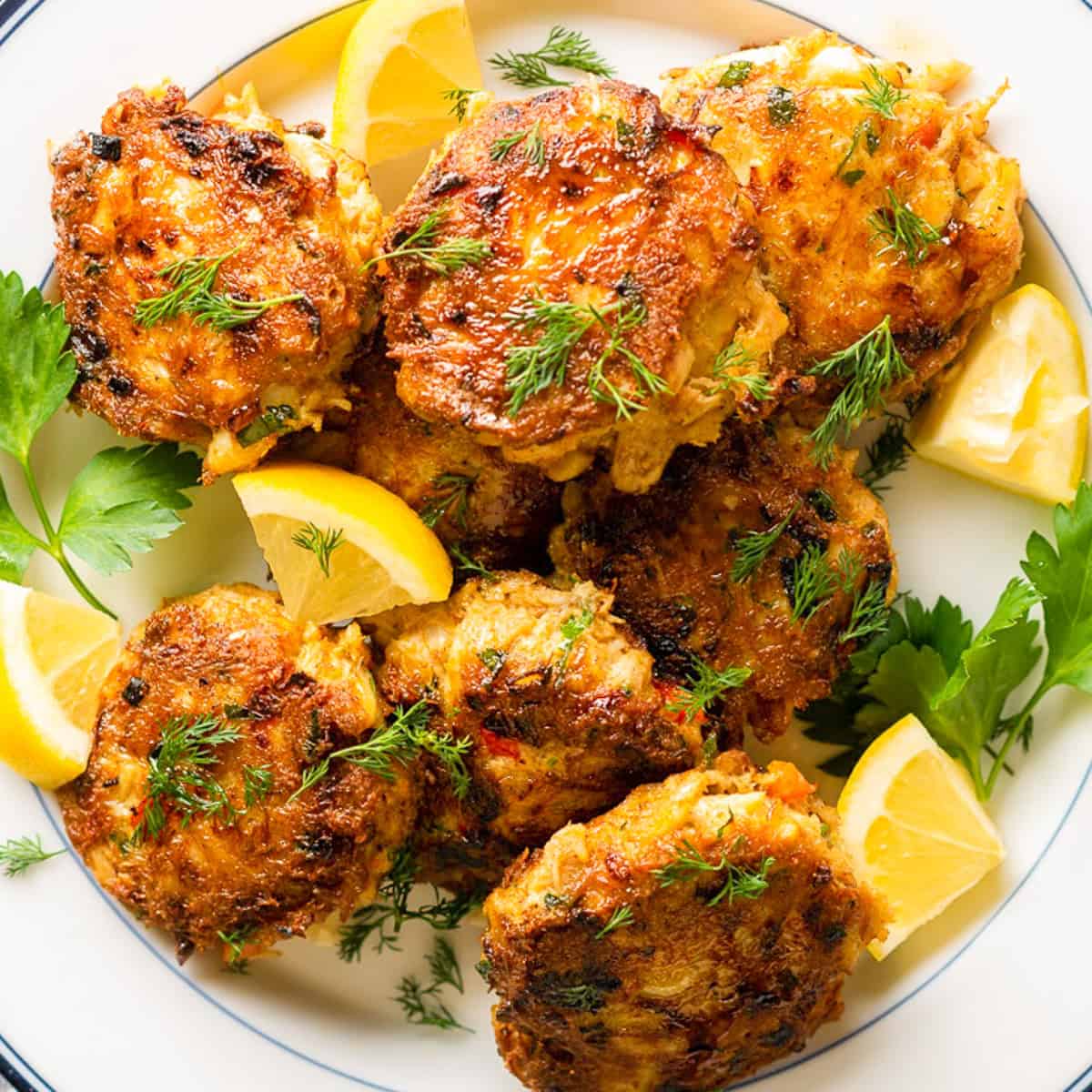
This crab cakes recipe makes golden-brown cakes with tender pieces of lump crab meat and just enough breadcrumbs to hold everything together. There’s no heavy breading, so you can really enjoy the flavor and texture of the crab in every bite.
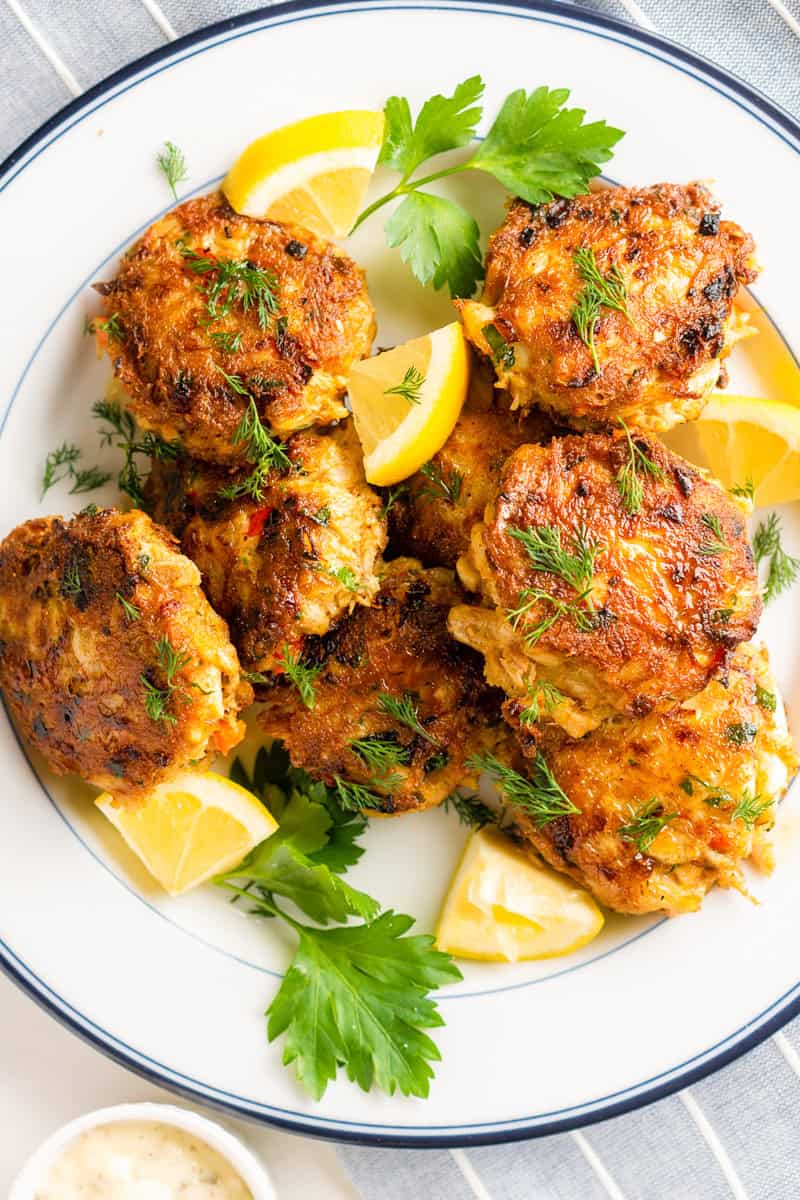
These pan-fried crab cakes are large enough to serve for dinner, but you can also make smaller ones for appetizers. I like to serve them with a dipping sauce like my homemade tartar sauce or remoulade sauce and a couple of simple sides. For a low-carb version, my keto crab cakes use almond flour instead of breadcrumbs.
Why You’ll Love This Recipe
- Lots of crab, little filler: You get large pieces of crab meat instead of a crab cake that’s mostly breadcrumbs.
- Golden brown outside, tender inside: Pan-frying gives the cakes a nicely browned crust while keeping the crab tender.
- Great for dinner or appetizers: Make larger crab cakes for a seafood dinner or smaller ones to serve with dipping sauce.
Ingredients Needed
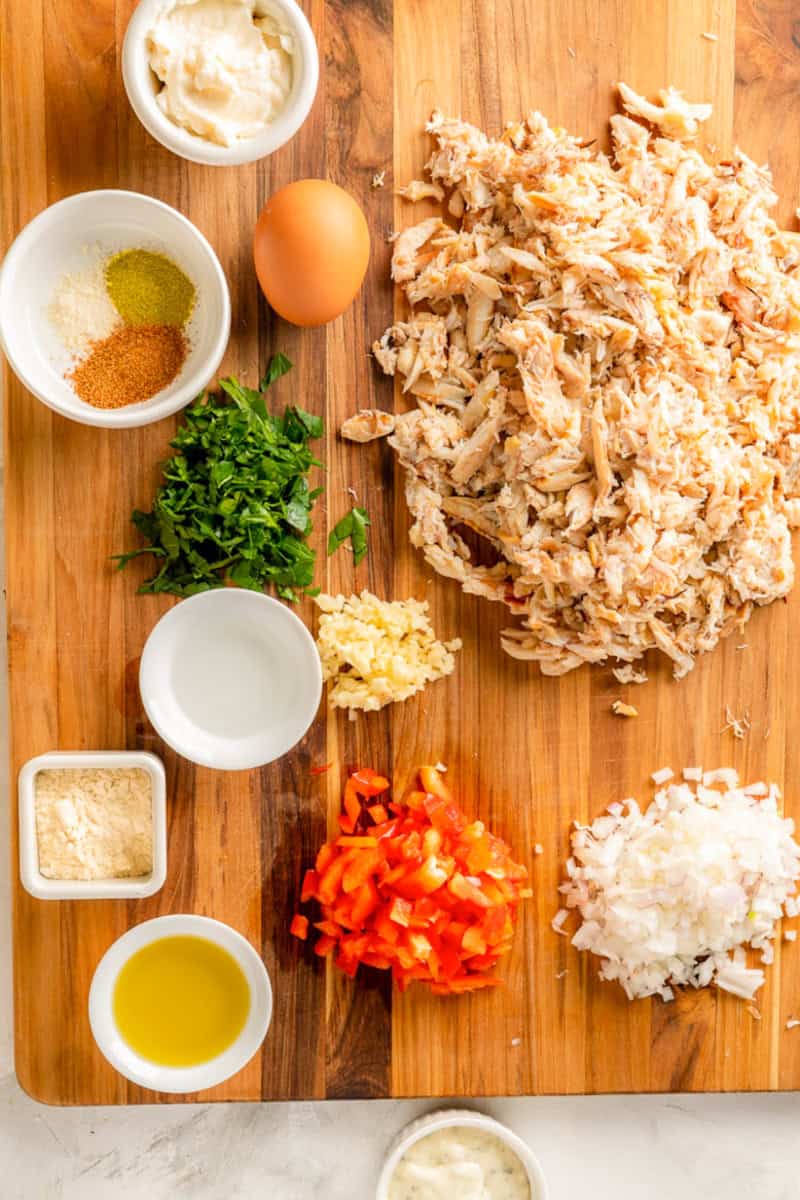
Here are a few things to know about the ingredients. You’ll find the exact amounts in the recipe card below.
- Lump crab meat: I buy refrigerated pasteurized crab meat from the grocery store. I prefer lump because it gives the crab cakes larger, more noticeable pieces of crab. To save money, you can use half lump and half claw meat (8 ounces of each). I don’t recommend using claw meat alone because the cakes tend to have a somewhat mushy texture.
- Shallots, red bell pepper, and garlic: These add flavor and a little sweetness. I sauté them first so they’re tender when the crab cakes are done cooking.
- Mayonnaise and egg: Help hold the crab cakes together without needing a lot of breadcrumbs.
- Plain, unseasoned breadcrumbs: You only need a little to help bind the crab meat.
- Old Bay seasoning: Use store-bought or my homemade Old Bay seasoning.
- Ground dry mustard and white pepper: Add a little extra seasoning without overpowering the crab.
- Fresh parsley and lemon juice: Add freshness that goes well with the crab meat.
- Olive oil: You’ll need some for sautéing the vegetables and pan-frying the crab cakes.
How to Make Crab Cakes
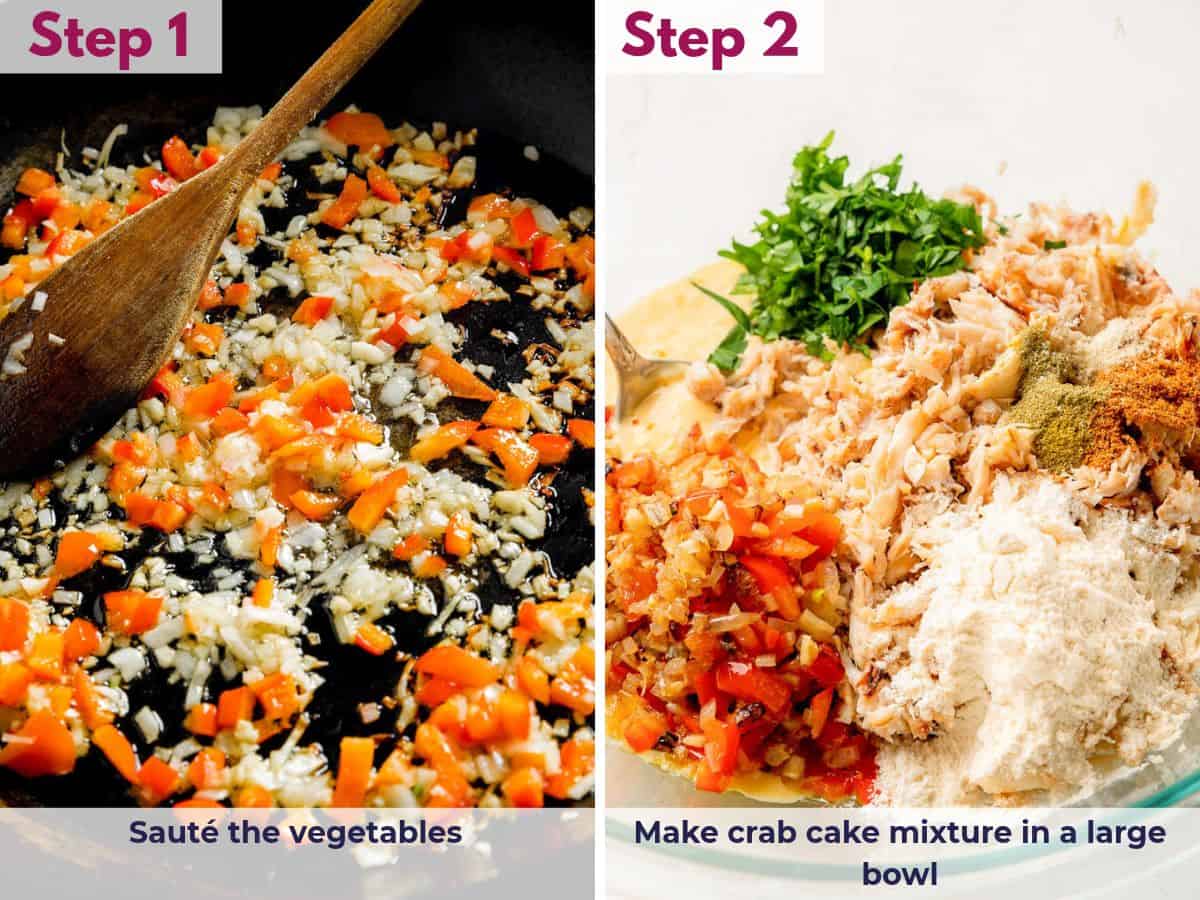
Use the step-by-step photos as your guide. The recipe card has the full instructions, while these steps show you what to look for as you cook.
Sauté the Vegetables
Cook the shallots, bell pepper, and garlic in olive oil until softened. Set them aside while you prepare the crab meat.
Prepare the Crab Mixture
Open and drain the crab meat, then gently feel through it with your hands to remove any remaining shells. There’s usually very little liquid in the container, so don’t worry if nothing drains out.
Add the seasonings, breadcrumbs, and sautéed vegetables. Fold in the egg and mayonnaise mixture gently so you keep the larger pieces of crab intact.
Shape and Chill
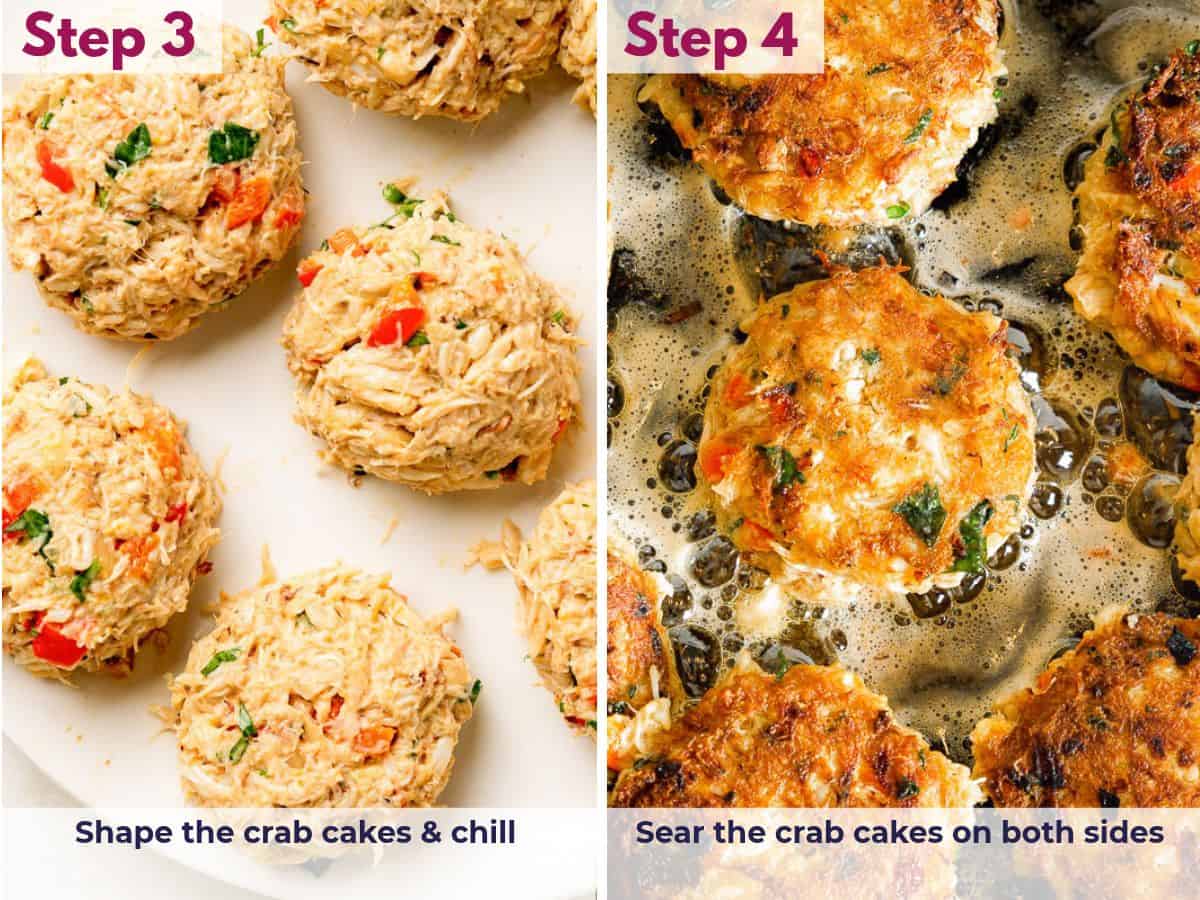
Form the mixture into 8 crab cakes and refrigerate for 20–30 minutes. I’ve found that chilling them after shaping helps them hold together when it’s time to cook.
Pan-Fry Until Golden Brown
Heat olive oil in a 12-inch nonstick or cast iron skillet over medium heat. Cook the crab cakes for 3–4 minutes per side, until golden brown and heated through.
The crab cakes should lift easily when they’re ready to flip. If one starts breaking apart, give it another 15–30 seconds before trying again.
Tips for the Best Crab Cakes
- Keep the breadcrumbs to a minimum: I start with just 2 tablespoons for a pound of crab meat. You can add another tablespoon if the mixture needs help holding together, but I prefer to use as little filler as possible.
- Use a large skillet: I use a 12-inch nonstick or cast iron skillet. It gives the crab cakes enough room to cook and makes them easier to flip.
- Keep the heat at medium: You want the outside to turn golden brown without burning before the center is heated through.
- Don’t overcrowd the pan: I use about 2 tablespoons of olive oil, just enough to coat the bottom of the skillet. Cook in batches if needed so you have room to turn the cakes without breaking them.
What to Serve with Crab Cakes
I love serving these crab cakes with fresh lemon wedges and homemade tartar sauce. Remoulade sauce is another great choice if you want something with a little more kick. My lemon garlic aioli is good with them, too.
For a Southern-style seafood dinner, add hush puppies and Southern coleslaw. The coleslaw adds a cool, crunchy side that goes well with the warm crab cakes. Homemade French fries are another classic option, especially with extra dipping sauce.
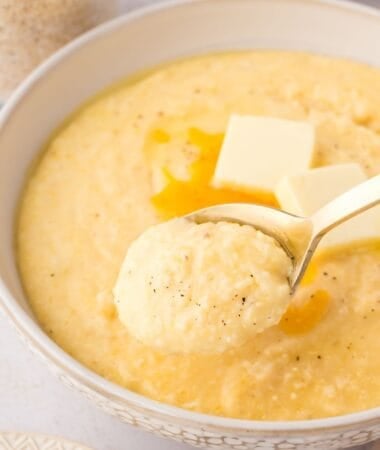
For a simple vegetable side, try my baked asparagus or sautéed green beans. If you want something more filling, cheese grits are another good choice.
Storage & Reheating
- Refrigerating: Store leftover crab cakes in an airtight container in the refrigerator. I usually enjoy mine the next day.
- Reheating: I typically reheat leftovers in the microwave until warmed through. The outside won’t be as seared as when they’re freshly cooked, but that’s fine with me. You can also warm them gently in a skillet if you prefer a crispier outside.
- Freezing: I don’t recommend freezing these crab cakes because it can change the texture. Crab meat isn’t cheap, and I think it’s worth enjoying the flavor and texture you paid for.
Frequently Asked Questions
I recommend refrigerated pasteurized crab meat, which is often sold in a can in the refrigerated seafood section. This is different from shelf-stable canned crab meat. I don’t recommend the shelf-stable version for crab cakes because you won’t get the same chunky texture. I prefer using it in recipes like crab dip or crab wontons.
Yes. My keto crab cakes use almond flour instead of breadcrumbs. They’re a good option if you’re looking for a low-carb version, and you can make them in the air fryer or a skillet.
Crab Cakes Recipe
Use DRDAVINAHS at checkout to save on some equipment & ingredients!
Recommended Equipment
- 12-inch nonstick or cast iron skillet
- Large mixing bowl
- Small Bowl
- Spatula
Ingredients
- 1 lb lump crab meat, refrigerated pasteurized
- ½ cup Shallots, diced
- ½ cup Red Bell Peppers, diced
- 3 cloves garlic, minced
- ¼ cup Mayonnaise
- 1 large egg
- ½ tsp white pepper
- 2 tbsp fresh parsley, chopped
- 2 tsp Old Bay seasoning, homemade or store-bought
- 1 tbsp lemon juice
- 1 tsp ground dry mustard
- 2 tbsp breadcrumbs, plain unseasoned, you can use up to 1 tbsp more if needed
- 2 tbsp Olive Oil, divided, for sautéing and pan-frying
Instructions
- Heat a little olive oil in a skillet over medium heat. Add the diced shallots, bell pepper, and minced garlic. Sauté for about 3 minutes, until softened, then set aside.
- Open and drain the refrigerated pasteurized crab meat. Gently feel through it with your fingers to remove any shell pieces, taking care not to break up the lumps.
- In a small bowl, whisk the mayonnaise and egg together.
- Gently fold the white pepper, parsley, Old Bay seasoning, lemon juice, dry mustard, breadcrumbs, and sautéed vegetables into the crab. Add the egg and mayonnaise mixture and fold just until combined, keeping the crab pieces as intact as possible.
- Shape the mixture into 8 crab cakes. Refrigerate the formed crab cakes for 20–30 minutes to help them hold together.
- Add about 2 tablespoons of olive oil to a 12-inch nonstick or cast iron skillet, or enough to lightly coat the bottom. Heat over medium heat.
- Pan-fry the crab cakes for 3–4 minutes per side, until golden brown and heated through. Flip gently when each cake lifts easily from the skillet. If a cake is sticking or breaking apart, wait another 15–30 seconds before flipping. Cook in batches if needed.
- Serve warm with fresh lemon wedges, tartar sauce, or remoulade sauce.
Save This Recipe for Later
Recipe Notes
- For a more affordable option, use 8 oz lump crab meat and 8 oz claw meat instead of 1 lb lump crab.
- Start with 2 tbsp breadcrumbs; add up to 1 extra tbsp only if needed to help the mixture hold together.
- For appetizer-sized crab cakes, shape smaller patties and pan-fry for about 2 minutes per side.
Nutrition Details
The nutrition facts come from entering the recipe ingredients into a database of food ingredients. They may vary for any recipe based on the exact product used.





Leave a Reply