This post may contain affiliate links to products I use and highly recommend. You can read my full disclosure . As an Amazon Associate I earn from qualifying purchases.
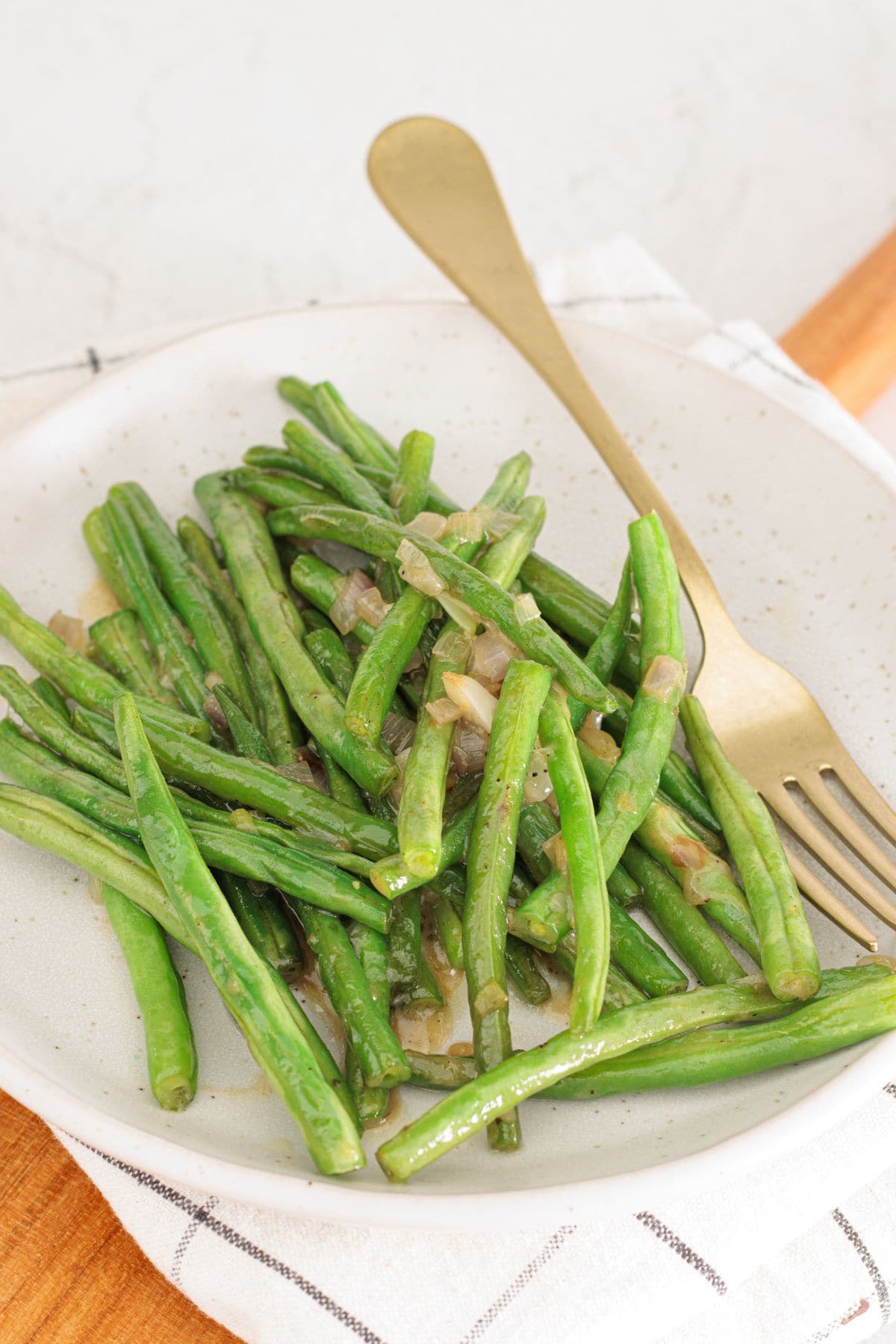
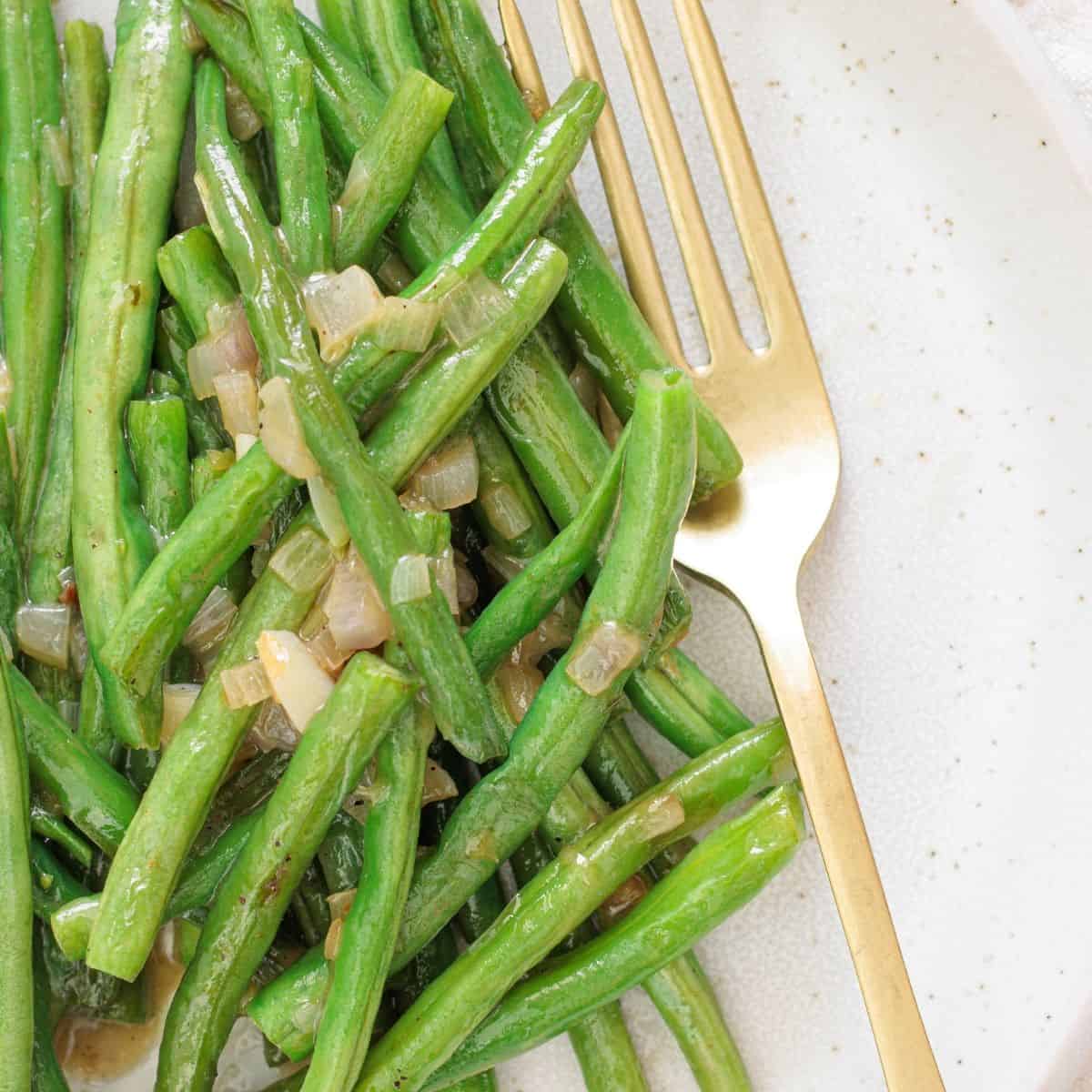
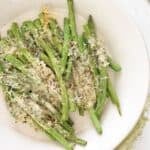
Sautéed Green Beans are one of the easiest ways to get a fresh vegetable side on the table quick. These green beans cook in one skillet with shallots, garlic, butter, and a little water so they turn crisp-tender without needing to be blanched first.
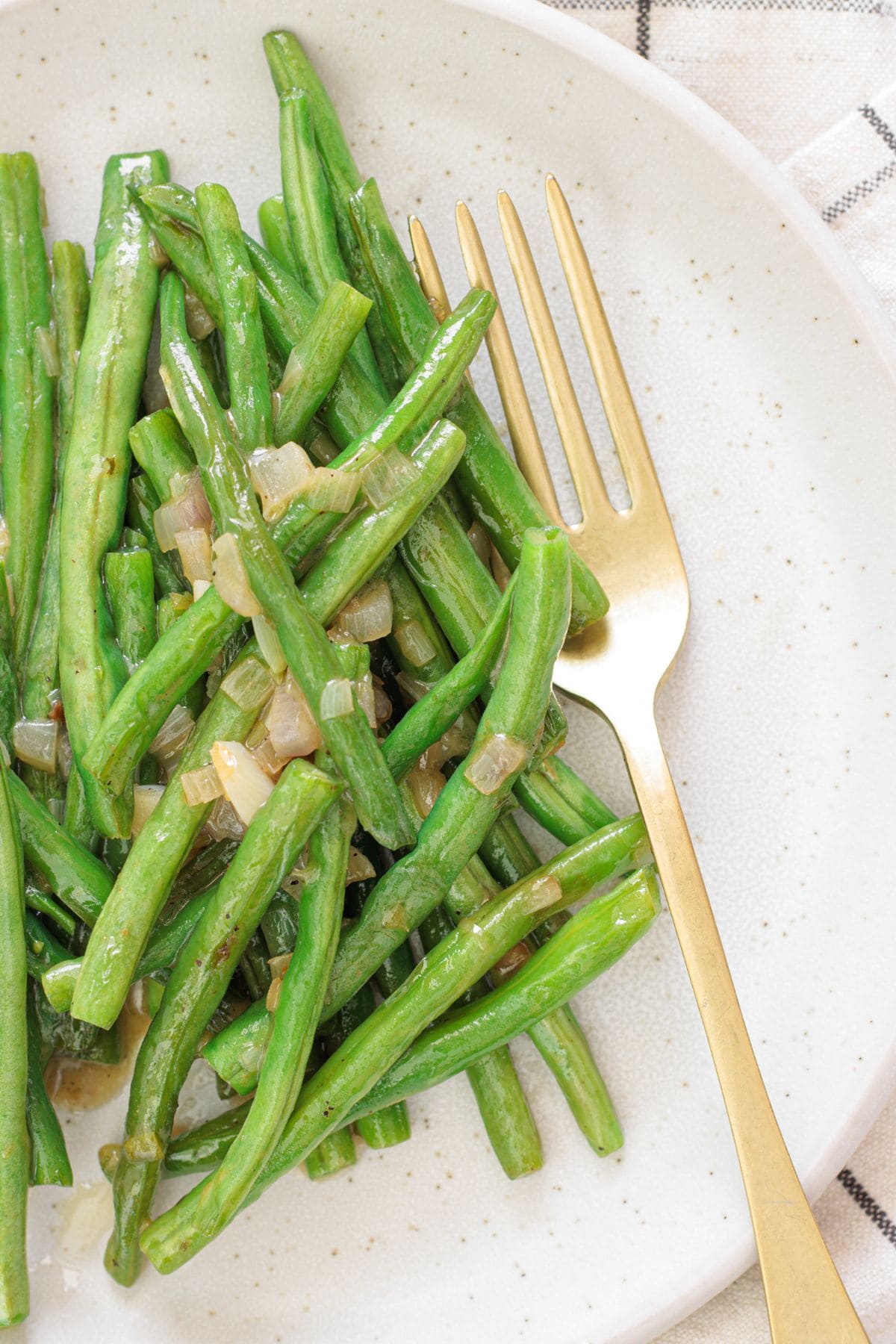
Being able to have green beans without blanching is what I like most about this version. You still get green beans with good color, plenty of garlic flavor, and a little bite, but the method is simple enough for weeknights. This is the kind of side dish that works with all kinds of dinners, especially mains like Peruvian Chicken, Garlic Butter Steak Bites, Pan-Seared Halibut, or Creamy Garlic Parmesan Chicken Thighs when you want something easy to round out the plate.
Why This Sauteed Green Beans Recipe Works
- No blanching step: The green beans steam right in the skillet, so you do not have to boil water first.
- Simple ingredients: Garlic, shallot, butter, and olive oil give the green beans plenty of flavor without overcomplicating the dish.
- Fast enough for weeknights: This side comes together quickly and works with just about any protein.
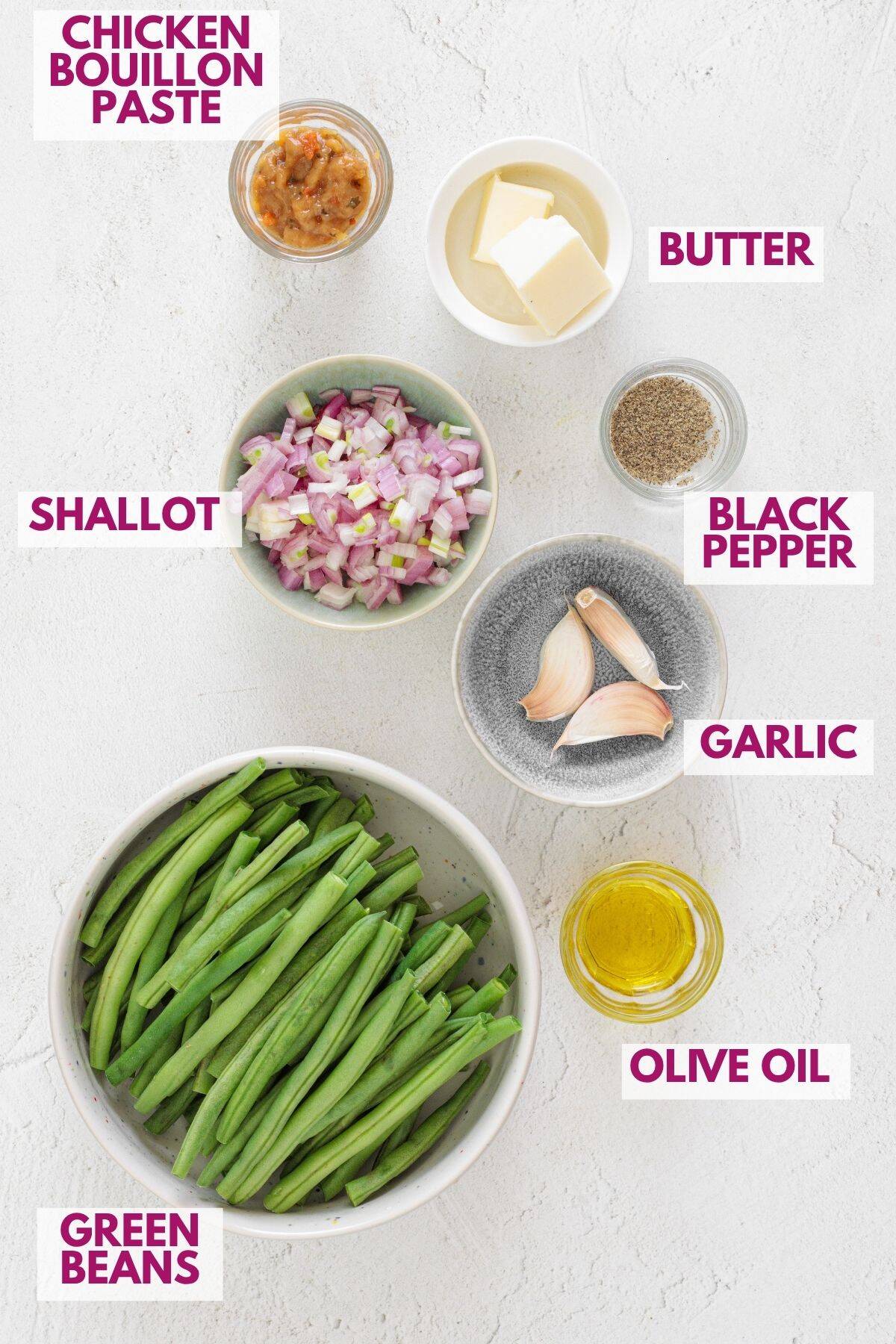
Ingredients You’ll Need
This sauteed green beans recipe uses simple ingredients, but a few details help it turn out better.
- Olive oil: This helps the green beans and shallots start cooking quickly in the skillet.
- Fresh green beans: Trim the ends before cooking. Fresh green beans work best here because they stay crisp-tender after sautéing and steaming. If you don’t have fresh, check out my canned green beans recipe for the best way to cook green beans from a can.
- Shallot: Thinly sliced shallot adds a little sweetness and cooks quickly.
- Garlic: Fresh minced garlic gives the beans that classic sautéed green bean flavor.
- Butter: This adds richness and helps carry the garlic flavor through the dish.
- Water: A small amount of water creates steam in the skillet so the beans can soften without blanching.
- Chicken bouillon paste or fine sea salt: Bouillon adds a more savory finish, while salt keeps it simple.
- Black pepper: This finishes the dish and balances the richness from the butter.
How to Make Sauteed Green Beans
This easy sauteed green beans recipe comes together in one skillet.
Sauté the green beans and shallots
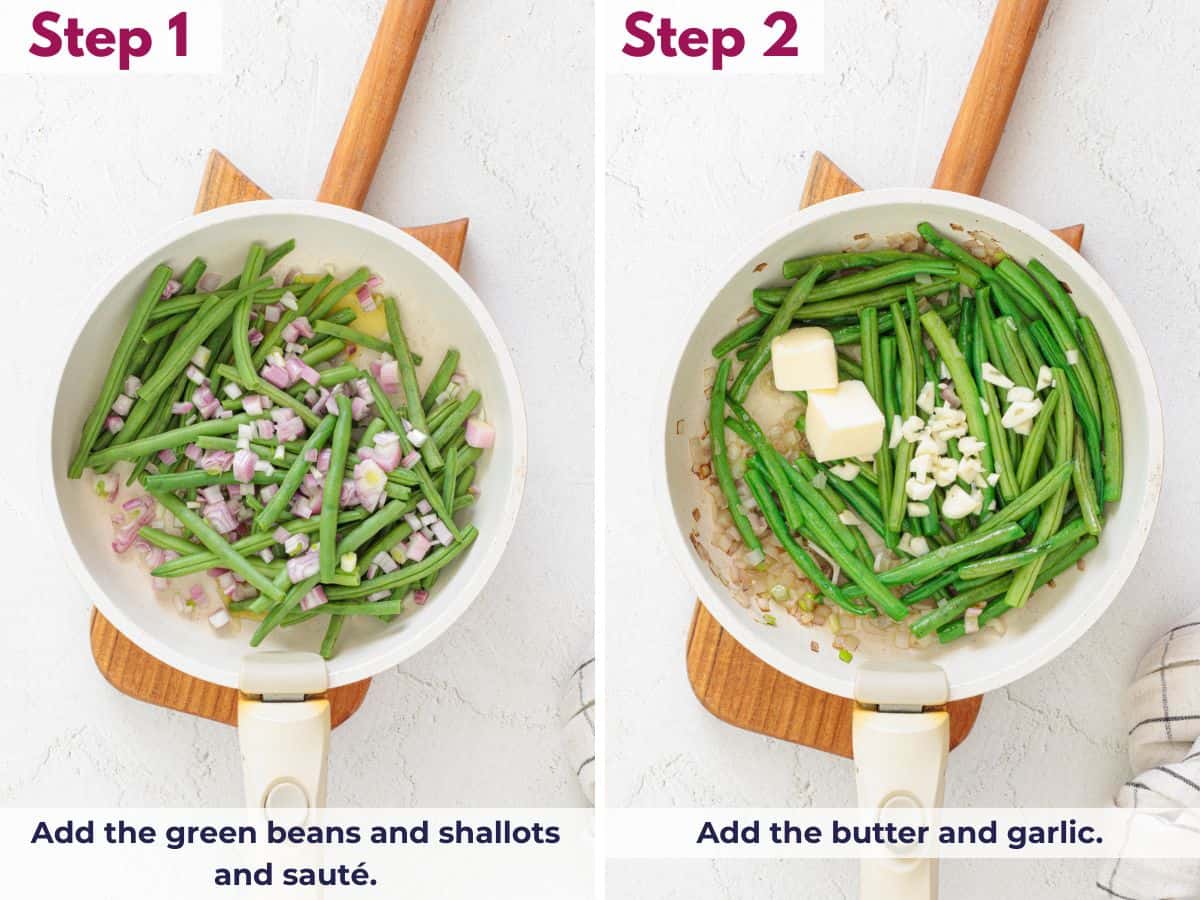
Heat the olive oil in a large, wide skillet over medium-high heat. Add the green beans and shallots and sauté for about 2 minutes, using tongs to move everything around the pan.
Add the garlic and butter
Add the butter and garlic and continue cooking for 1 more minute. This gives the garlic flavor time to bloom without burning.
Steam until crisp-tender
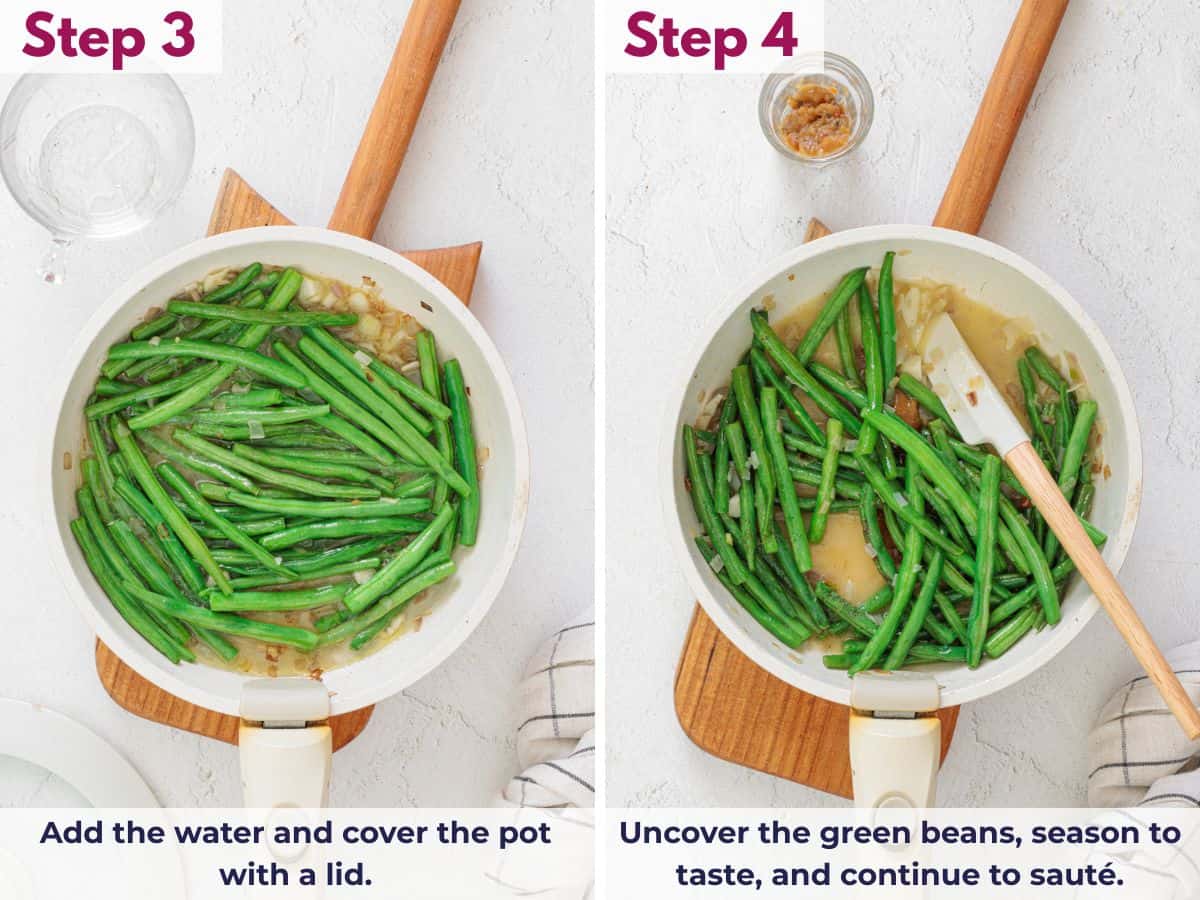
Turn the heat down to medium-low. Add the water, cover the skillet with a lid, and let the green beans steam for about 4 minutes. This is the step that replaces blanching. The steam helps the green beans soften and turn bright green while still keeping some bite.
SAVE THIS RECIPE
Finish and season
Uncover the skillet, season with bouillon or salt and black pepper, and sauté for another 1 to 2 minutes to cook off any extra moisture. The green beans should be tender with a little bite, not soft or mushy.
Tips for the Best Sauteed Green Beans
- Trim the ends before you start: That way everything is ready once the skillet is hot.
- Use fresh green beans for the best texture: They hold up especially well for this no-blanch method.
- Slice the shallot thinly: Thin slices cook quickly and blend into the dish better.
- Use a wide skillet: This helps the green beans cook in a more even layer instead of piling up and steaming too much.
- Start over medium-high heat: That gets the beans going quickly before the covered steam step.
- Add the garlic after the green beans start cooking: Garlic burns fast, so this timing works better than adding it first.
- Cover the skillet to steam: This is what helps the beans turn crisp-tender without extra prep.
- Do not oversteam: Four minutes is usually enough. Add another minute only if you want softer green beans.
- Finish uncovered: Cooking them another minute or two after removing the lid helps any extra water cook off.
- Taste before serving: Bouillon and salt season differently, so adjust at the end if needed.
Easy Swaps and Variations
- Use salt instead of bouillon: Fine sea salt works well if you want a simpler finish.
- Add lemon at the end: A squeeze of lemon brightens the whole dish.
- Add sliced almonds: These add crunch if you want to dress the beans up a little.
- Finish with Parmesan: A little on top can make the side feel a bit richer.
More Green Bean Recipes to Try
Fresh green beans work especially well for this sautéed version, but there are a few other good options depending on how you want to cook them. If you want more browned edges, try Roasted Green Beans. For a more hands-off option, Slow Cooker Green Beans is a good choice. If you want to use a pressure cooker, Instant Pot Green Beans gives you another easy way to cook fresh green beans. And if you prefer the air fryer, Air Fryer Green Beans is a great option too.
What to Serve With It
These sautéed garlic green beans work with all kinds of dinners. Serve them with Peruvian Chicken for a bold chicken dinner, Garlic Butter Steak Bites for an easy steakhouse-style meal at home, or alongside saucier comfort-food mains like Creamy Garlic Parmesan Chicken Thighs, Slow Cooker Beef and Noodles, and Slow Cooker Chicken and Gravy.
FAQs About Sautéed Green Beans
No. In this recipe, the green beans steam in the skillet with a little water, which helps them turn crisp-tender without blanching first.
Use fresh green beans, avoid oversteaming, and finish them uncovered so any extra moisture can cook off.
You can, but they are best right after cooking. If needed, reheat them gently in a skillet so they do not get too soft.
This recipe takes about 7 to 9 minutes of active skillet cooking. The green beans sauté first, then steam briefly, then finish uncovered.
Storage and Reheating
- Store: Keep leftovers in an airtight container in the refrigerator for up to 3 days.
- Reheat: Reheat in a skillet over medium heat or in the microwave just until warmed through. A skillet is the better choice if you want to keep them from getting too soft.
Sautéed Green Beans
Use DRDAVINAHS at checkout to save on some equipment & ingredients!
Ingredients
- 1 tbsp Olive Oil
- 1 lb green beans, fresh, trimmed
- 1/4 cup Shallot, thinly slided
- 3 cloves Garlic, minced
- 2 tbsp Butter
- 2 tbsp Water
- 1 tsp Chicken Better than Bouillon, low sodium, or 1/2 tsp Natural Ancient Sea Salt, fine
- 1/4 tsp Black Pepper
Instructions
- Heat the olive oil in a large, wide skillet over medium-high heat.
- Add the green beans and shallots and saute for 2 minutes. Use tongs to mix.
- Add the butter and garlic and continue to sauté for 1 minute.
- Turn the heat to medium-low. Add the water and cover the pot with a lid and allow the green beans to steam for 4 minutes, they’ll turn crisp-tender
- Uncover the green beans, season to taste with salt or bouillon and black pepper, and continue to sauté for 1-2 minutes.
SAVE THIS RECIPE
Recipe Notes
- Trim the ends first: Trim the stem ends before cooking so the green beans are ready to go once the skillet is hot.
- Use fresh green beans: Fresh green beans work best for this recipe because they stay crisp-tender after sautéing and steaming.
- Slice the shallot thinly: Thin slices soften quickly and cook evenly with the green beans.
- Use a large skillet: A wide skillet helps the green beans cook in a more even layer instead of crowding.
- Start over medium-high heat: This helps the green beans and shallots sauté quickly before steaming.
- Add the garlic near the end of sautéing: Garlic cooks fast, so adding it with the butter helps keep it from burning.
- Cover to steam: The small amount of water and a lid help the green beans turn crisp-tender without needing to blanch them first.
- Season after steaming: Wait until the end to add the bouillon or salt so you can better adjust the flavor once the green beans are fully cooked.
- Use bouillon for more flavor: Chicken bouillon paste adds a more savory finish. If you prefer, fine sea salt works well too.
- Finish uncovered: Sautéing for another minute or two after removing the lid helps any extra moisture cook off.
- Taste before serving: Depending on whether you use bouillon or salt, you may want to adjust the seasoning at the end.
Nutrition Details
The nutrition facts come from entering the recipe ingredients into a database of food ingredients. They may vary for any recipe based on the exact product used.












Leave a Reply