
This post may contain affiliate links to products I use and highly recommend. You can read my full disclosure . As an Amazon Associate I earn from qualifying purchases.
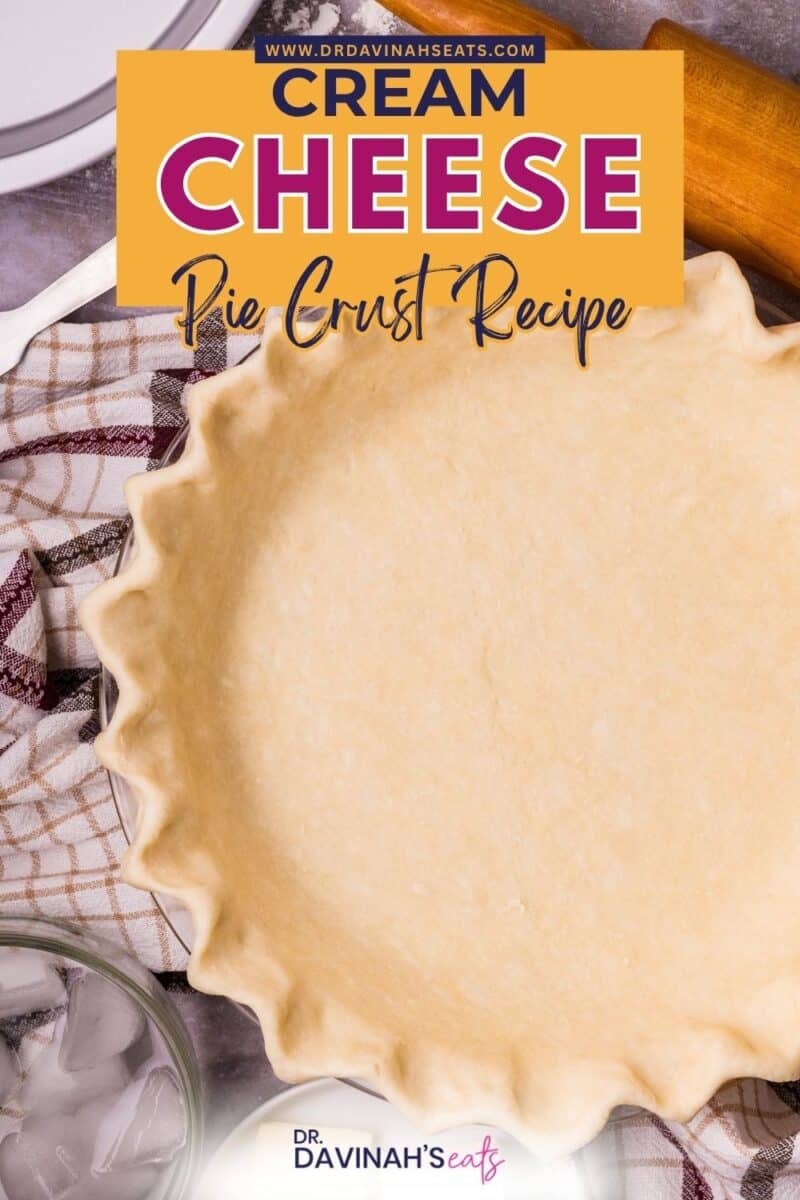
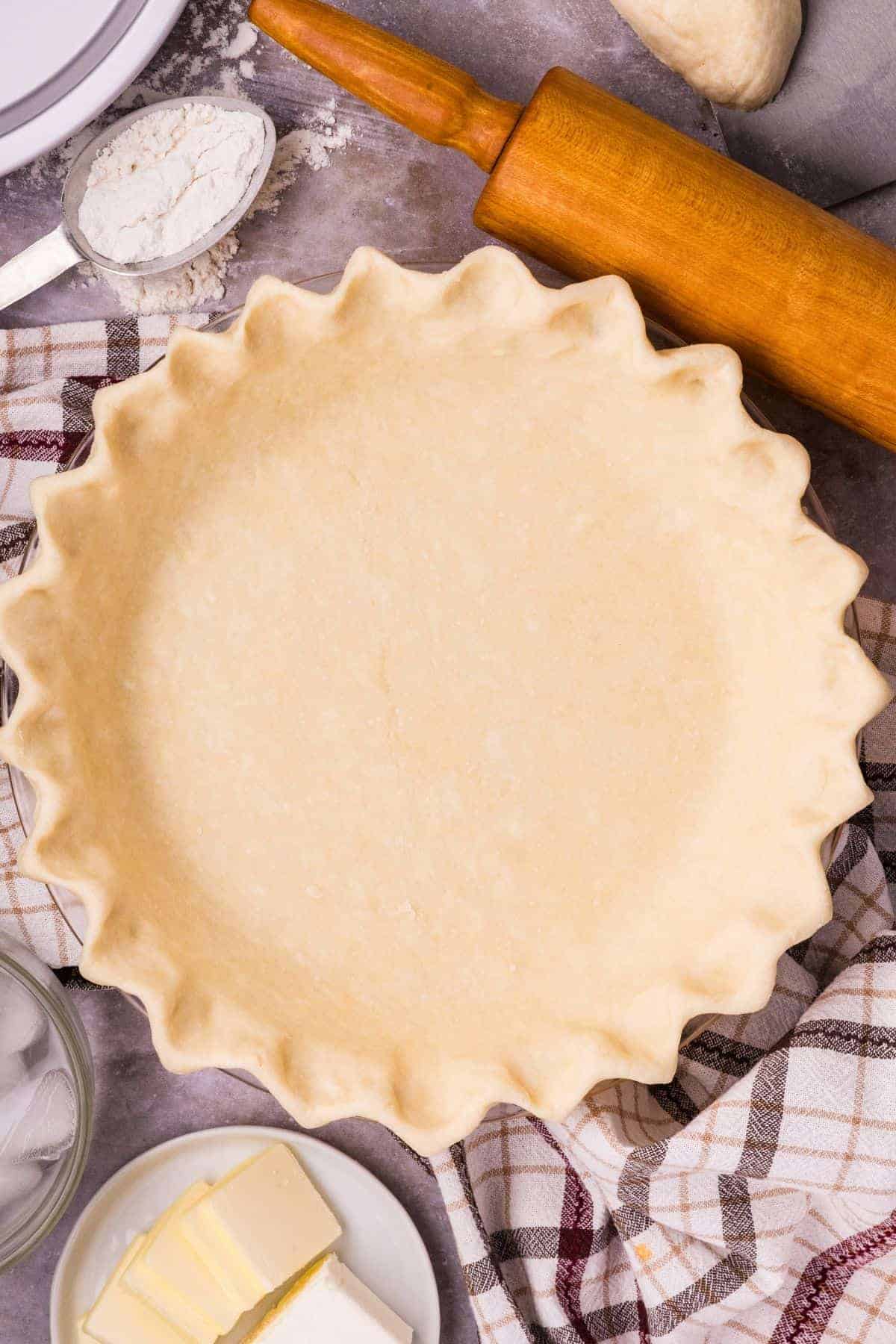
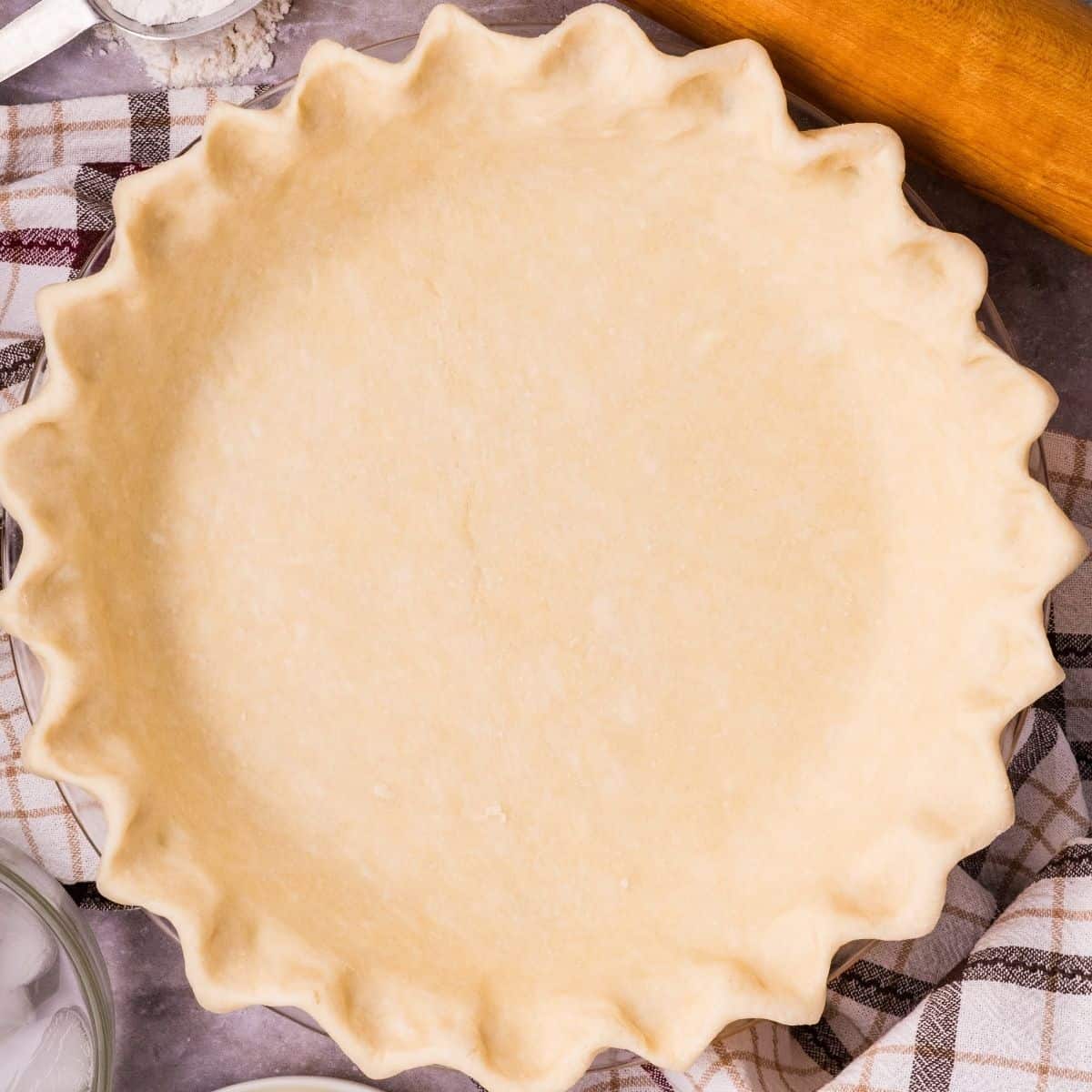
This cream cheese pie crust bakes up golden and flaky, with buttery layers, a tender texture, and just a hint of tang. The soft, pliable dough is easy to roll and shape, even for beginner bakers making homemade pie crust for the first time.
I use this pie crust recipe with cream cheese for my Dutch Apple Pie, but it’s also an easy homemade basic to keep on hand for recipes that call for rolled pastry, like my Sweet Potato Pie. If you’re looking for a crumb-style crust for cheesecake instead, try my Graham Cracker Pie Crust.
Why You’ll Love This Recipe
- Easy to work with: The cream cheese makes the dough more forgiving when rolling, transferring, and shaping it in your pie plate.
- Buttery and flaky: Butter gives the crust its rich flavor and flaky texture, while cream cheese adds tenderness and a subtle tang.
- Versatile: Use it for single-crust or double-crust pies. You can also make the dough ahead and refrigerate or freeze it until needed.
Ingredients Needed
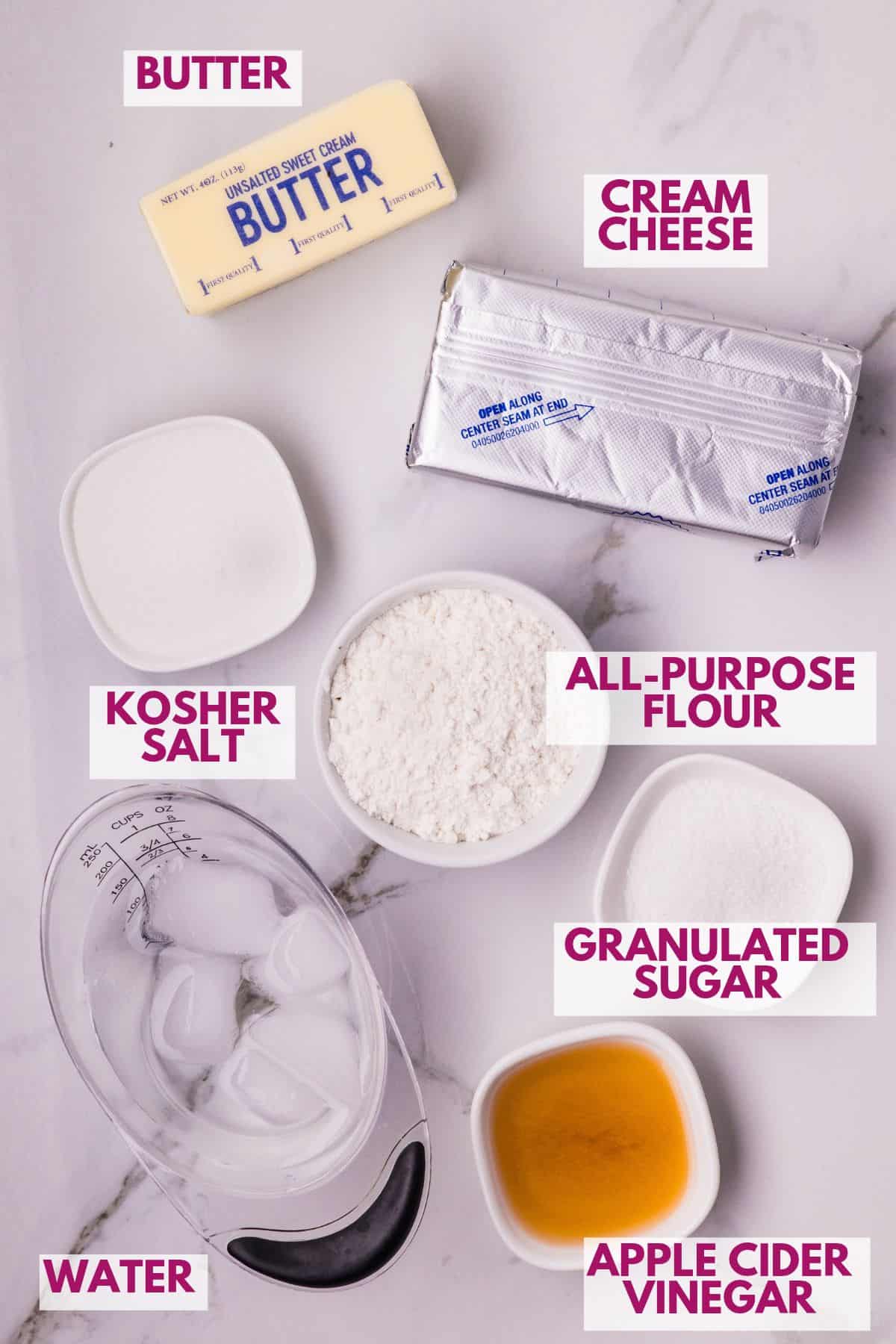
You’ll need a few simple ingredients to make this homemade pie crust. The exact amounts are in the recipe card below.
- All-purpose flour: Provides structure for the pastry. Weighing the flour gives the most consistent results, but measuring cups work just fine. Simply spoon the flour into the measuring cup and level it off to avoid adding too much.
- Granulated sugar: Adds a little sweetness and helps the crust brown.
- Sea salt: Balances the richness of the butter and cream cheese.
- Unsalted butter: Keep it cold and cut it into ¼-inch pieces. The small pieces of butter help create a flaky texture as the pastry bakes.
- Cream cheese: Use cold, full-fat block cream cheese cut into small pieces. Avoid whipped or spreadable cream cheese because their moisture content can affect the dough.
- Apple cider vinegar: Helps keep the pastry tender without adding a noticeable vinegar flavor.
- Ice-cold water: Brings the dough together. Add it gradually so the dough doesn’t become too wet or sticky.
How to Make Cream Cheese Pie Crust
Use the step-by-step photos as your guide. The most important thing is knowing when the dough has enough moisture to hold together.
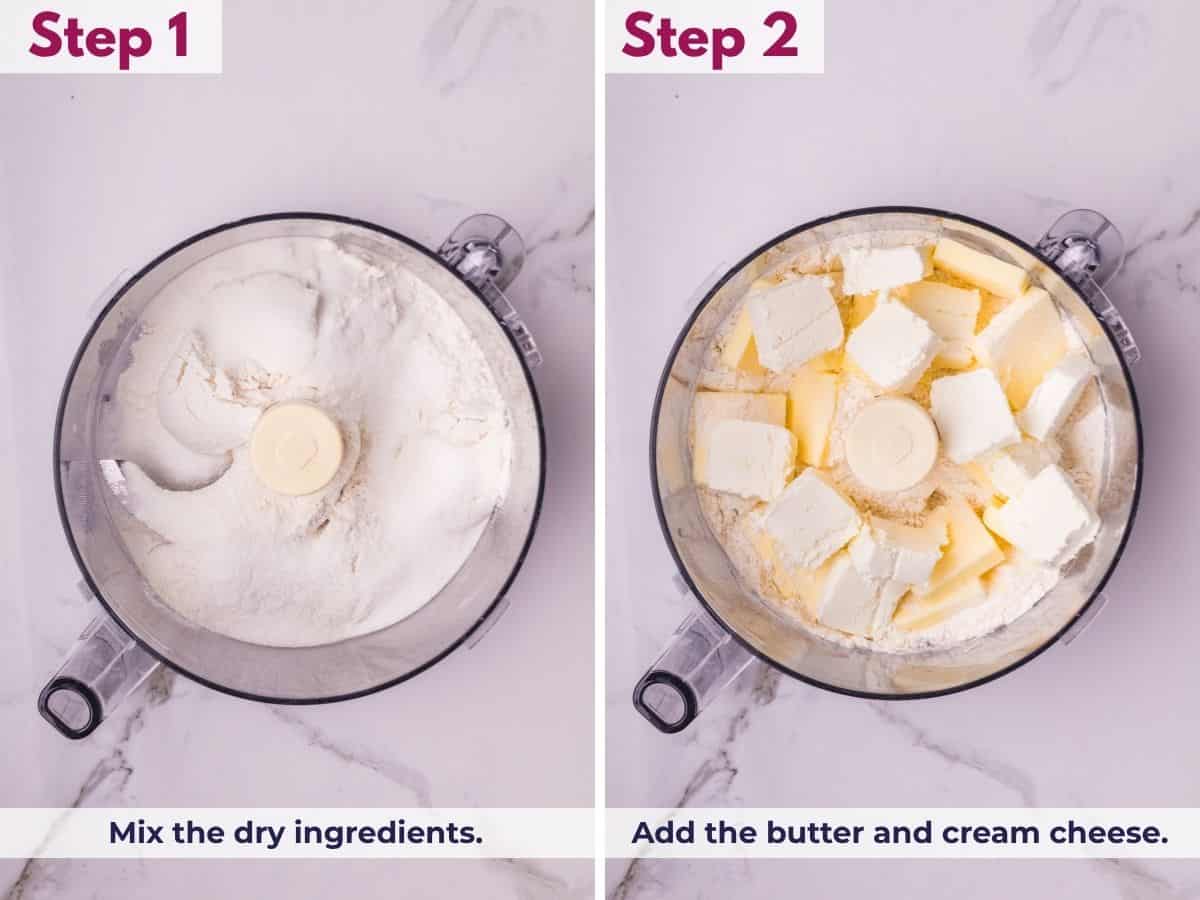
Combine the Dry Ingredients and Fats
After pulsing the ingredients in the food processor, the mixture should look coarse and chunky, with visible pea-sized pieces of butter and cream cheese. Stop before it becomes a smooth paste.
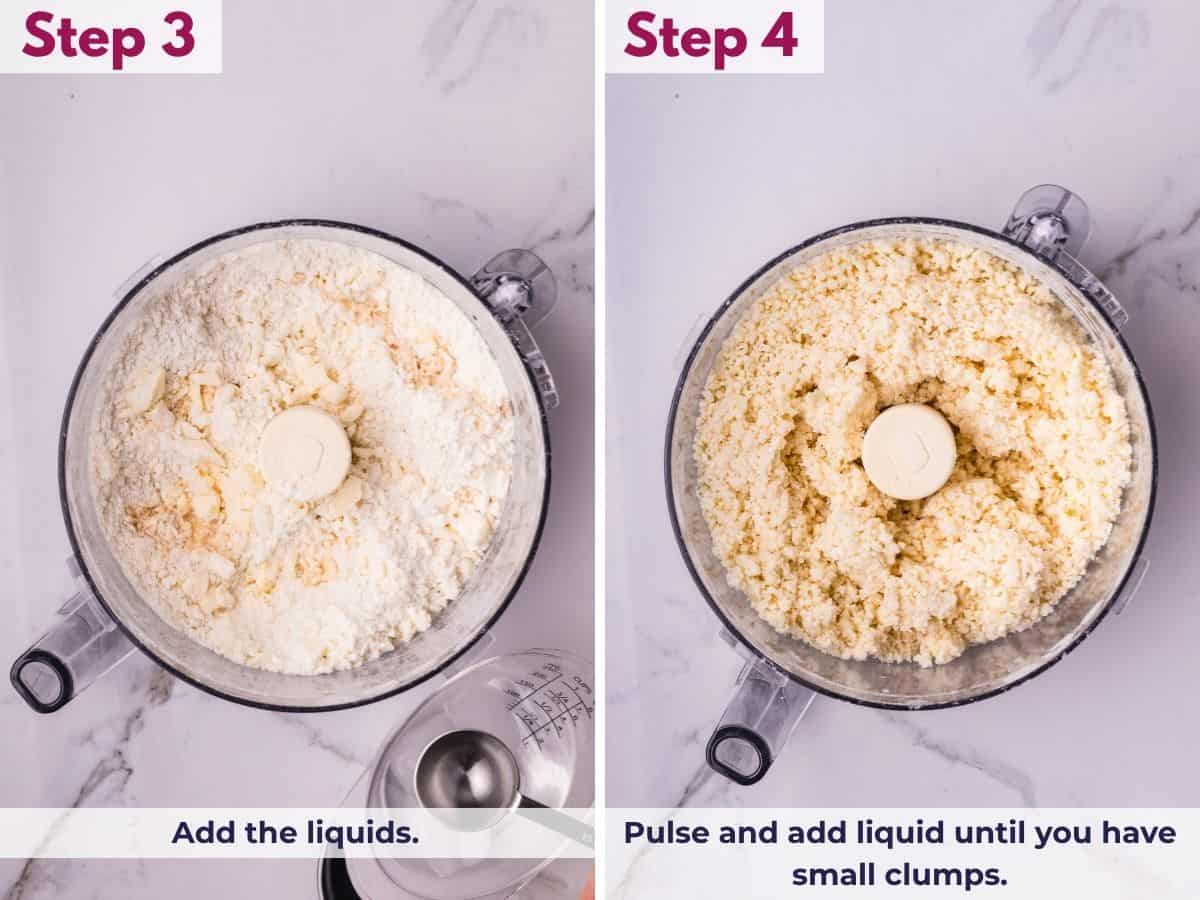
Add the Liquids
The mixture should form tiny, uneven balls rather than one smooth dough. When pressed between your fingers, the clumps should feel soft and hold together without being floury or wet.
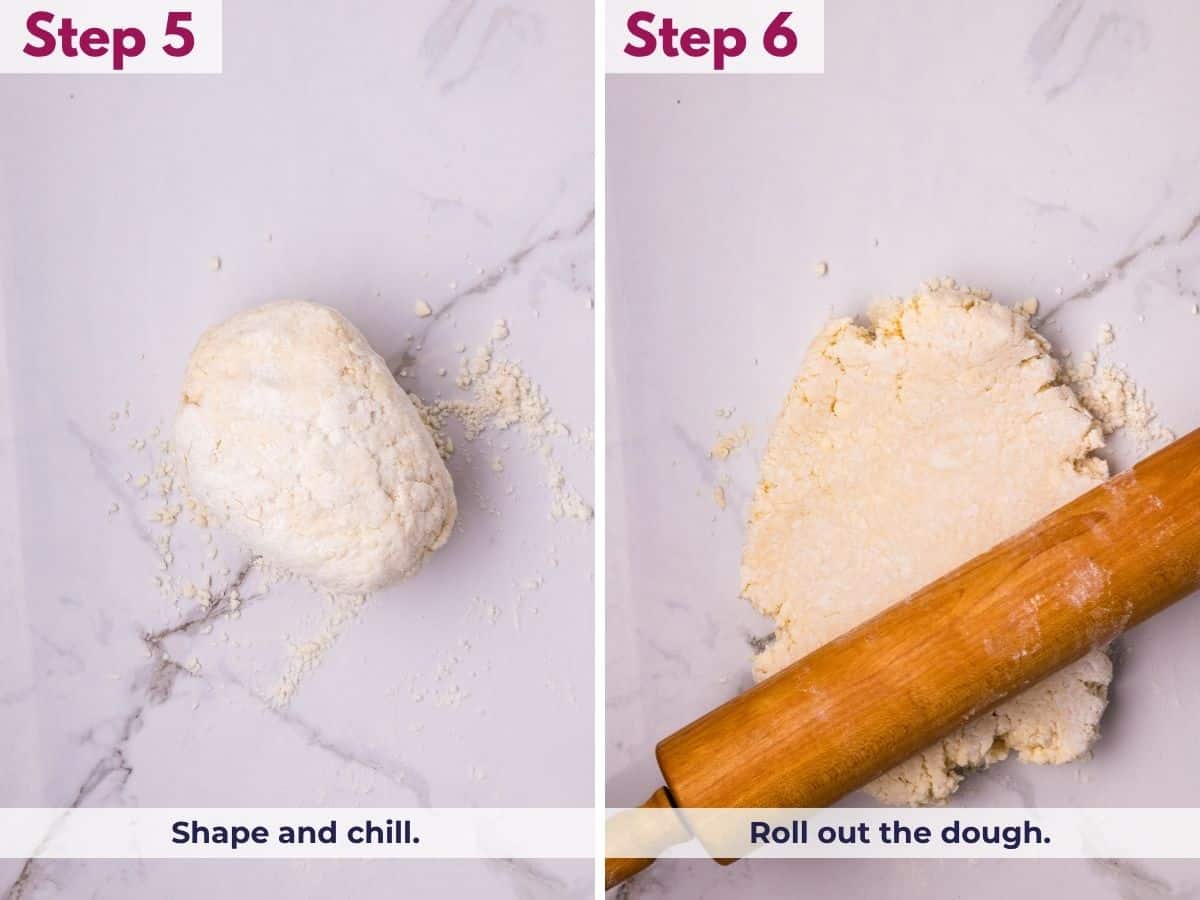
Shape and Chill
The mixture may look crumbly at first, but the small pieces should come together into a disk with gentle pressure. The dough becomes smoother as you roll it. Chilling firms the fats and makes the pastry easier to handle.
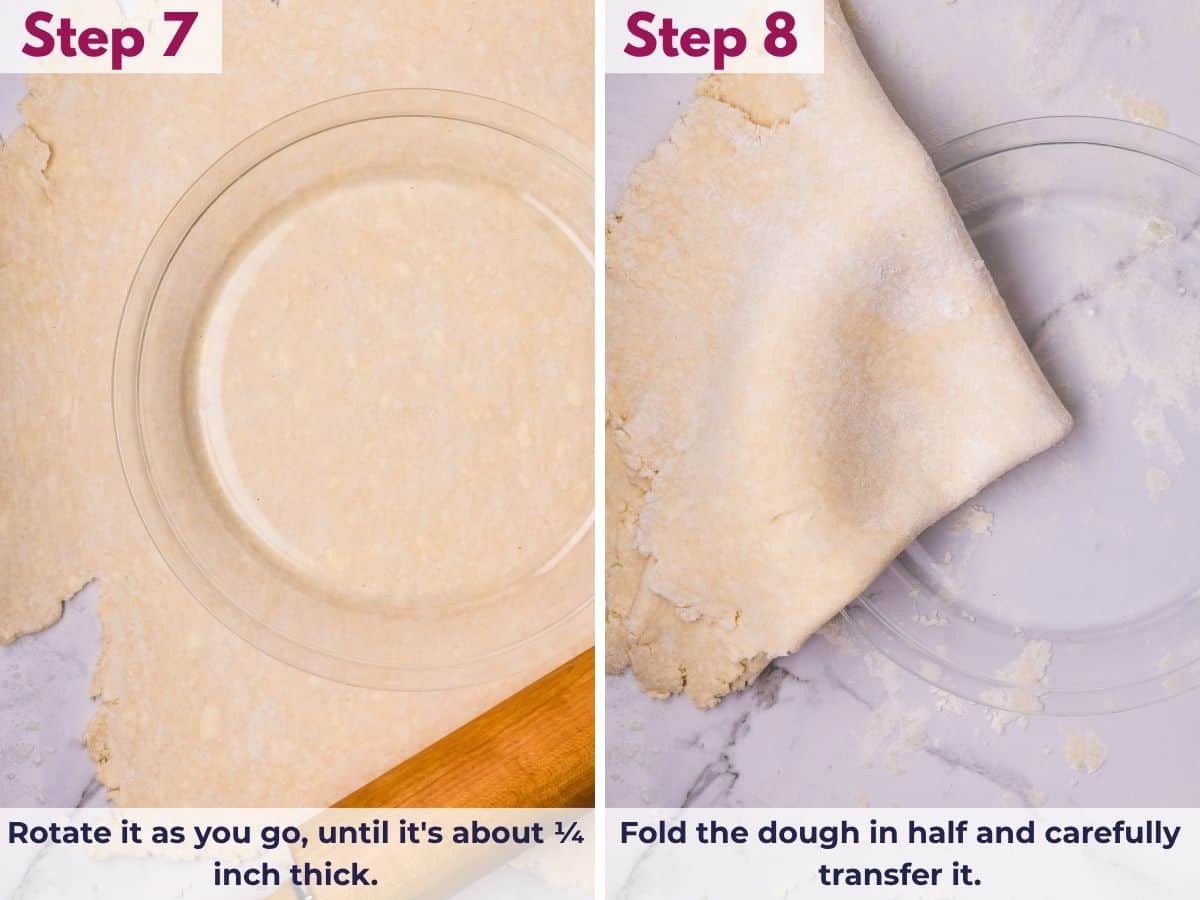
Roll Out the Dough
You may notice small pieces of butter in the dough as you roll it out. That’s normal. The pastry should flatten into an even sheet without crumbling or breaking apart.
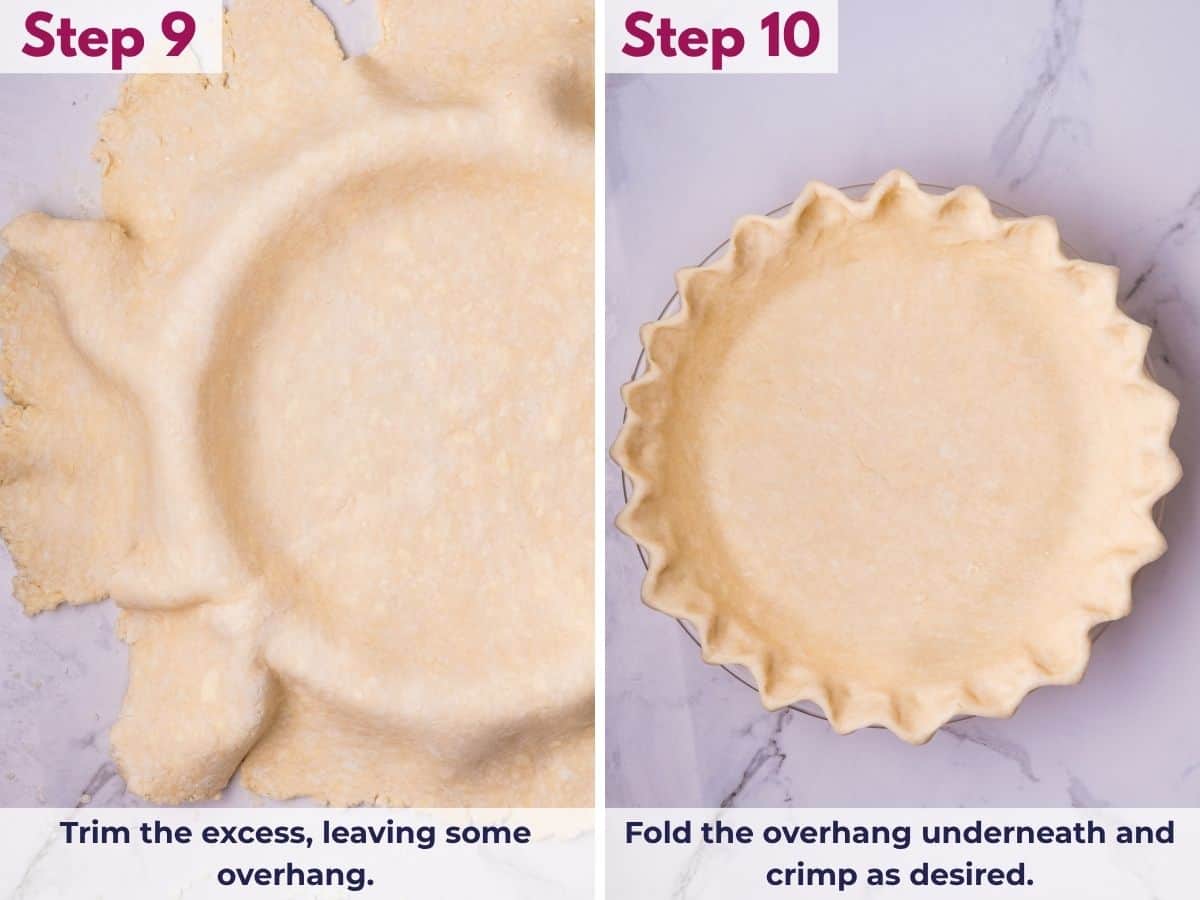
Transfer and Shape the Crust
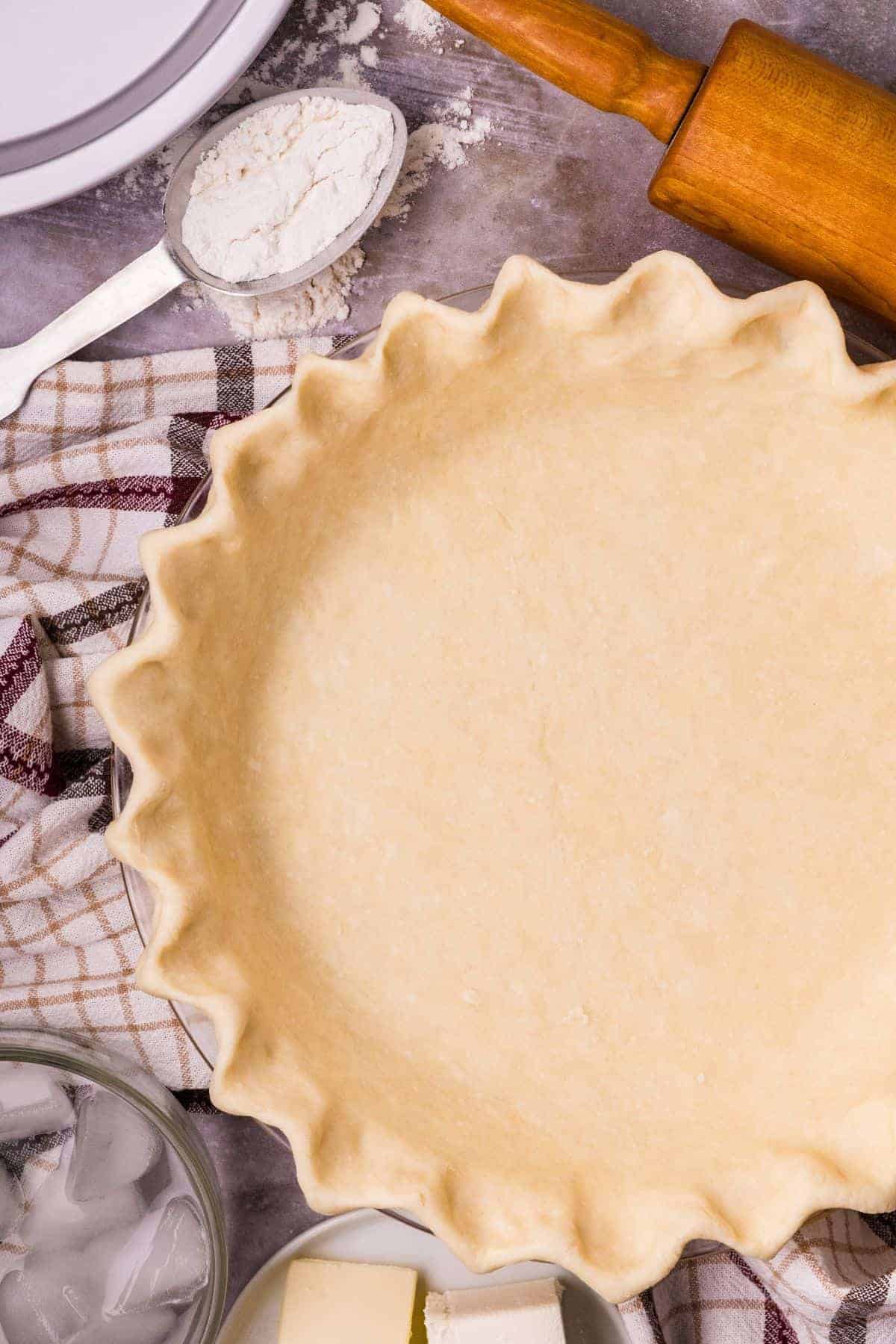
The dough should feel pliable enough to fold, transfer, and unfold without tearing. Gently settle it into the pie plate rather than stretching it to fit, then shape the edges.
The crust is now ready to use. Follow your pie recipe’s instructions for filling and baking.
When Should You Blind Bake Pie Crust?
Not every pie needs a prebaked crust. Some fillings bake directly in the unbaked pastry, while others require the crust to be baked first.
SAVE THIS RECIPE
- Unbaked crust: Used for fillings that bake directly in the pastry shell. Don’t prick the bottom or sides unless your pie recipe specifically tells you to.
- Partially baked crust: Some pies benefit from prebaking the bottom crust to prevent sogginess. Follow the specific pie recipe for the correct method and baking time.
- Fully blind-baked crust: Used for fillings that don’t require additional baking, such as certain cream and pudding pies.
For example, my Pumpkin Pie with Sweetened Condensed Milk bakes with an unbaked crust, while my Dutch Apple Pie includes specific blind-baking instructions. Always follow the individual pie recipe rather than automatically prebaking the crust.
How to Blind Bake Cream Cheese Pie Crust
If your pie calls for a fully baked pastry shell, use these steps and the process photos as your guide.
Prick and Freeze the Crust
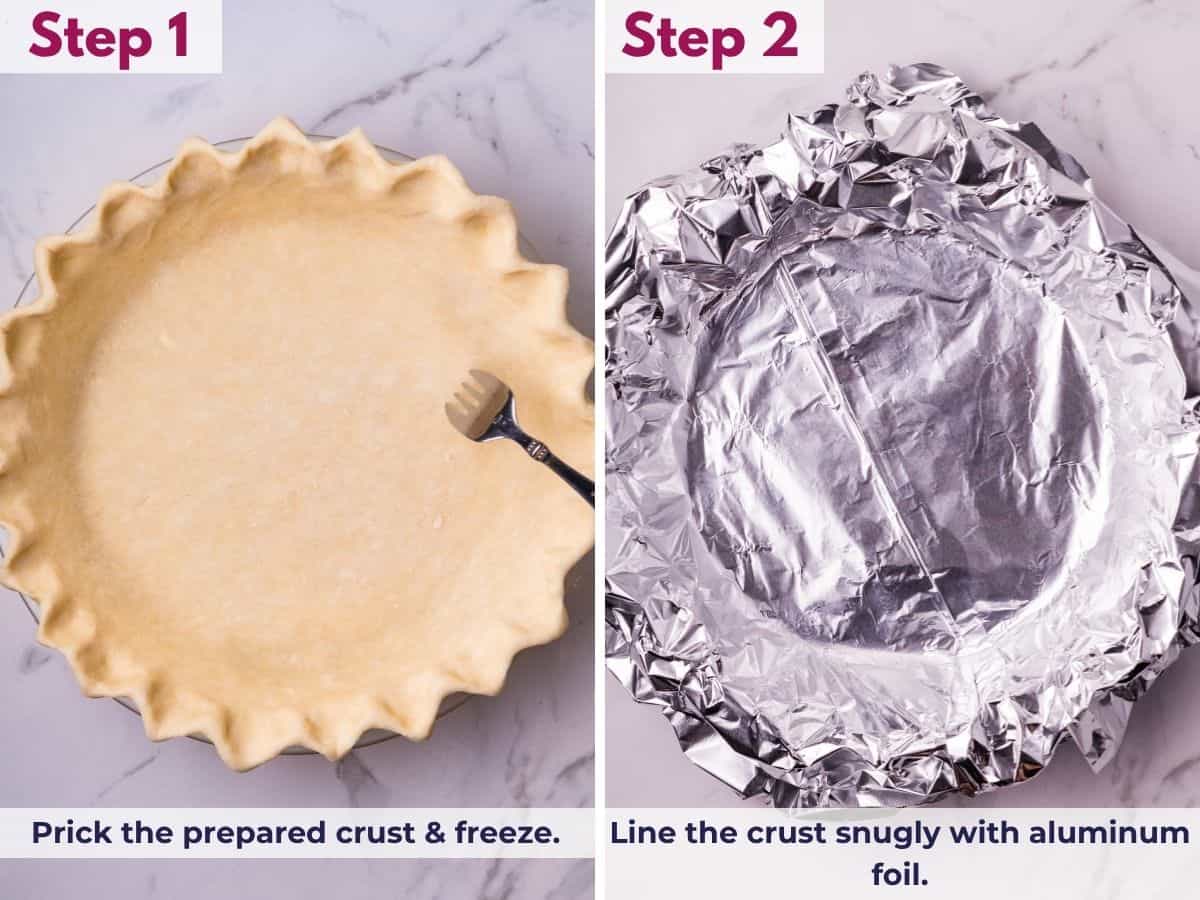
Preheat the oven to 400°F. Prick the bottom and sides of the shaped crust with a fork, then freeze for 30 minutes. This helps the pastry hold its shape during baking.
Add the Pie Weights
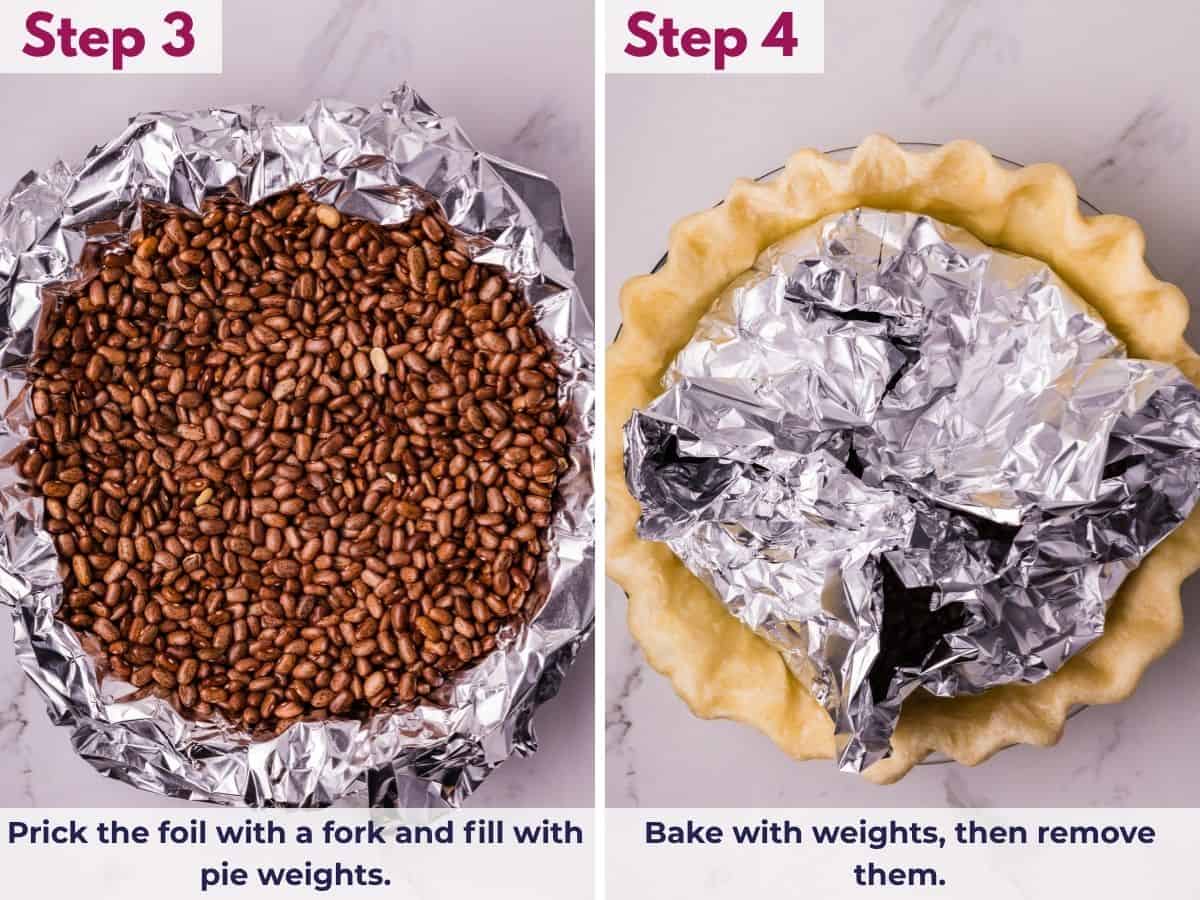
Press aluminum foil snugly against the bottom, sides, and edges of the chilled crust. Prick the foil with a fork and fill it with pie weights or dried beans to help prevent the pastry from puffing up.
Bake Until Golden Brown
Bake for 25 minutes. Carefully remove the foil and weights, then return the crust to the oven for another 8–10 minutes, until golden brown.
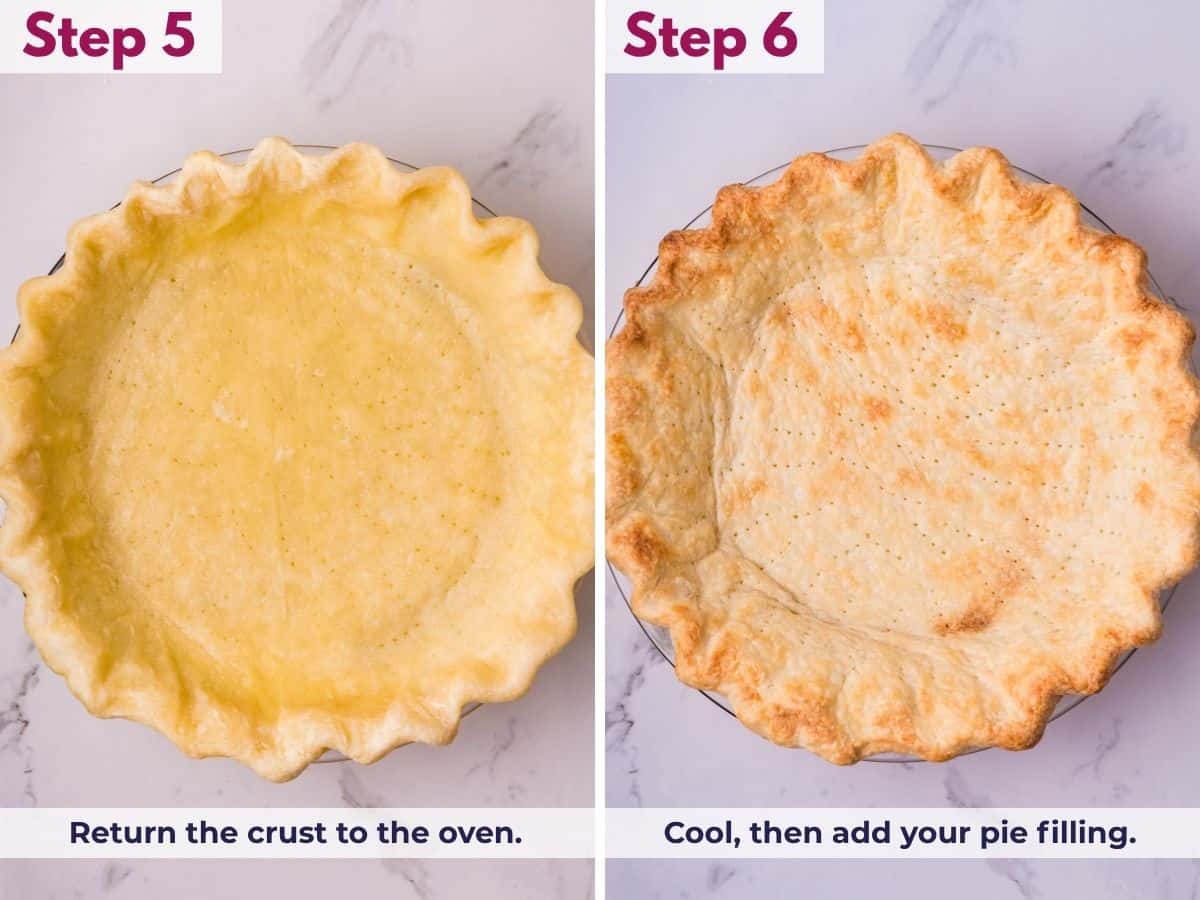
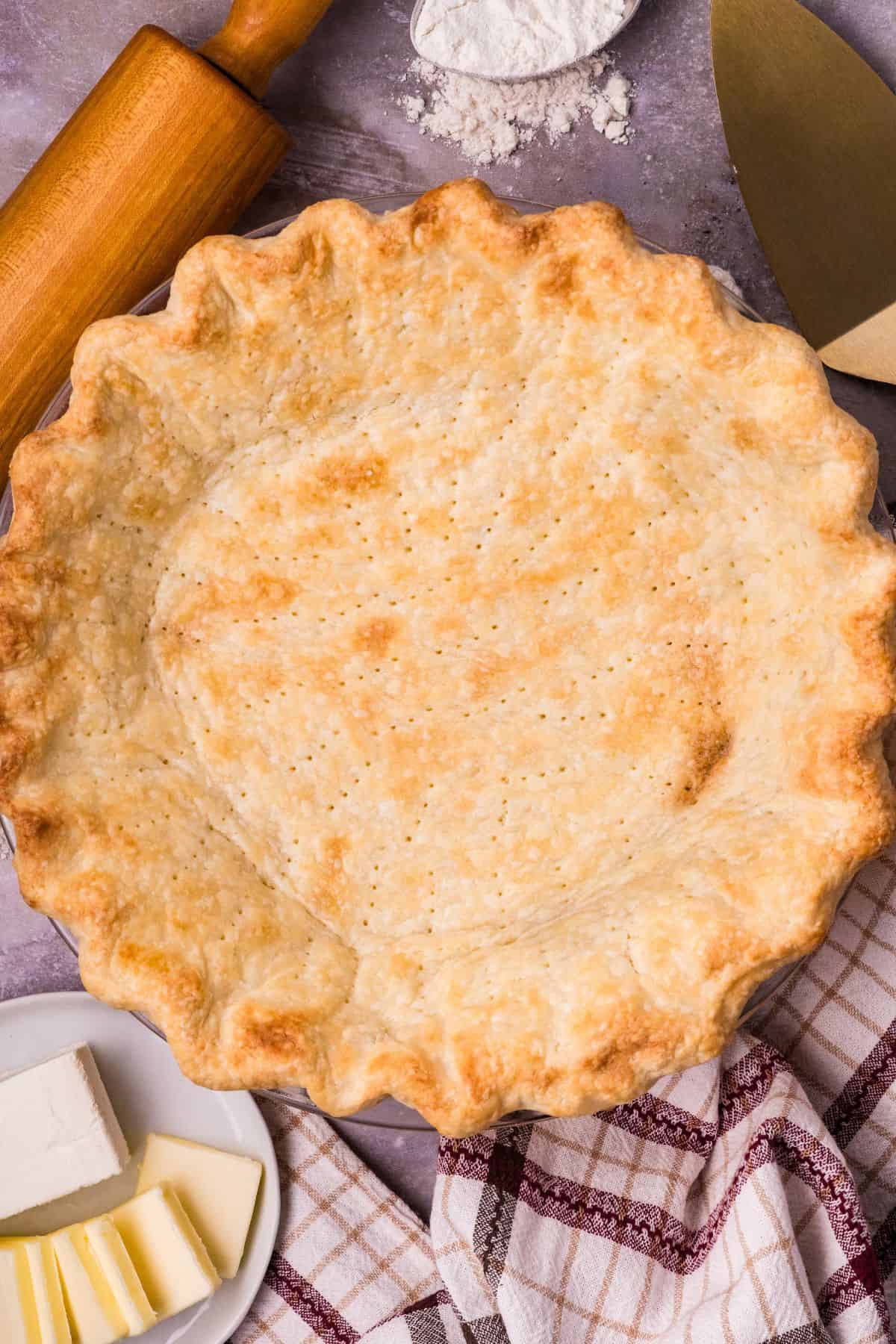
If the edges brown too quickly, cover them with a foil shield while the bottom finishes baking. Transfer the crust to a wire rack and let it cool completely before adding a filling that requires a cooled shell.
Tips for the Best Cream Cheese Pie Crust
- Let very firm dough soften slightly: If the dough is difficult to roll after refrigeration, let it sit at room temperature for 5–10 minutes, just until pliable.
- Prevent sticking: Rotate the dough as you roll, occasionally lifting it to add a little flour underneath. This also helps maintain an even, rounded shape.
- Repair small cracks: Press cracked edges together or patch them with a small piece of extra dough. The cream cheese makes this pastry forgiving, so minor cracks are easy to fix.
Cream Cheese Pie Crust vs. All Butter Pie Crust
Both recipes make flaky homemade pastry. My All Butter Pie Crust uses butter as the only fat, while this recipe combines butter and cream cheese for a tender pastry with a slightly tangy flavor. The cream cheese also makes the dough more pliable and forgiving when rolling and shaping.
Pies That Use a Pastry Crust
I use this cream cheese pastry for my Dutch Apple Pie. The crust supports the apple filling and buttery crumble topping, and that recipe includes its own instructions for preparing and blind baking the crust.
For more homemade pies made with a rolled pastry crust, try these recipes:
- Sweet Potato Pie: A silky sweet potato filling flavored with warm spices and browned butter.
- Pecan Pie: A classic dessert with a sweet, nutty filling baked in a pastry shell.
- Pumpkin Pie with Sweetened Condensed Milk: A creamy pumpkin pie with warm spices that bakes in an unbaked pastry crust.
These pies have their own crust preparation and baking instructions. Follow the individual recipes rather than assuming they all require blind baking.
Make Ahead and Storage
- Refrigerate unbaked dough: Wrap the prepared dough tightly in two layers of plastic wrap and refrigerate for up to 2 days.
- Freeze unbaked dough: Double-wrap the dough, place it in a freezer-safe bag, and freeze for up to 3 months. Thaw overnight in the refrigerator before rolling.
- Store a fully baked crust: Cool completely and cover tightly. Store at room temperature for up to 1 day or refrigerate for up to 3 days.
- Freeze a baked crust: Wrap securely and freeze for up to 2 months. Thaw while wrapped to help prevent condensation from making the crust soggy.
- Recrisp a baked crust: If needed, warm an unfilled crust at 300°F for 5–10 minutes, watching carefully to prevent overbrowning. Cool before filling.
FAQs
Yes. Whisk the dry ingredients in a large bowl, then use a pastry cutter to work in the cold butter and cream cheese. Add the vinegar and ice water gradually, mixing gently until the dough holds together.
Full-fat block cream cheese is best. Low-fat, whipped, and spreadable varieties may have different moisture contents that affect the dough’s texture and make it harder to handle.
Shrinking can happen when the dough is stretched into the pie plate or baked before it’s properly chilled. Gently ease the dough into place rather than pulling it to fit. Freezing the shaped crust before blind baking also helps it hold its shape.
Yes. Reduce the added sea salt to account for the salt in the butter. Since the salt content varies by brand, the finished flavor may be slightly different.
Cream Cheese Pie Crust
Use DRDAVINAHS at checkout to save on some equipment & ingredients!
Recommended Equipment
- Food Processor
- Pastry Cutter
- Rolling Pin
Ingredients
- 2 cups all-purpose flour, +2 tablespoons more as needed
- 1 ½ tbsp granulated sugar
- ¾ tsp Natural Ancient Sea Salt
- ¾ cup Butter, unsalted and cold, cut into ¼-inch pieces
- 5 oz Cream Cheese, full-fat block and cold, cut into small pieces
- ½ tsp Apple Cider Vinegar
- 1 ½ tbsp water, ice-cold, + 1½ tablespoons more as needed
Instructions
- Mix the dry ingredients: Add the flour, sugar, and sea salt to a food processor. Pulse briefly to combine.
- Add the butter and cream cheese: Add the cold butter and cream cheese to the food processor. Pulse about 12 times, until the mixture is chunky with pea-sized pieces throughout.
- Add the liquids: Add the apple cider vinegar and 1 ½ tablespoons of ice water. Pulse 3–4 times, then add another tablespoon of ice water and pulse 3–5 times. If needed, add the remaining ½ tablespoon and pulse briefly. The mixture should form small clumps that hold together when pressed between your fingers without feeling wet or floury.
- Shape and chill: Transfer the dough to a lightly floured surface and gently gather it into a disk. Wrap tightly in plastic wrap and refrigerate for 1 hour to firm up the butter and cream cheese. If you're short on time and the dough is still cold and easy to handle, you can roll it out immediately.
- Roll out the dough: Lightly flour your work surface and rolling pin. Roll the dough from the center outward, rotating it as you go, until it's about ¼ inch thick and approximately 2 ½ inches wider than your pie plate.
- Shape the crust: Fold the dough in half and carefully transfer it to the pie plate. Unfold and gently fit it into the bottom and sides without stretching. Trim the excess, leaving ½–¾ inch around the edge. Fold the overhang underneath and crimp as desired.
- Use the crust: Your prepared crust is ready for filling. Follow your specific pie recipe for adding the filling and baking. Some pies require an unbaked crust, while others call for a partially or fully baked crust.
SAVE THIS RECIPE
Recipe Notes
- Double crust: Double all ingredient amounts and divide the prepared dough into two disks before refrigerating. Follow your pie recipe for assembling and baking.
- Keep ingredients cold: Cold butter, cream cheese, and water help create a flaky crust. If the dough becomes sticky or too soft, refrigerate until firm.
- No food processor: Use a pastry cutter to work the cold butter and cream cheese into the dry ingredients, then gently mix in the vinegar and ice water until the dough comes together.
- Make ahead: Refrigerate tightly wrapped dough for up to 2 days or freeze for up to 3 months. Thaw frozen dough overnight in the refrigerator before using.
- Baking the crust: Not all pies require blind baking. Follow your pie recipe’s baking instructions to avoid overbaking the crust.
Nutrition Details
The nutrition facts come from entering the recipe ingredients into a database of food ingredients. They may vary for any recipe based on the exact product used.
















Leave a Reply