This post may contain affiliate links to products I use and highly recommend. You can read my full disclosure . As an Amazon Associate I earn from qualifying purchases.
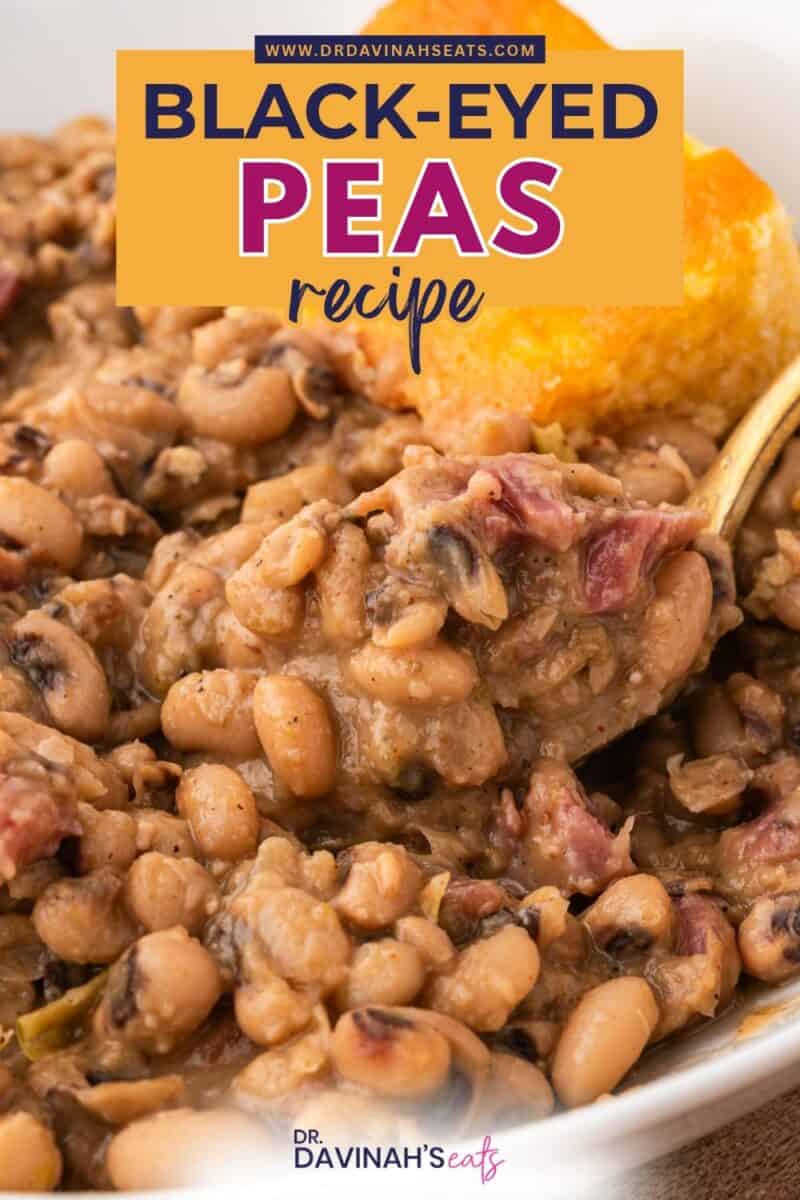
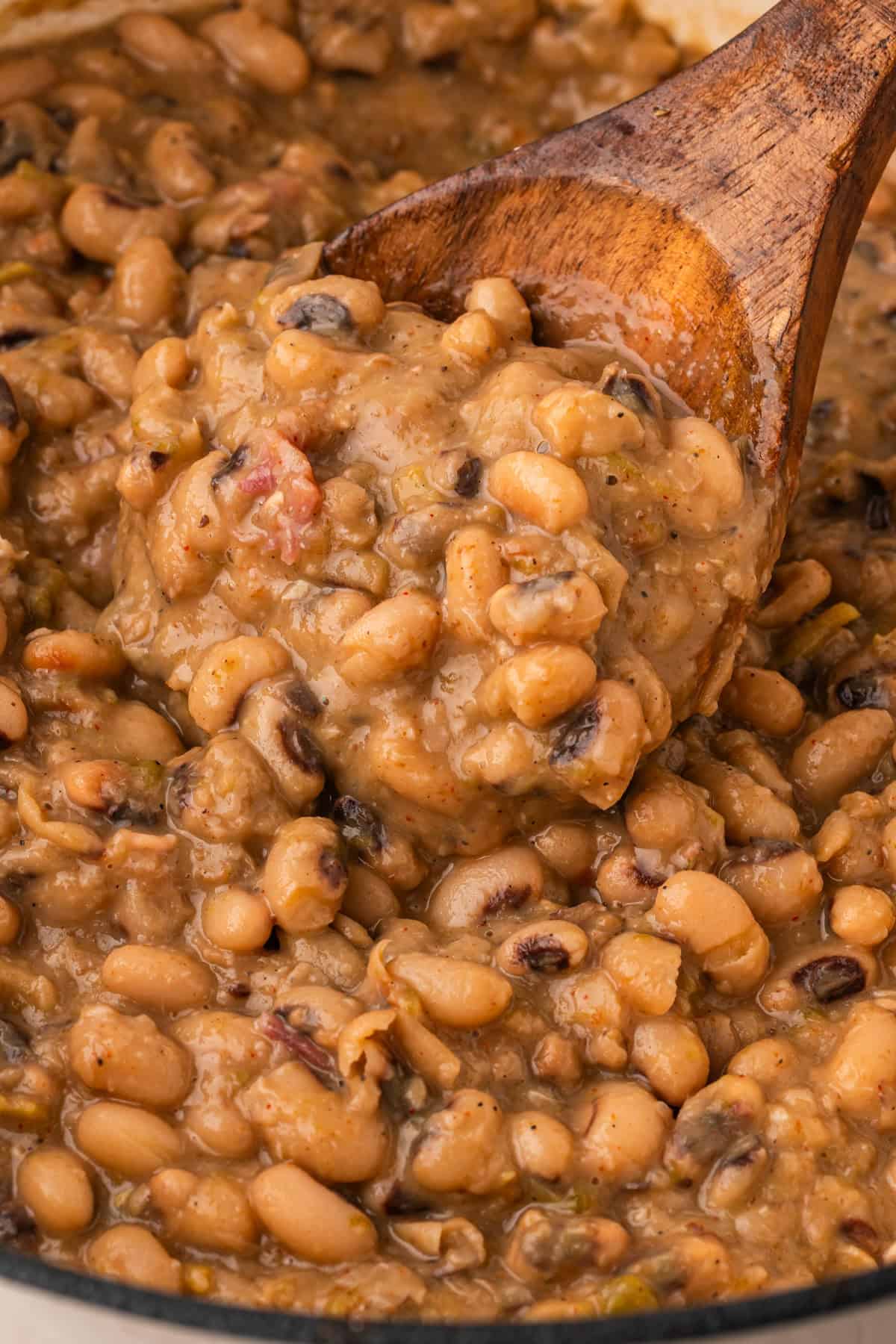
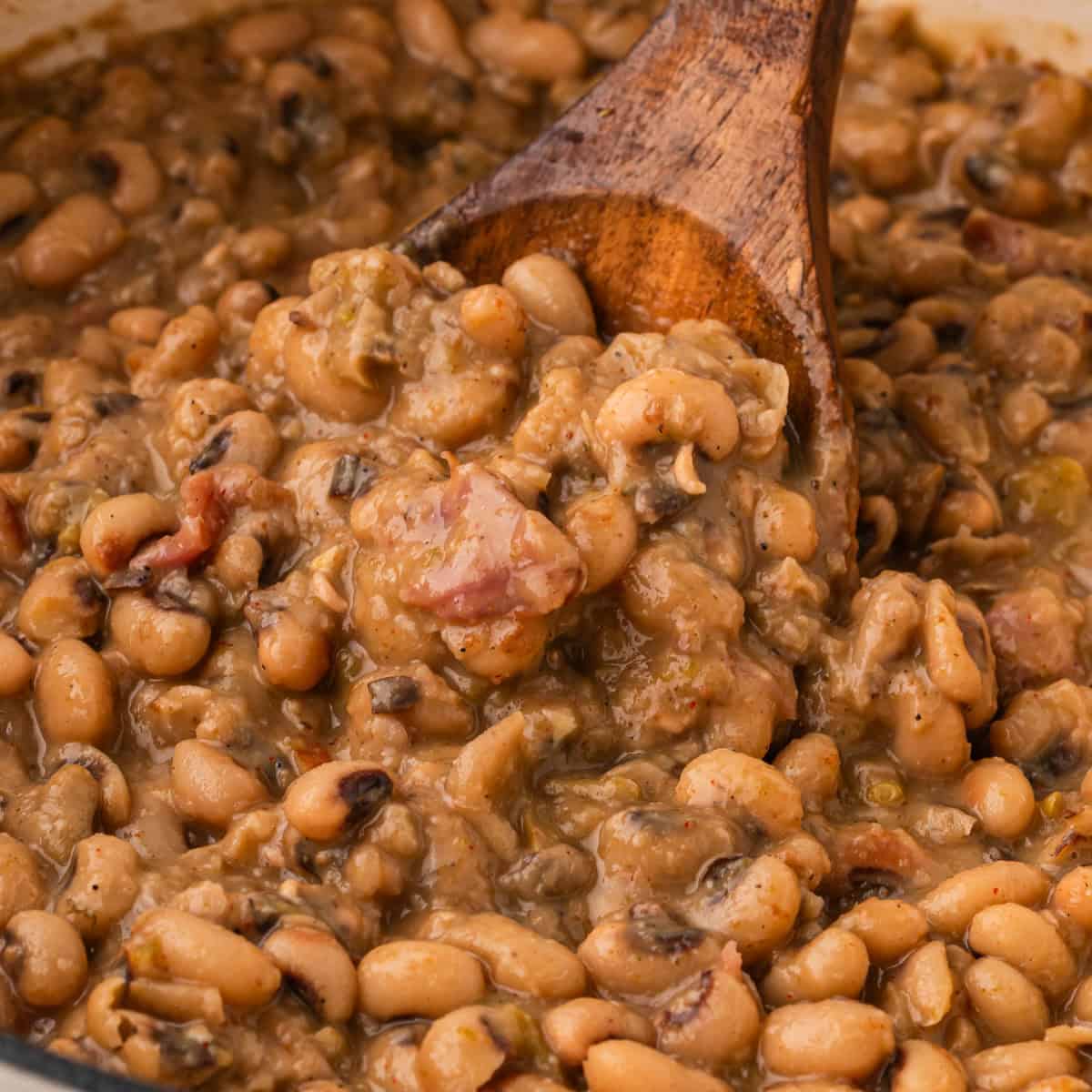
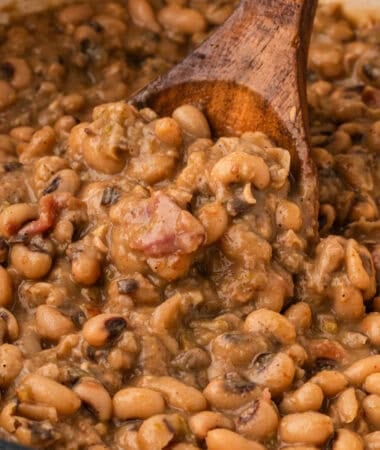
This black-eyed peas recipe makes tender peas in a rich, smoky gravy with plenty of savory flavor. Everything simmers together on the stovetop until the peas are creamy and the gravy is thick enough to coat every spoonful.
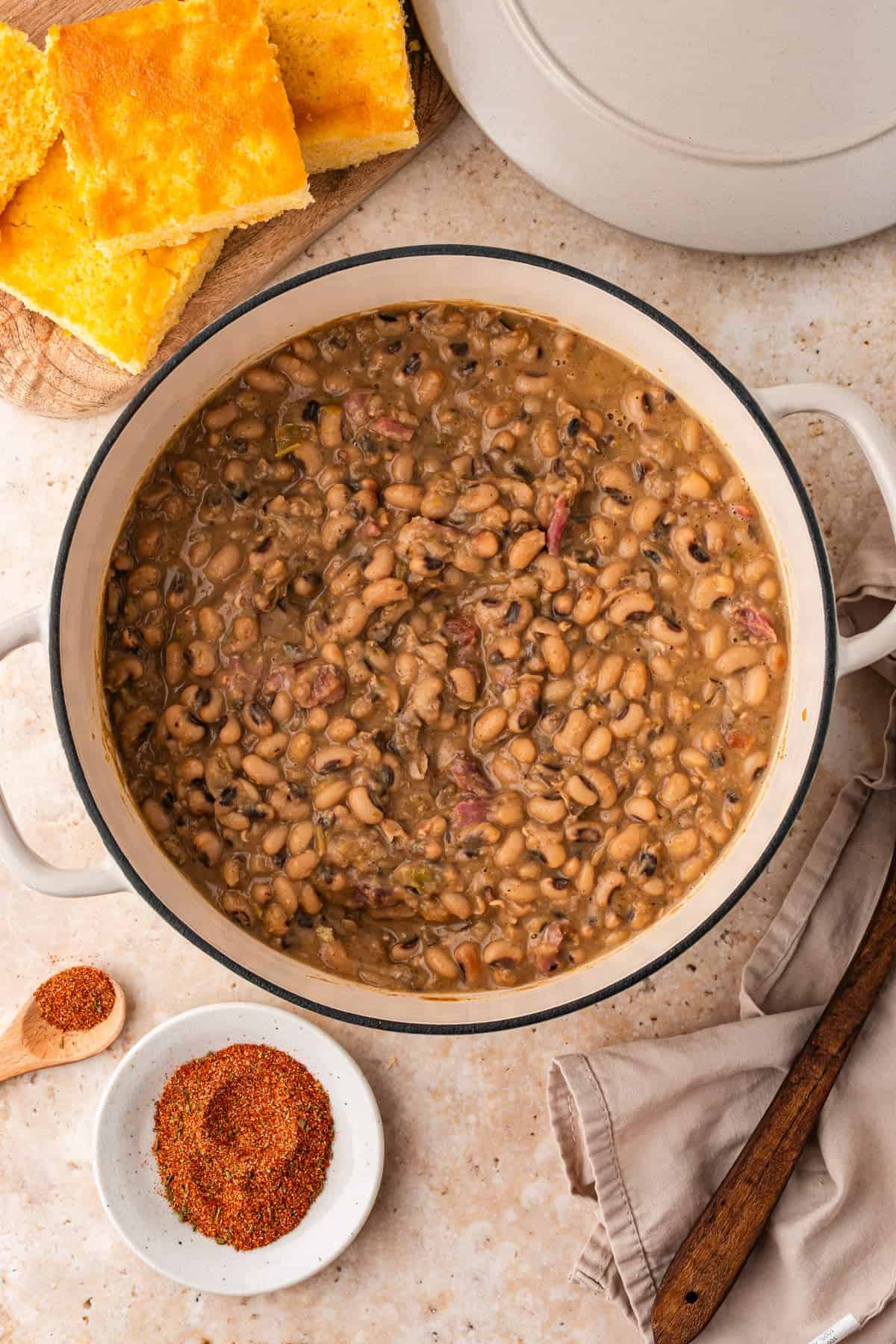
Southern black-eyed peas are a New Year’s Day tradition, often served for good luck with greens and cornbread. I enjoy them year-round, usually over plain white rice or my Garlic Butter Rice, with Southern Collard Greens with Bacon and Homemade Cornbread on the side.
Why You’ll Love This Recipe
- Rich, smoky flavor: The smoked meat seasons the peas as they simmer, with tender pieces of meat added back before serving.
- Naturally creamy gravy: The broth thickens as the peas cook, without flour, cornstarch, or other thickeners.
- Great for making ahead: Everything cooks together in one pot, and the leftovers reheat well for another meal.
Ingredients You’ll Need
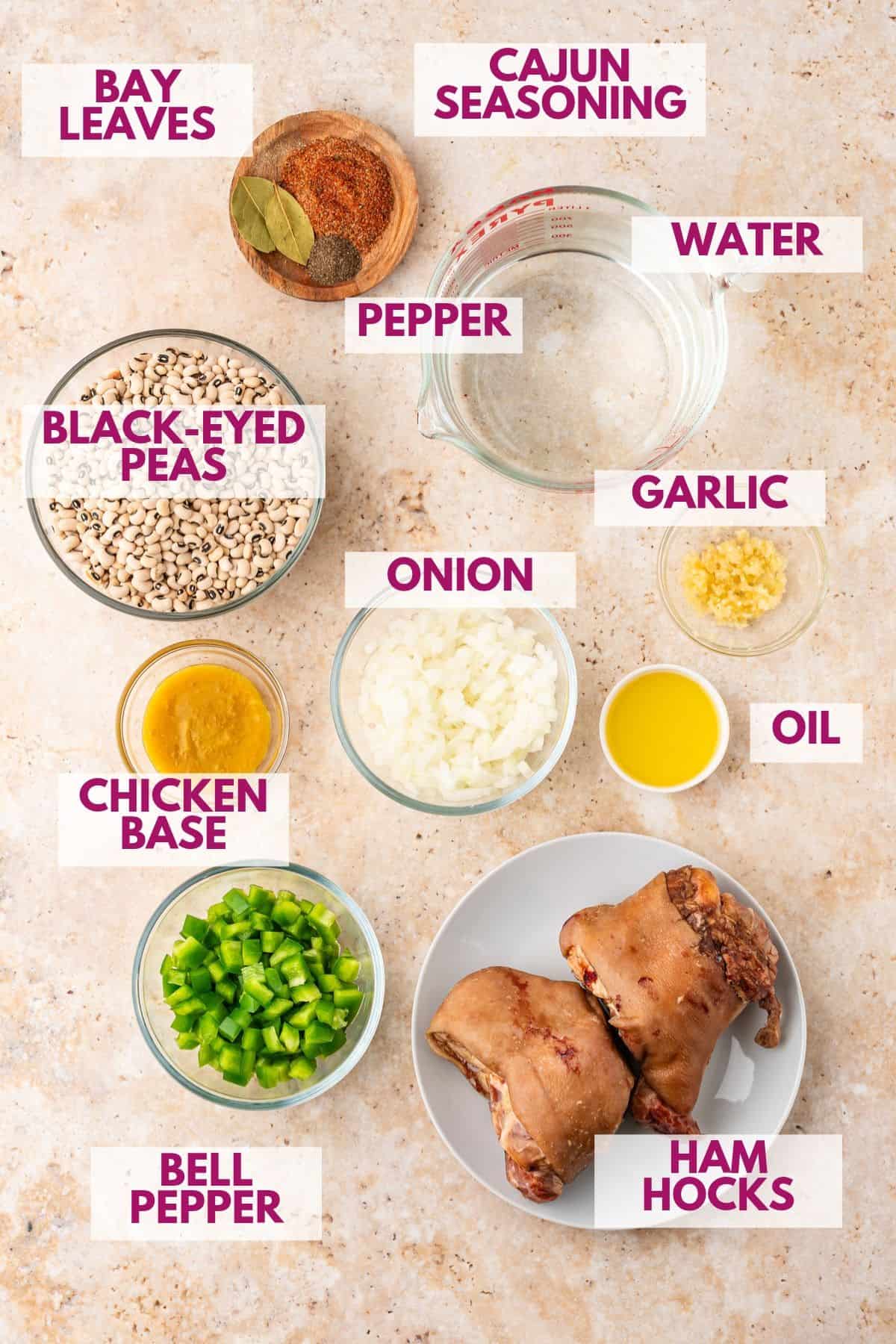
Here are a few things to know about the ingredients. You’ll find the exact amounts in the recipe card below.
- Dried black-eyed peas: Use dried rather than canned peas for this longer stovetop recipe.
- Smoked meat: I use smoked ham hocks, but smoked turkey legs or smoked turkey neck bones work just as well. Use about the same amount of similarly sized smoked meat and follow the same cook time. Once tender, remove the bones and return the meat to the pot.
- Yellow onion, green bell pepper, garlic, and olive oil: Dice the vegetables small so they soften into the broth. The oil is used to sauté them.
- Water, chicken bouillon, and bay leaves: I use Better Than Bouillon Roasted Chicken Base to season the cooking liquid. The smoked meat also adds salt, so there’s no need to add extra.
- Black pepper and Cajun seasoning: I use my homemade Cajun seasoning. Start with the amount listed and add more to taste after cooking.
How to Make Black-Eyed Peas
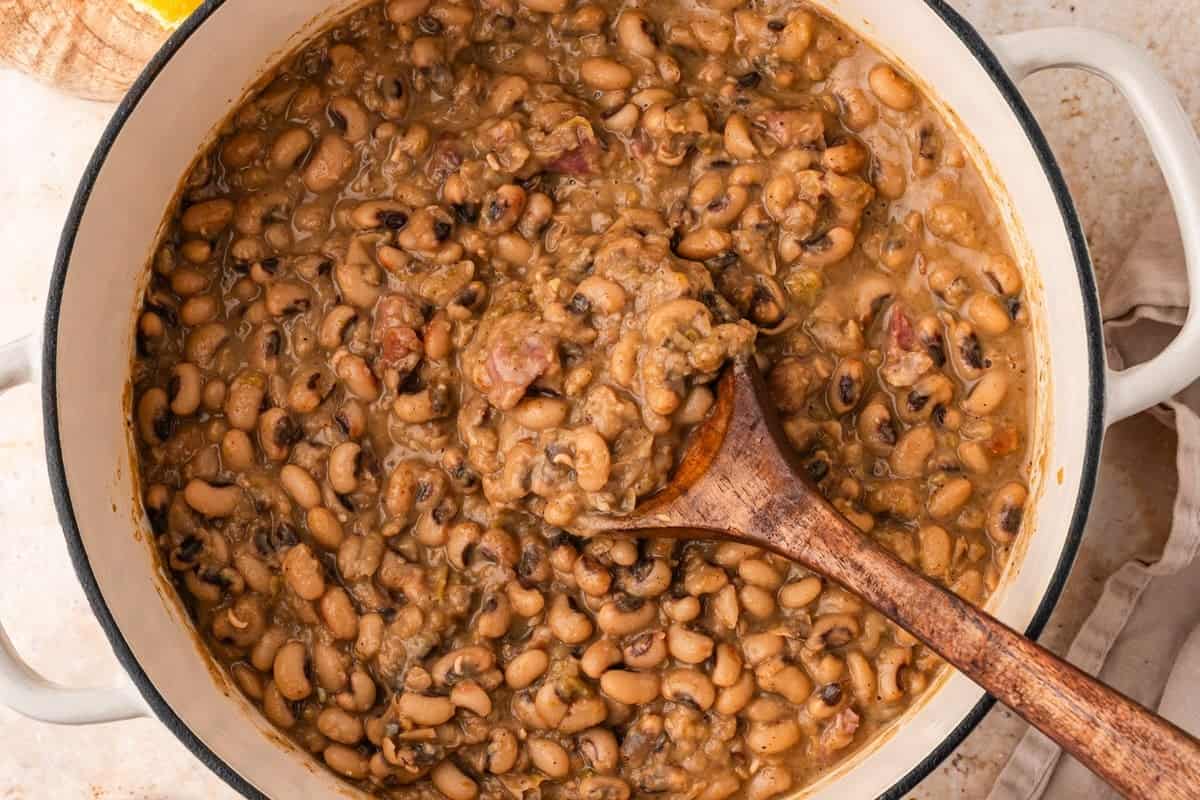
These stovetop black-eyed peas are easy to make in a large Dutch oven or stockpot. The recipe card below has the full measurements and cooking times.
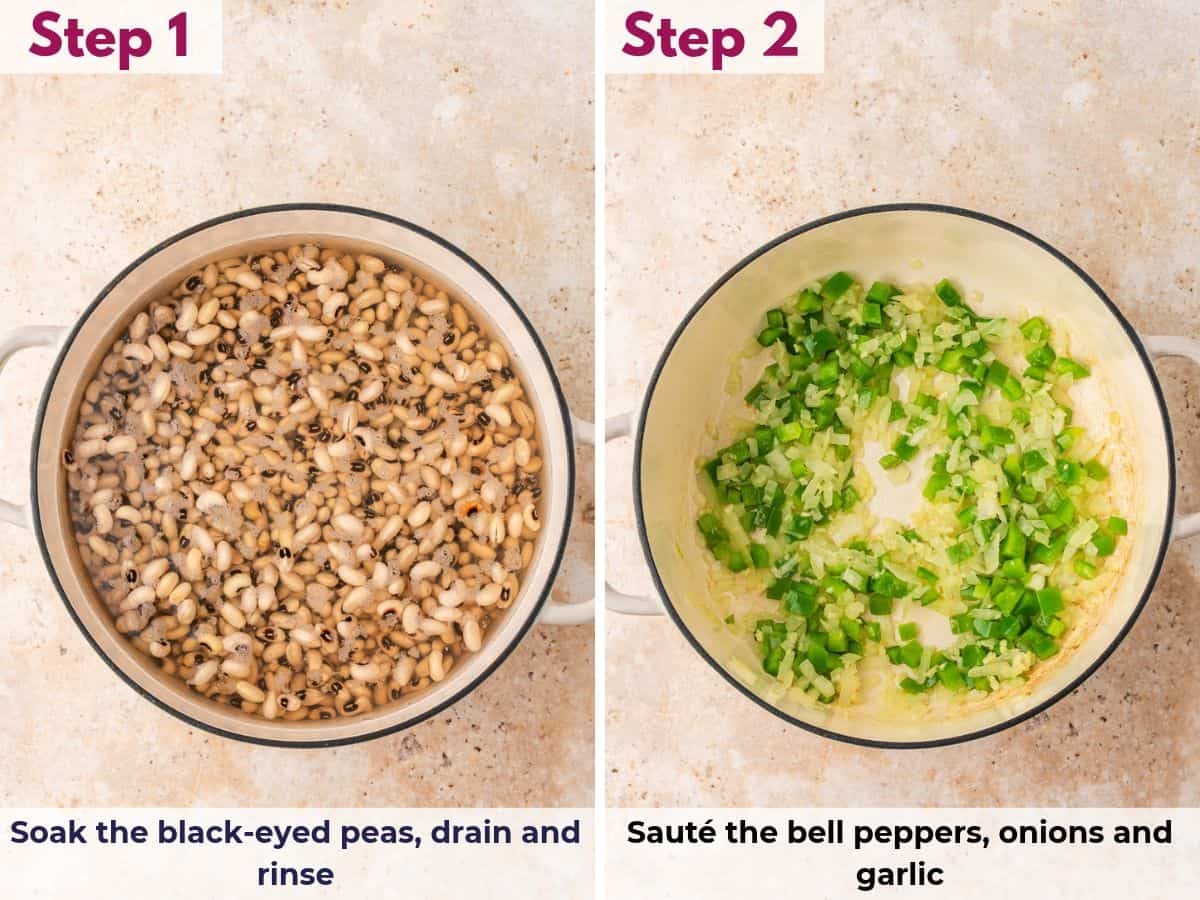
Soak the Black-Eyed Peas
Sort through the dried peas and rinse them thoroughly. Cover with cold water and soak overnight, then drain and rinse before cooking.
Sauté the Vegetables
Heat the olive oil in your pot. Cook the onion and bell pepper until softened, then add the garlic and cook briefly until fragrant.
Simmer the Peas and Ham Hocks
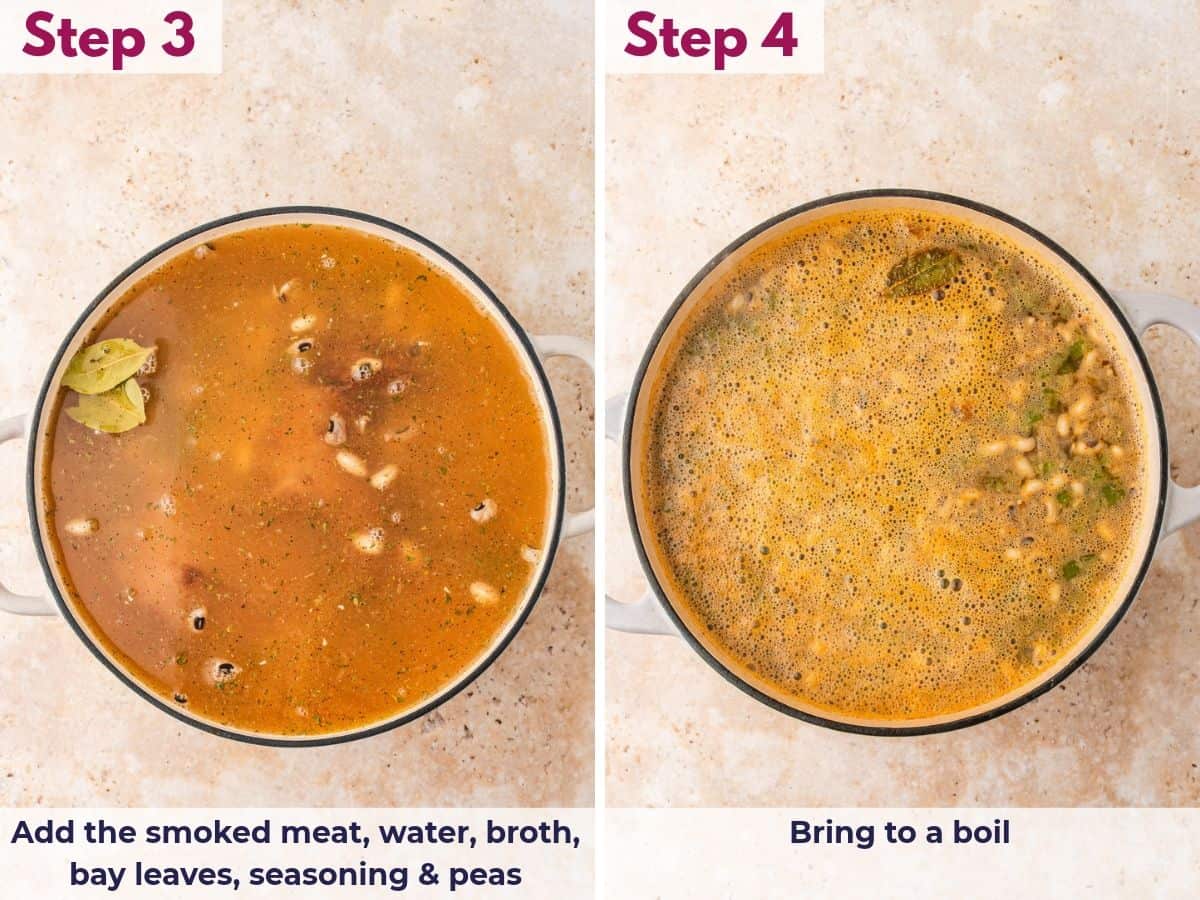
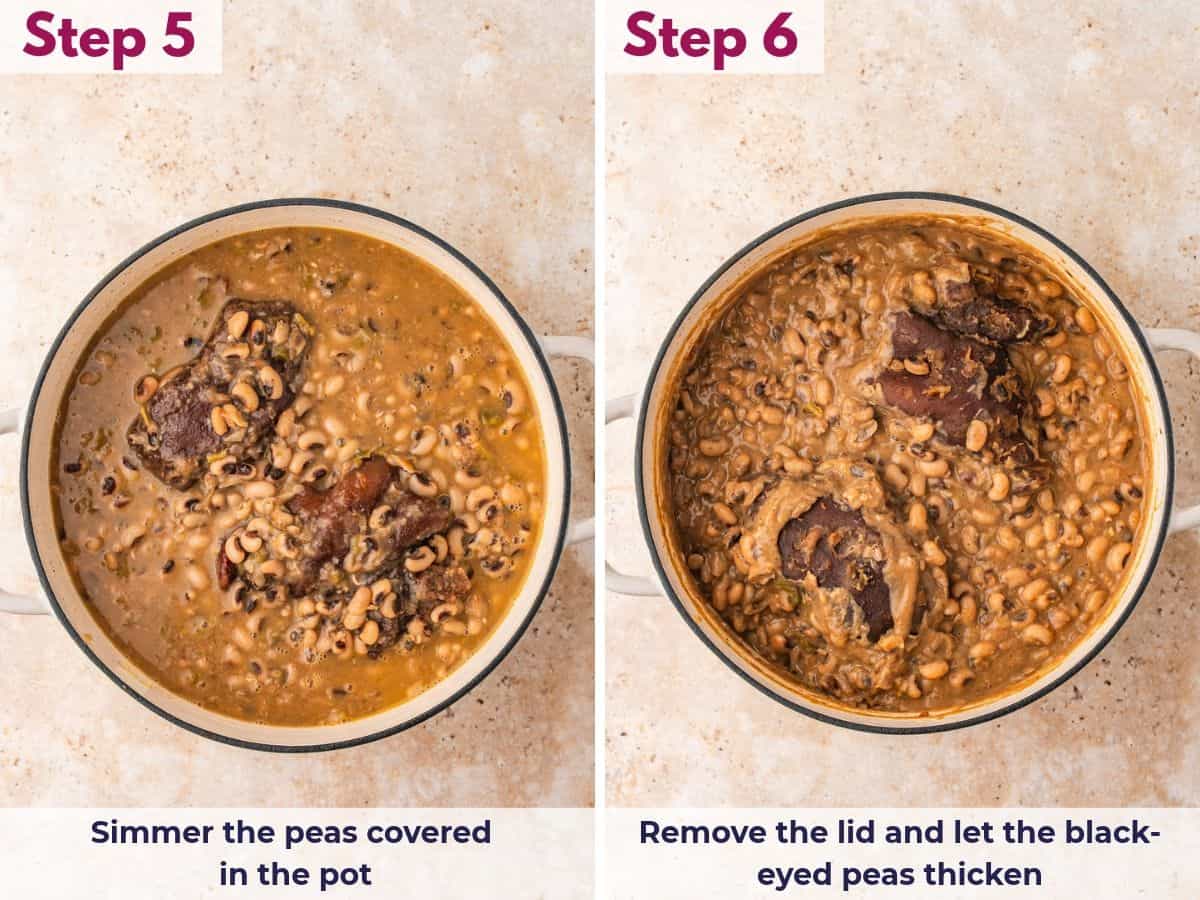
Add the soaked peas, smoked ham hocks, water, bouillon, bay leaves, black pepper, and Cajun seasoning. Bring everything to a boil, then reduce the heat to a low, gentle simmer and cover the pot.
Thicken the Broth and Finish
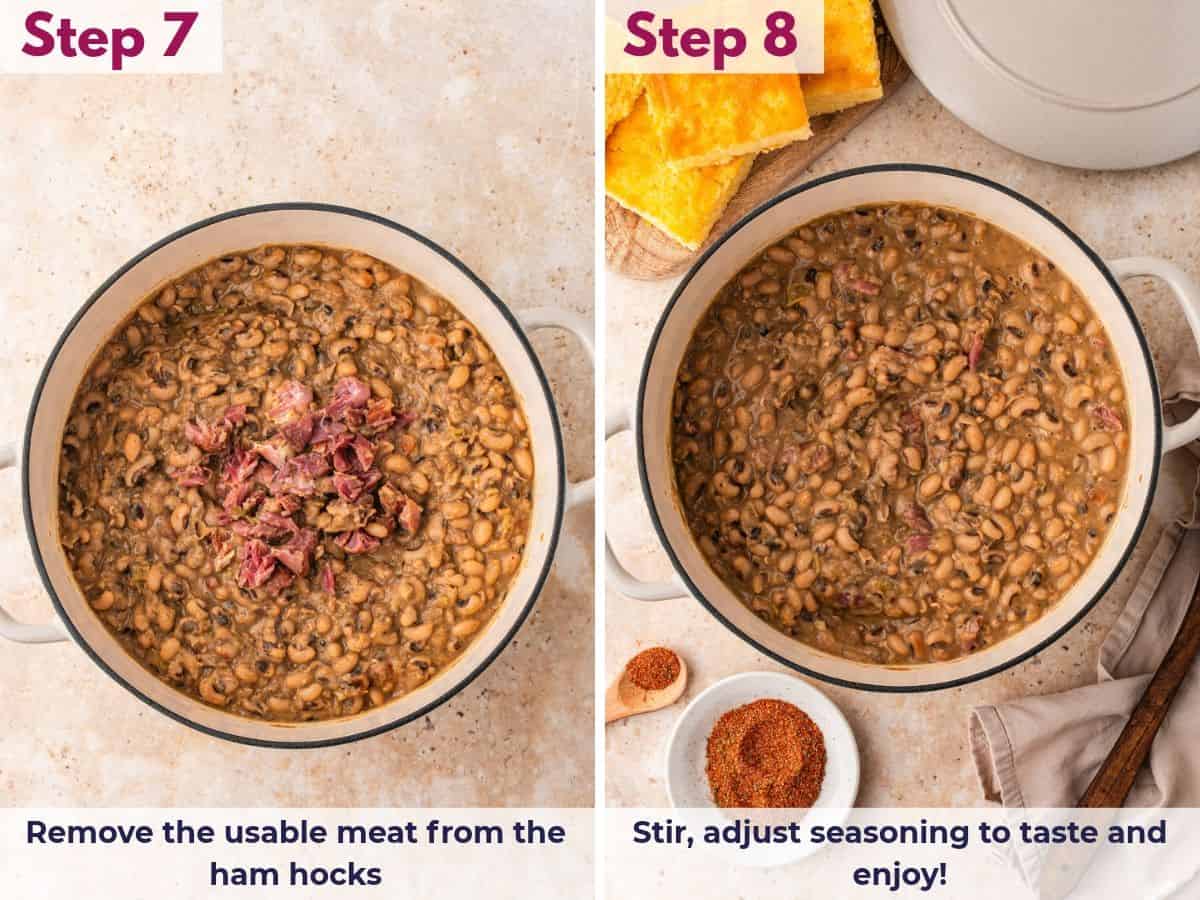
Uncover the pot toward the end of cooking and let the broth reduce until creamy. Remove the tender ham hocks, separate the meat from the bones, and return it to the peas. Remove the bay leaves and taste before adding more seasoning.
Tips for the Best Black-Eyed Peas
- Keep the simmer low: A gentle simmer helps the peas soften while keeping most of them intact. Avoid a vigorous boil.
- Watch for sticking near the end: As the broth thickens, the peas can begin sticking to the bottom of the pot. Stir gently and add a little hot water if needed.
- Season after the broth reduces: The smoked meat, chicken bouillon, and Cajun seasoning all contain salt. The flavor becomes more concentrated as the liquid cooks down, so taste before adding more seasoning.
- Don’t worry if there isn’t much meat: Smoked ham hocks can have very little usable meat, and that’s fine. They still give the peas plenty of flavor. Smoked turkey, especially turkey legs, gives you more meat to add back to the pot.
What to Serve with Black-Eyed Peas
These peas are filling enough to enjoy as a meal, especially with rice. They’re also a great side dish for a larger Southern dinner.
- Rice: Spoon the peas and their gravy over plain white rice or Garlic Butter Rice. The rice soaks up the rich gravy and makes a hearty meal.
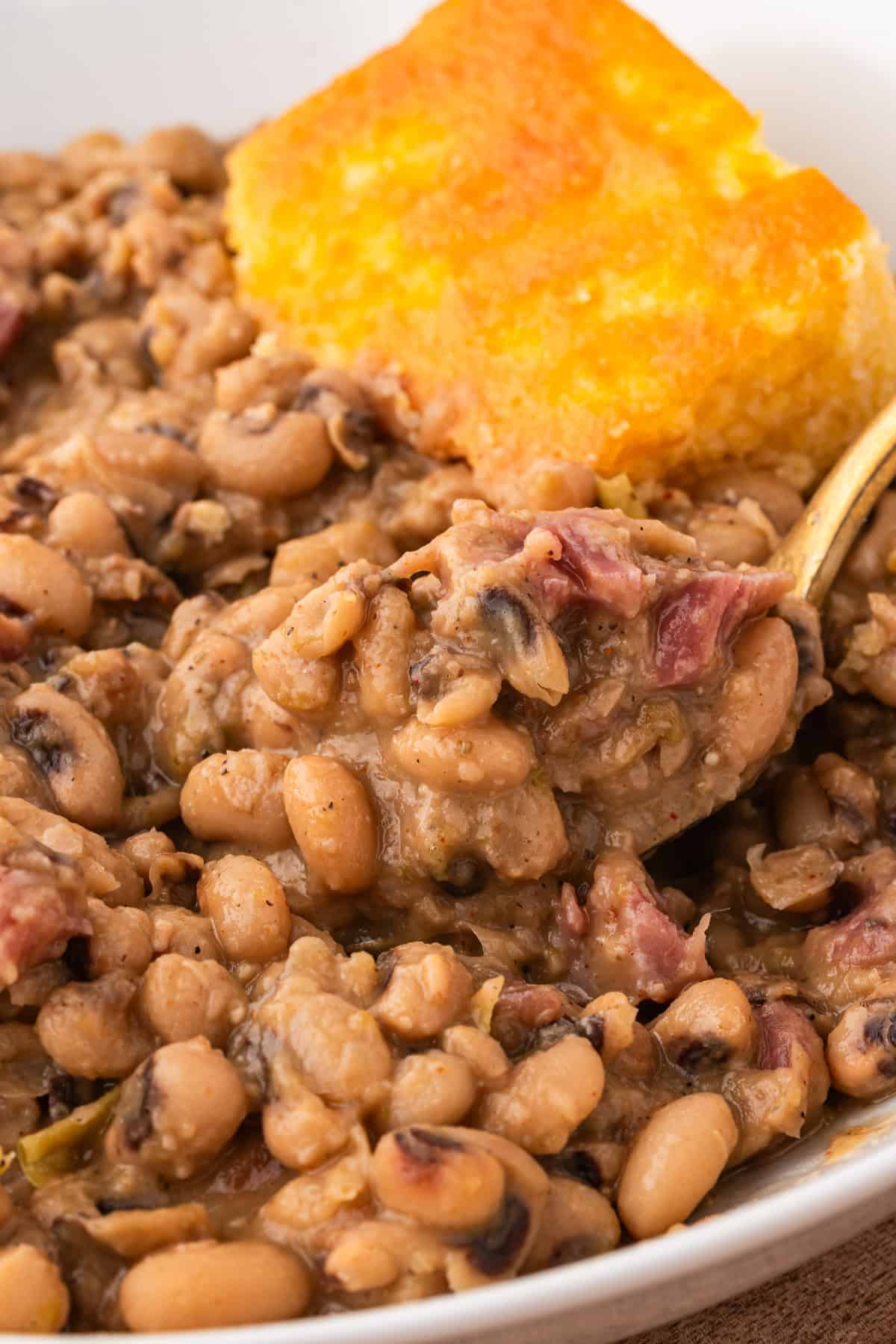
- Cornbread: Serve Homemade Cornbread or Cornbread Muffins on the side to soak up the extra gravy.
- Collard greens: My Southern Collard Greens with Bacon are a classic choice. For another cooking method, try Pressure Cooker Collard Greens or Crockpot Collard Greens.
- Cabbage: My Southern Cabbage Recipe is another delicious choice, especially for a New Year’s Day meal.
- Pork chops: Serve with Smothered Pork Chops when you want a larger comfort food dinner.
Storage and Reheating
- Refrigerator: Allow the peas to cool, then transfer them to an airtight container. Refrigerate for up to 3–4 days.
- Freezer: Freeze in airtight, freezer-safe containers for up to 3 months for the best quality.
- Reheating: Warm in a saucepan over medium-low heat, stirring occasionally until heated through. Add a splash of water if the gravy has thickened too much.
Frequently Asked Questions
No. Black-eyed peas can cook without soaking, but I prefer soaking them overnight for this recipe. They become tender and creamy during the gentle stovetop simmer while most retain their shape.
I recommend dried peas for this recipe. Canned black-eyed peas are already cooked and can become too soft during the long simmer with the smoked meat.
Black-Eyed Peas Recipe
Use DRDAVINAHS at checkout to save on some equipment & ingredients!
Recommended Equipment
- 6-quart or larger Dutch oven or stockpot with lid
Ingredients
- 1 lb Black-eyed Peas, dried
- 1–1½ lb Ham Hocks, smoked, or smoked turkey
- 1 tbsp Olive Oil, or avocado oil
- 1 cup yellow onion, diced
- 1 cup green bell pepper, diced
- 5 cloves Garlic, minced
- 7 cups Water, plus more as needed at the end to prevent sticking
- 1½ tbsp Chicken Better than Bouillon
- 2 bay leaves
- ½ tsp Black Pepper
- 2 tsp Cajun seasoning, homemade; plus up to 1 tsp more to taste, click for my recipe
Instructions
- Soak the peas: Sort through the dried black-eyed peas and remove any debris. Rinse thoroughly. Add them to a large bowl and cover with several inches of cold water. Soak overnight for 8–12 hours. Drain and rinse before cooking.
- Sauté the vegetables: Heat the olive oil in a large Dutch oven or stockpot over medium heat. Add the onion and bell pepper. Cook for 4–5 minutes until softened. Add the garlic and cook for another 30–60 seconds until fragrant.
- Add the remaining ingredients: Add the soaked black-eyed peas, smoked ham hocks, water, chicken bouillon, bay leaves, black pepper, and 2 teaspoons Cajun seasoning. Stir to combine.
- Bring to a boil: Increase the heat and bring the mixture to a boil. Reduce the heat to low, cover the pot, and maintain a gentle simmer.
- Simmer the peas: Cook covered for 1 hour. Stir gently, making sure nothing is sticking to the bottom of the pot. Continue cooking covered for another 30–45 minutes, or until the peas are becoming tender and the ham hocks are softening.
- Thicken the broth: Remove the lid and continue simmering gently for another 15–30 minutes, until the peas are tender and creamy and the broth has thickened into a gravy-like consistency. Stir occasionally along the bottom of the pot to prevent sticking, adding small amounts of hot water as needed.
- Shred the ham: Remove the ham hocks from the pot. Once cool enough to handle, pull the meat from the bones. Discard the bones, skin, and excess fat. Return the shredded meat to the peas.
- Season and serve: Remove the bay leaves. Taste and add up to 1 additional teaspoon Cajun seasoning, if desired. Stir gently and serve warm.
Save This Recipe for Later
Recipe Notes
- Keep the simmer low: A gentle simmer helps the peas become creamy while allowing most to retain their shape.
- Adjust the liquid as needed: If the peas begin sticking to the bottom of the pot, stir gently and add a little hot water.
- Season to taste: Smoked ham hocks, chicken bouillon, and Cajun seasoning all contribute salt. Taste the finished peas before adding more seasoning.
- Smoked meat alternatives: Smoked turkey legs or smoked turkey neck bones can be used instead of ham hocks. Remove the bones before serving.
Nutrition Details
The nutrition facts come from entering the recipe ingredients into a database of food ingredients. They may vary for any recipe based on the exact product used.









Leave a Reply