This post may contain affiliate links to products I use and highly recommend. You can read my full disclosure . As an Amazon Associate I earn from qualifying purchases.
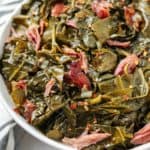
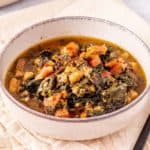
These Crockpot collard greens are tender, savory, and full of smoky flavor from ham hocks, onions, garlic, and a seasoned cooking broth. The slow cooker gives the greens plenty of time to soften while the smoked meat flavors the pot.
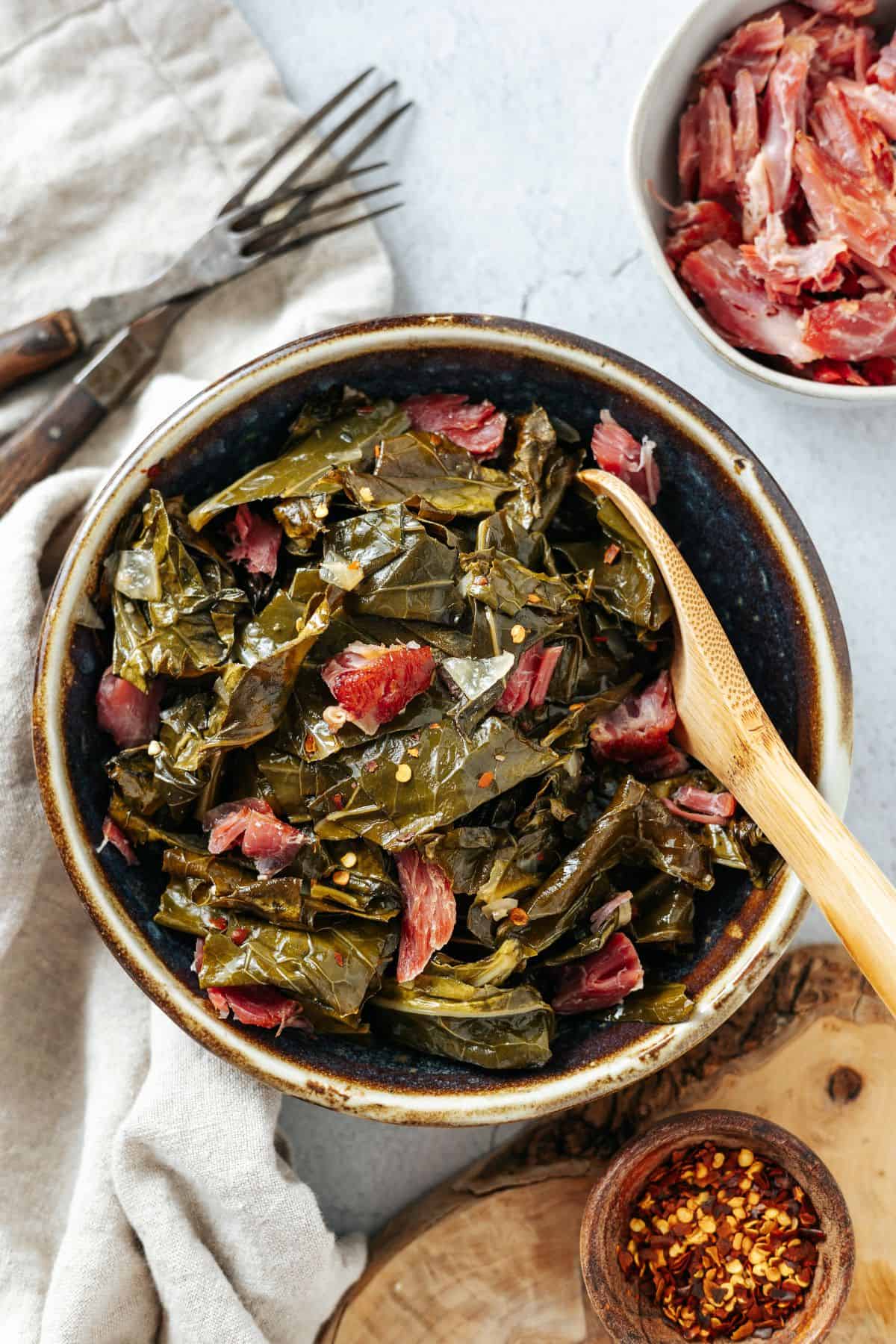
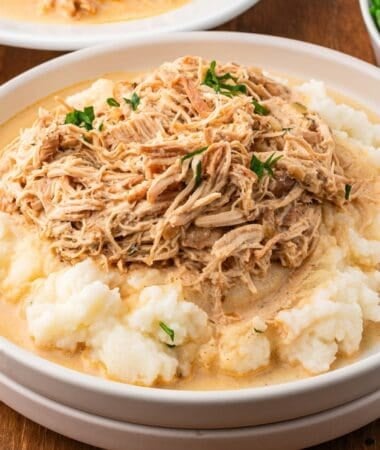
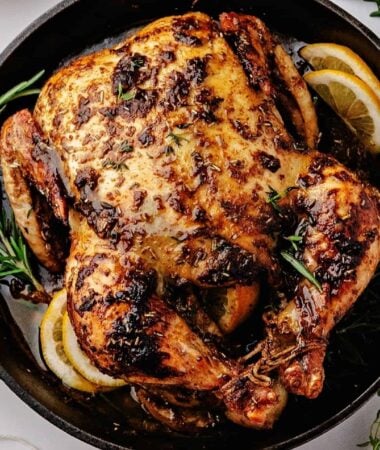
This is an easy Southern side dish when you want collard greens without having to watch a pot on the stove. I especially like making them this way for Thanksgiving and other holiday meals because once the greens are in the Crockpot, they can cook mostly hands-off while you focus on the rest of the meal, like Pressure Cooker Turkey Breast, Baked Macaroni and Cheese, and Browned Butter Mashed Potatoes.
Why Make Collard Greens in the Crockpot
- Mostly hands-off: Once everything is in the slow cooker, the greens can cook until tender without much attention.
- Plenty of smoky flavor: The ham hocks slowly season the greens and cooking liquid as they cook.
- Helpful for holiday meals: Using the Crockpot keeps your oven and stovetop free when you’re preparing several dishes at once.
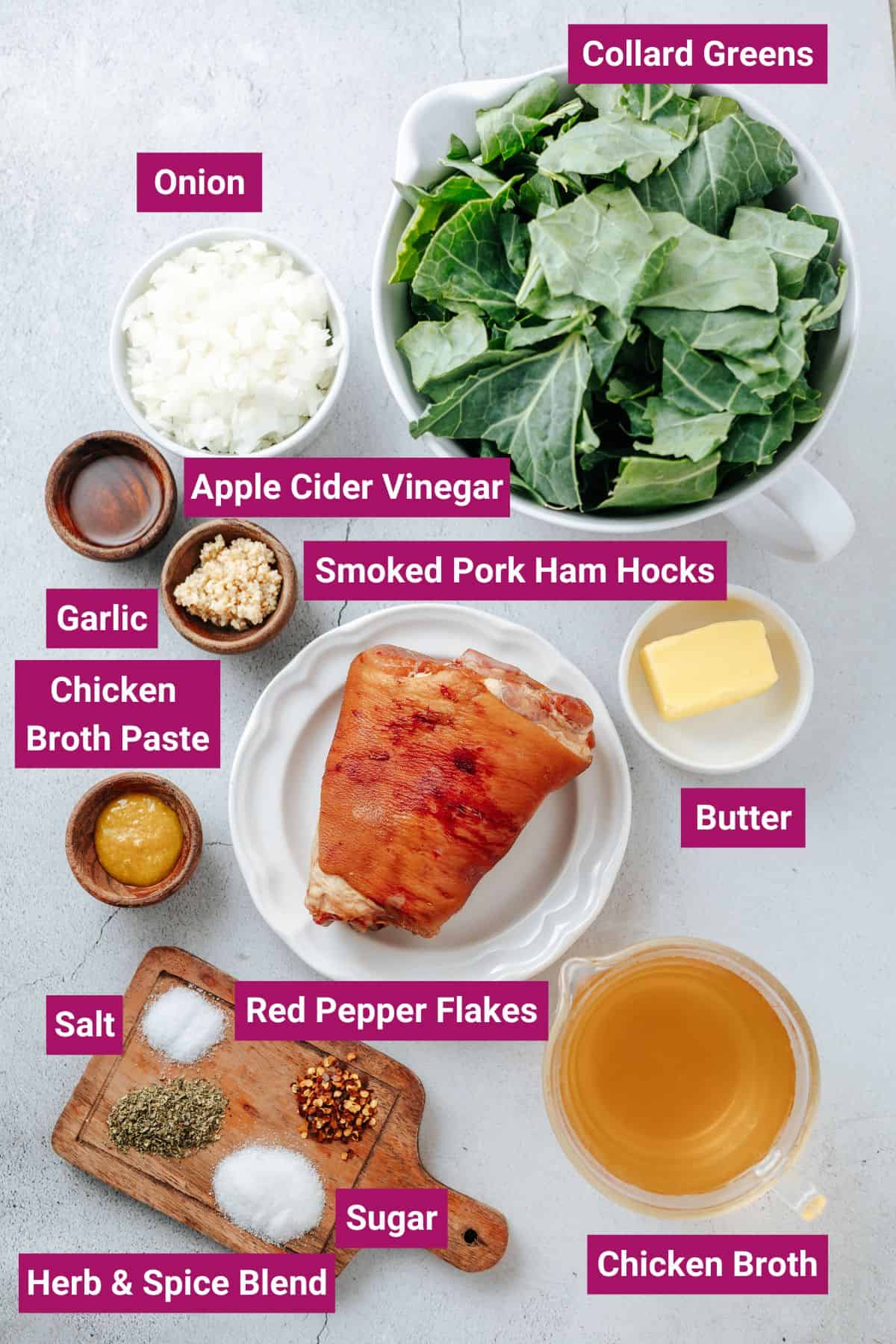
Ingredients Needed
The exact amounts are in the recipe card.
- Collard greens: I buy washed and chopped greens to save time. If you’re starting with whole bunches, wash them thoroughly and remove the thick stems before chopping.
- Onion: Diced onion adds savory flavor to the cooking broth.
- Smoked ham hocks: I use fully cooked smoked ham hocks for rich, smoky flavor. For another option, try my Collard Greens with Bacon or Collard Greens with Smoked Turkey.
- Garlic: Freshly minced or jarred garlic both work.
- Chicken broth: Low-sodium broth gives you more control over the final seasoning.
- Apple cider vinegar: Adds acidity that balances the rich smoked pork and earthy greens.
- Butter: I prefer unsalted so I can adjust the salt at the end.
- Red pepper flakes: Optional for a little heat.
- Herb and spice blend: Adds savory seasoning without needing several separate spices.
- Sweetener: A small amount balances the greens and vinegar without making the collards taste sweet.
- Chicken broth paste: Adds concentrated savory flavor.
- Salt: Add it at the end after the other salty ingredients have seasoned the pot.
How to Make Crockpot Collard Greens With Ham Hocks
Build the smoky cooking broth
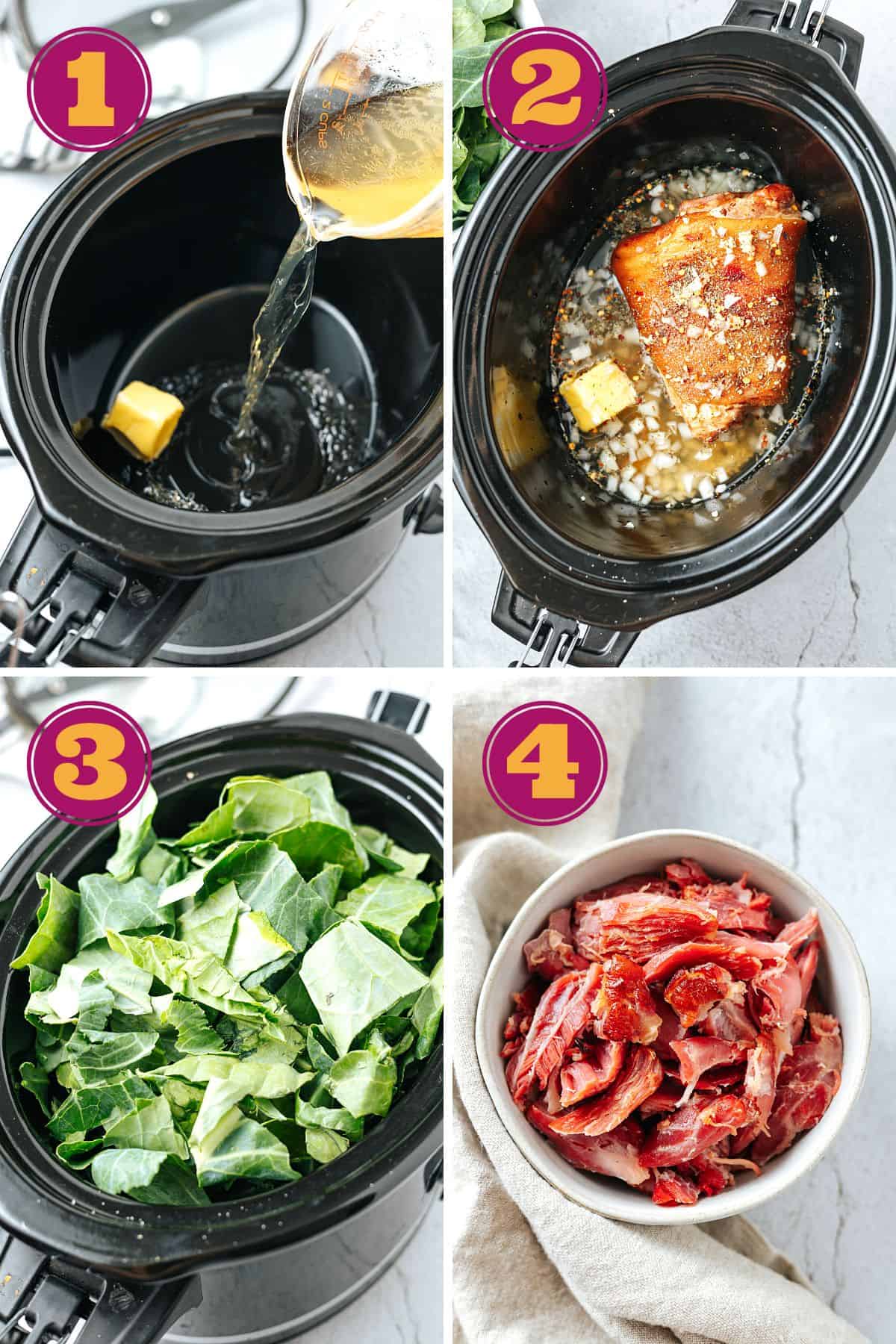
Add the onion, ham hocks, butter, chicken broth, apple cider vinegar, and garlic to the slow cooker. Starting with these ingredients on the bottom gives the ham hocks time to flavor the broth.
Pack in the collard greens
Add the collard greens on top. The slow cooker may look very full at first, but the greens shrink considerably as they cook. Cover and cook on high for about 4½ hours, or until tender. If you prefer to cook them on low, plan on about 7 hours.
SAVE THIS RECIPE
Check the greens for tenderness
The finished greens should be soft and tender without feeling tough or chewy. If they’re still firmer than you like, cover the Crockpot and continue cooking.
Shred the ham hocks and season
Remove the ham hocks and pull the meat from the bones. Discard the bones, skin, and large pieces of fat, then return the meat to the Crockpot. Stir in the red pepper flakes, herb seasoning, sweetener, and broth paste. Taste before adding salt since the smoked meat and broth ingredients already contribute plenty of seasoning.
Tips for the Best Slow Cooker Collard Greens
- Don’t worry if the Crockpot looks packed: Collard greens wilt significantly as they cook.
- Season at the end: Ham hocks, broth, and broth paste all contain salt, so taste the finished greens before adding more.
- Keep the cooking liquid: The flavorful broth, or potlikker, is one of the best parts of slow-cooked collard greens. Serve some with each portion instead of draining the greens.
How Long to Cook Collard Greens in a Crockpot
Cook the collard greens for about 4½ hours on high or about 7 hours on low. The exact time can vary slightly depending on your slow cooker and how tender you like your greens. They’re ready when the leaves are completely tender and no longer tough or chewy.
Make Ahead and Storage
- Make ahead: Cook the greens a day ahead, refrigerate, then reheat before serving. The flavors continue to come together as they sit.
- Store: Keep leftovers with some of their cooking liquid in an airtight container in the refrigerator for 3 to 4 days.
- Freeze: Freeze cooled collard greens and their cooking liquid for up to 3 months.
- Reheat: Warm on the stovetop or in the microwave until hot, keeping some cooking liquid with the greens so they stay moist.
Crockpot Collard Greens FAQs
You don’t need to soak packaged collard greens that are already thoroughly washed. If you’re using whole fresh collards, wash them well because dirt can hide between the leaves, then remove the thick stems and chop.
Apple cider vinegar adds acidity that balances the rich butter and smoked pork. It also helps balance the naturally earthy or slightly bitter flavor of collard greens.
Yes. Smoked turkey is another good option if you want that smoky flavor without pork. For a faster method, my Pressure Cooker Collard Greens use smoked turkey and cook in the pressure cooker instead. If you prefer bacon, try my Collard Greens with Bacon, which cooks on the stovetop.
Collard greens hold up well to long cooking, but they continue to soften. Start checking them around the recommended cooking time and stop once they’re as tender as you like.
Other sturdy leafy greens such as mustard or turnip greens can be slow cooked, although the flavor and cooking time may differ. Collard greens will give you the intended Southern-style result.
What to Serve With Crockpot Collard Greens
These slow cooker collard greens work especially well with Southern comfort food and holiday meals.
- For Thanksgiving or Christmas: Serve them alongside Pressure Cooker Turkey Breast, Sweet Potato Casserole with Marshmallowsand Baked Macaroni and Cheese.
- Add cornbread: Homemade Cornbread or Cornbread Dressing are perfect for soaking up some of the smoky cooking liquid.
- For a different collard greens method: My Collard Greens with Bacon cooks on the stovetop when you don’t want to use the slow cooker.
If you try this recipe, please stop back and leave it a star rating and/or a review in the comments. Stay connected & share photos of your creations with me & others on Instagram, Facebook, and Pinterest!
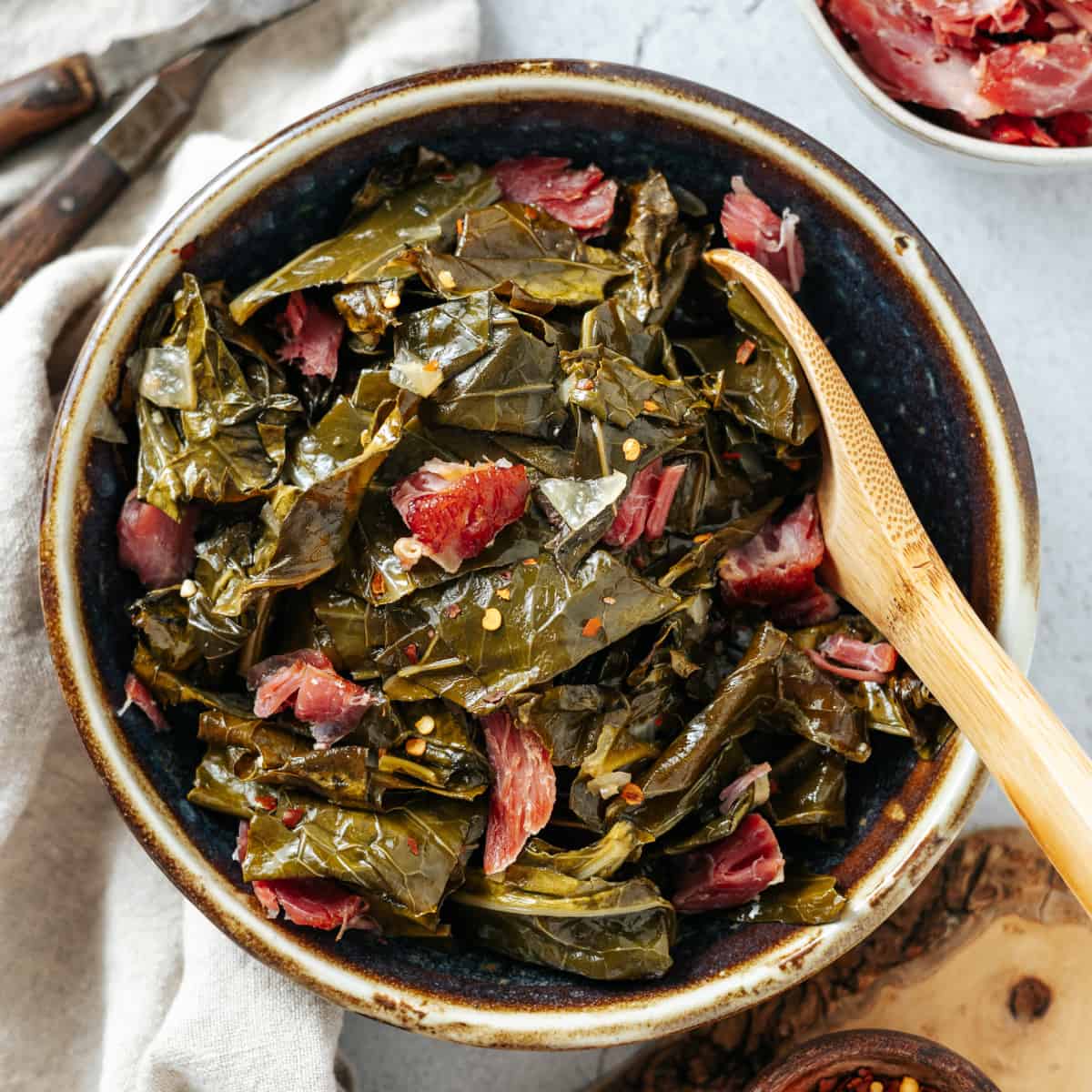
Crockpot Collard Greens with Ham Hocks
Use DRDAVINAHS at checkout to save on some equipment & ingredients!
Recommended Equipment
Ingredients
- 1 lb Collard Greens, chopped, about 12 cups, end stems removed. I buy these washed and chopped in a bag
- 1 cup Yellow Onion, diced
- 1.25 lb Ham Hocks, smoked
- 1/4 cup Butter, salted or unsalted
- 10 cloves Garlic, about 2 tbsp minced
- 2 cups Chicken Broth, low sodium
- 1 tbsp Apple Cider Vinegar
- 1/2 tsp Red Pepper Flakes
- 1 tsp 24 Herbs Sprinkle Seasoning (Salt-free)
- 1 tbsp Granular Sweetener, or another sweetener that you prefer
- 2 tsp Chicken Better than Bouillon
- 1/2 tsp Natural Ancient Sea Salt
Instructions
- Add onions, ham hocks, butter, broth, vinegar, and garlic cloves to the bottom of the slow cooker pot.
- Pack the collard greens on top of the other ingredients.
- Add the slow cooker lid.
- Slow cook on “high” for 4 hours and 30 minutes.
- Remove the ham hocks and pick off the meat. Discard the bones and skin.
- Add the remaining ingredients (red pepper flakes, herb seasoning, sweetener, broth paste, and salt to taste) to the collard greens. Stir.
- Add the meat to collard greens. Stir and serve.
SAVE THIS RECIPE
Recipe Notes
- Pre-washed and chopped collard greens save prep time. If using whole collards, wash well and remove the thick stems.
- Cook for about 4½ hours on high or 7 hours on low, until the greens are completely tender.
- Wait until the end to add salt since the ham hocks, broth, and broth paste already add seasoning.
- Smoked turkey can be used instead of ham hocks for another smoky option.
Nutrition Details
The nutrition facts come from entering the recipe ingredients into a database of food ingredients. They may vary for any recipe based on the exact product used.