This post may contain affiliate links to products I use and highly recommend. You can read my full disclosure . As an Amazon Associate I earn from qualifying purchases.
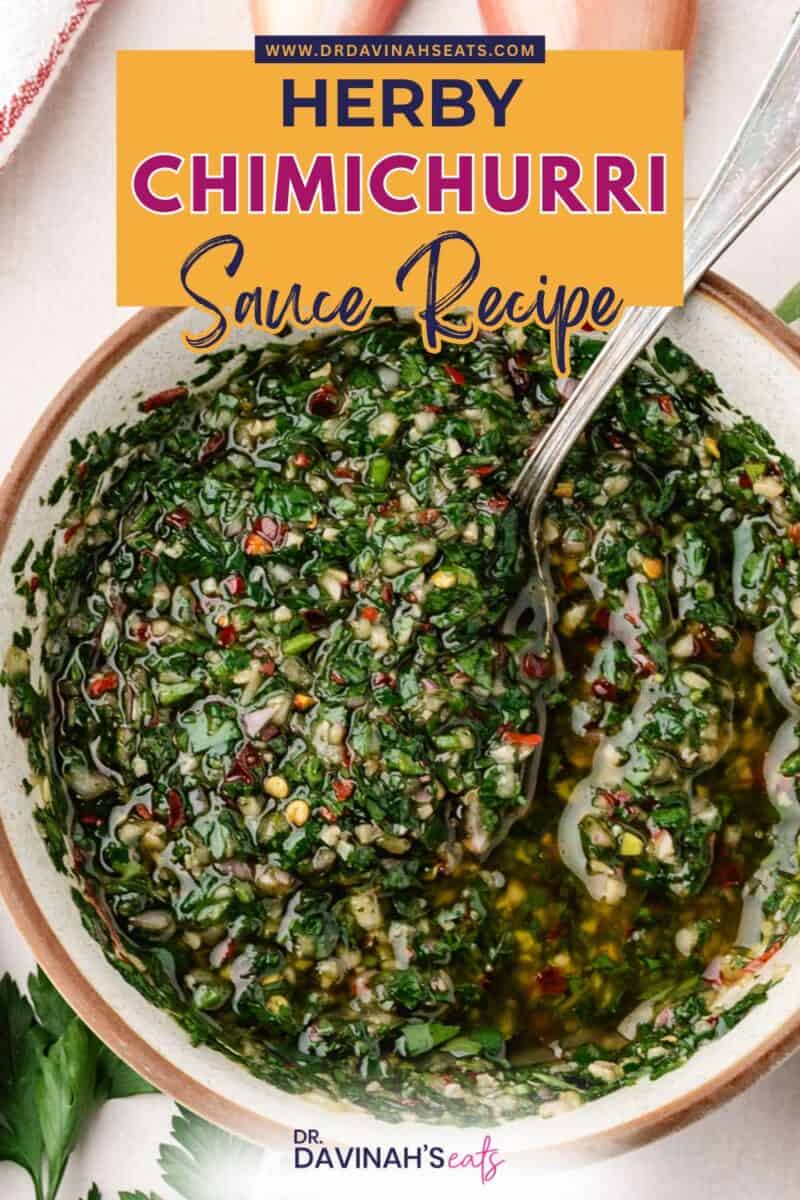
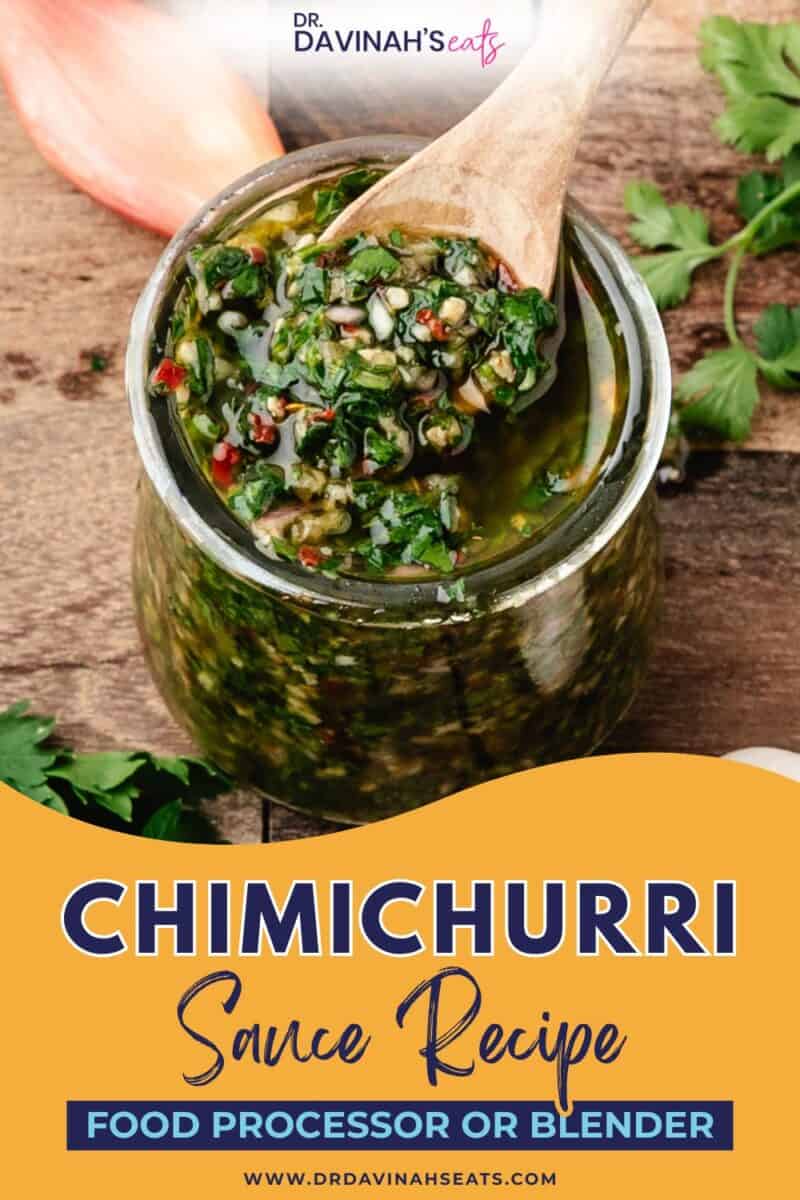
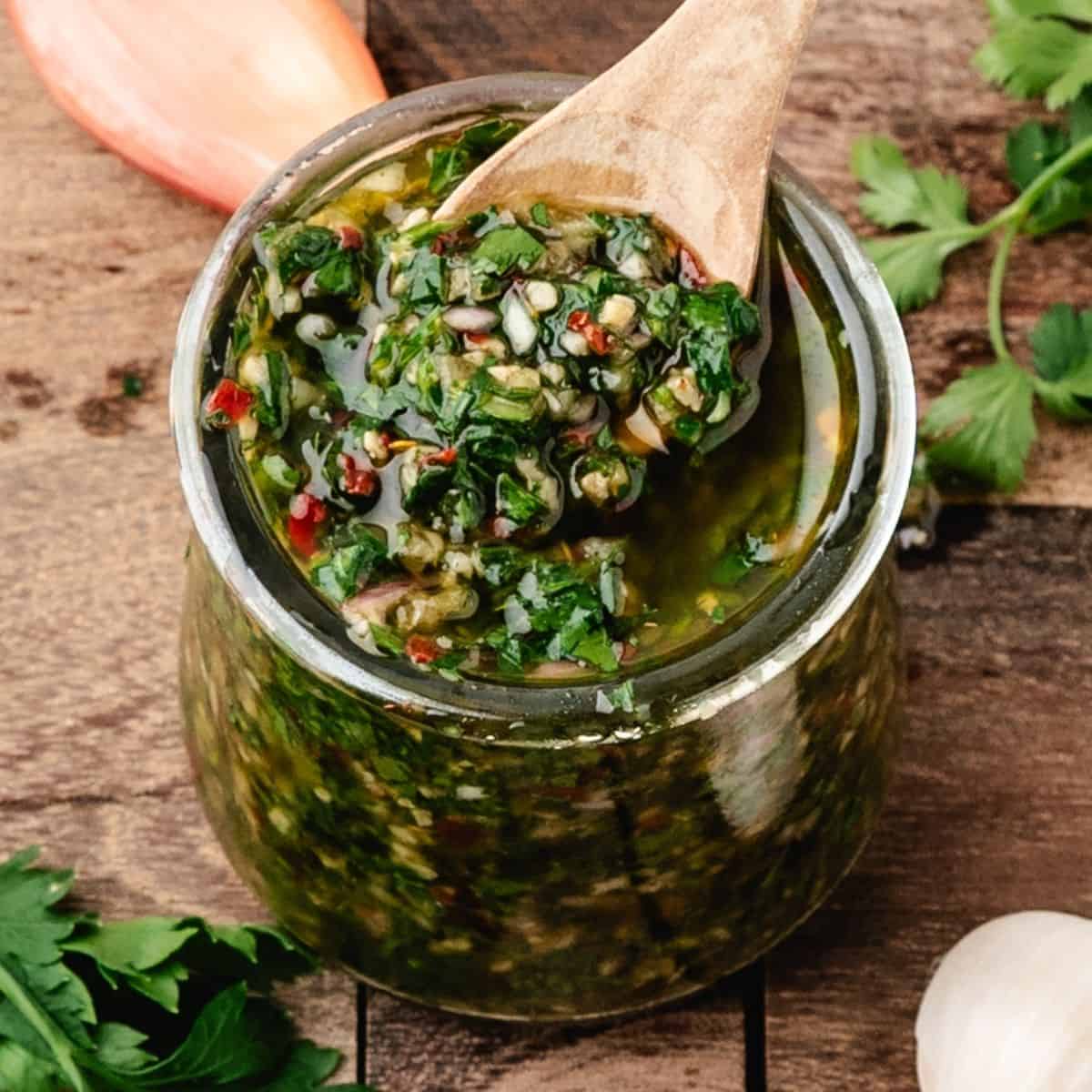
This chimichurri sauce recipe is bright, garlicky, and packed with fresh herb flavor from parsley, cilantro, and shallots. It comes together in minutes and adds a fresh, bold finish to steak, chicken, seafood, roasted vegetables, and more.
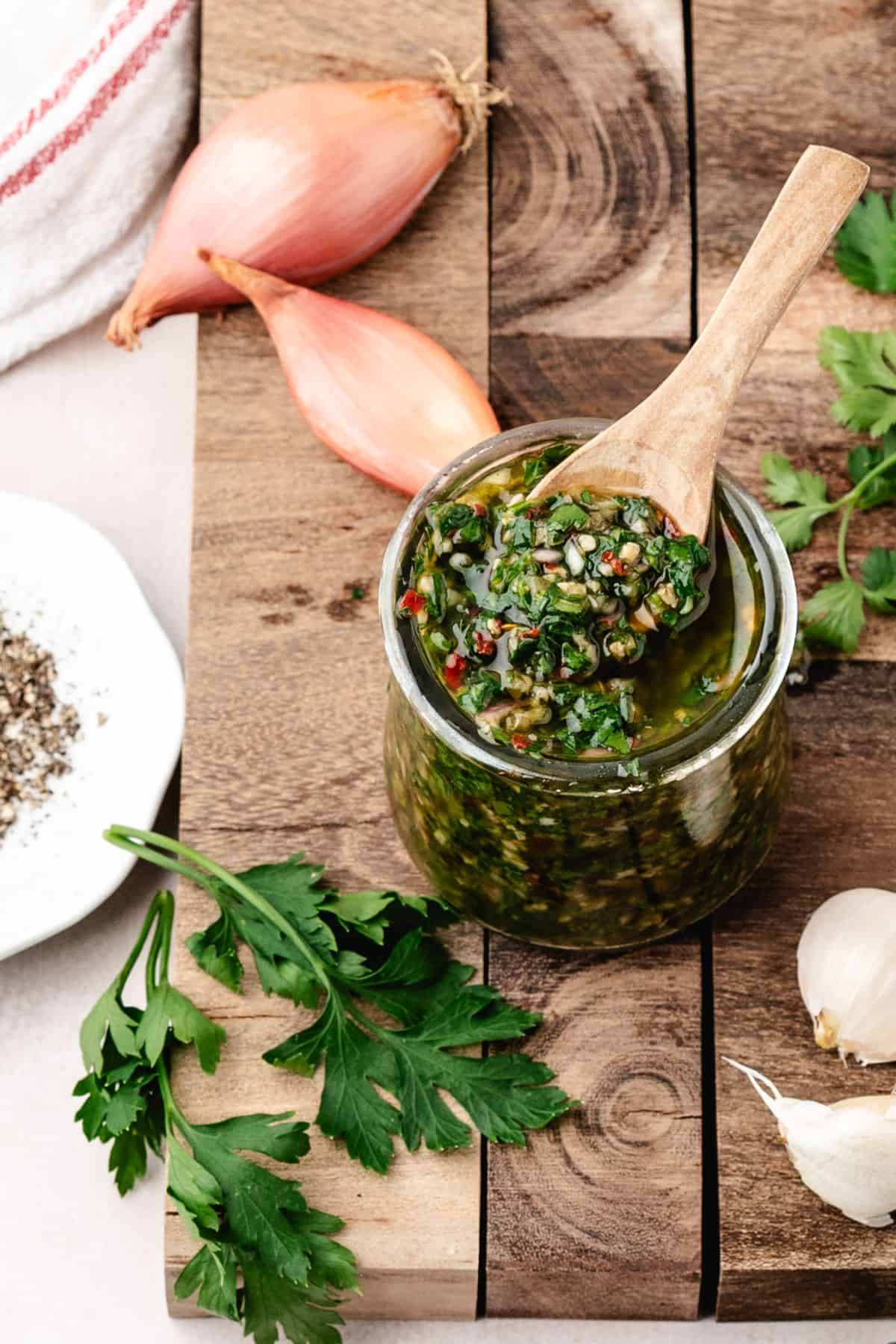
Sometimes all a meal needs is one spoonful of something bright and herby to wake everything up, and this sauce does exactly that. This version uses both parsley and cilantro for a fresh twist that works especially well with Air Fryer Steak, but it’s just as good spooned over chicken, salmon, shrimp, potatoes, or fries.
A Fresh Sauce That Makes Dinner Taste Better
Here’s why you’ll love this parsley cilantro chimichurri sauce:
- Bright, bold flavor: Parsley, cilantro, garlic, shallot, vinegar, and olive oil come together for a sauce that tastes fresh, savory, and balanced.
- Easy to make: Everything comes together in a food processor, so it’s a simple recipe to pull together when dinner needs a little something extra.
- Great with more than steak: Chimichurri is a natural fit for beef, but it also adds big flavor to chicken, seafood, vegetables, and potatoes.
- A little different from classic versions: Using both parsley and cilantro gives this chimichurri a fresh twist while still keeping the bold, herby flavor people expect.
What Is Chimichurri Sauce?
Chimichurri is an uncooked herb sauce that’s often served with grilled meats, especially steak. It’s known for its fresh flavor from herbs, garlic, olive oil, and vinegar.
This version uses both parsley and cilantro, which gives it a slightly different flavor than parsley-only versions. It’s still tangy, garlicky, and herb-forward, but the cilantro adds another layer of freshness that works really well with beef, chicken, and seafood.
Ingredients You’ll Need
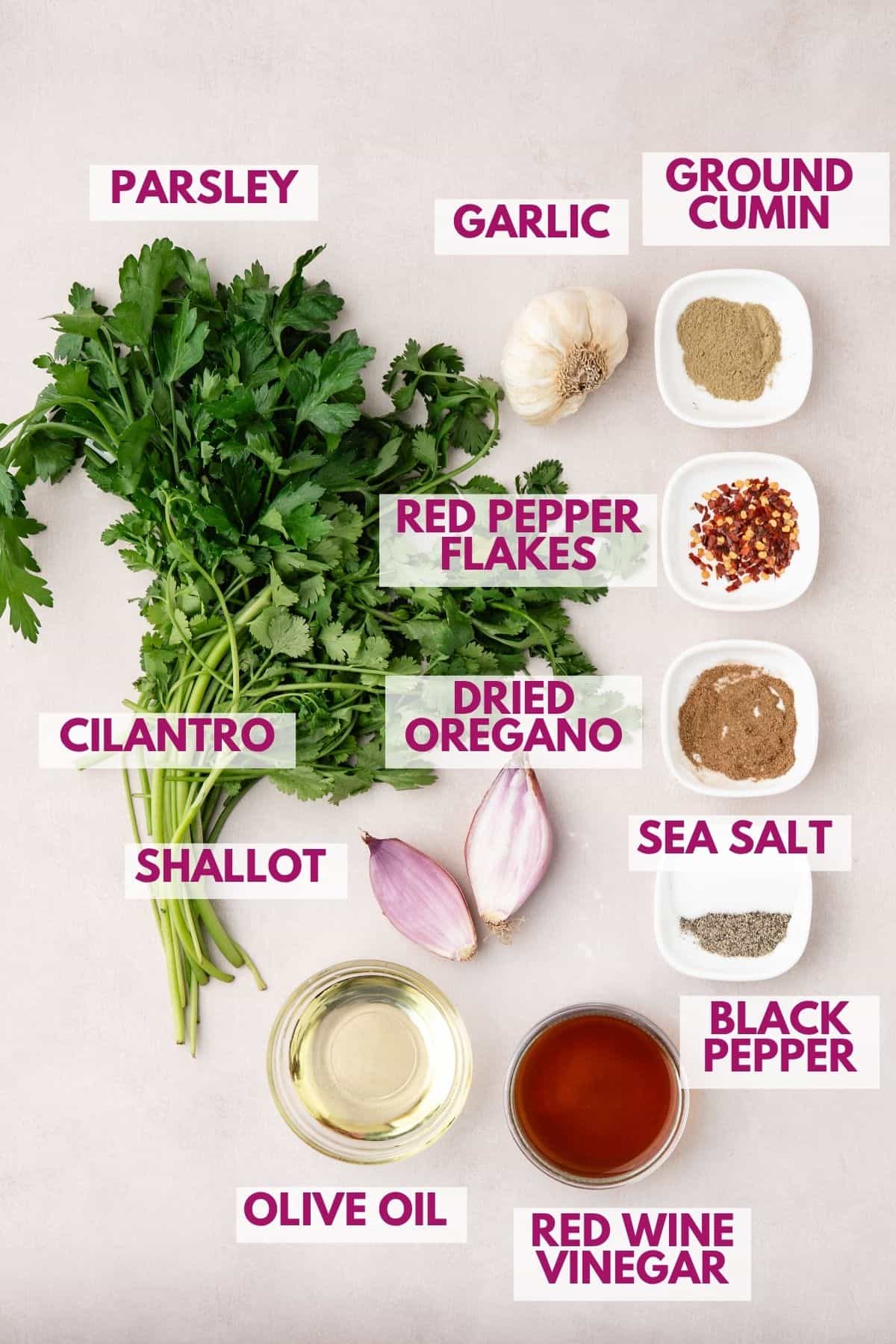
This chimichurri sauce recipe uses fresh herbs, pantry spices, and a few simple ingredients to build bold flavor. Grab the exact measurements in the recipe card below.
- Parsley: Gives the sauce its fresh, classic chimichurri flavor.
- Cilantro: Adds another layer of bright herb flavor and makes this version a little more unique.
- Garlic: Brings the sharp, savory bite chimichurri is known for.
- Shallot: Adds mild onion flavor without overpowering the sauce.
- Dried oregano: Gives the sauce earthy depth.
- Olive oil: Brings everything together and gives the sauce its rich, spoonable texture.
- Red wine vinegar: Adds the tangy flavor that makes chimichurri taste fresh and lively.
- Sea salt: Helps balance and bring out the other flavors.
- Ground cumin: Adds a subtle warm note that pairs especially well with beef.
- Black pepper: Adds a little extra savory spice.
- Red pepper flakes: Gives the sauce a gentle kick.
How to Make Chimichurri Sauce
Chop the fresh ingredients first
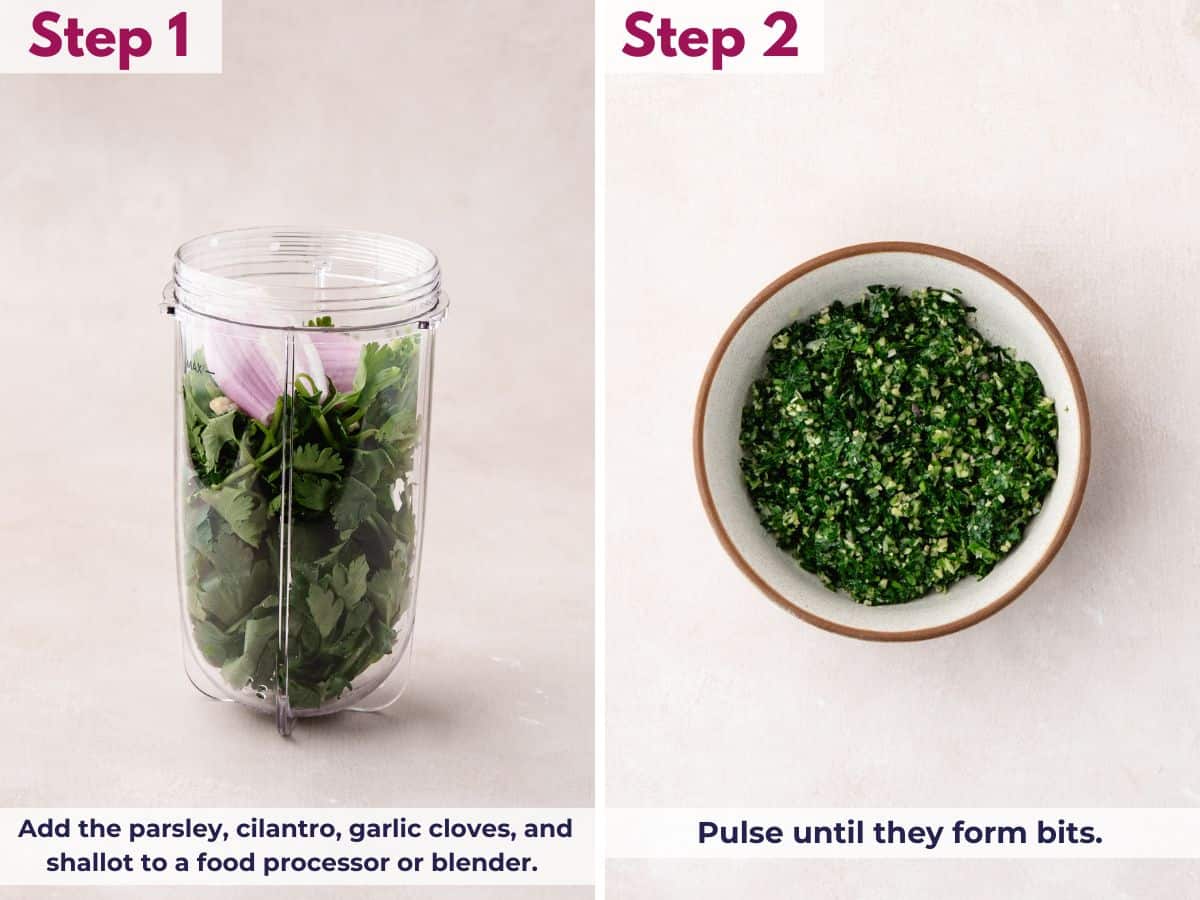
Add the parsley, cilantro, garlic, and shallot to a food processor or blender. Pulse until everything is chopped to your desired texture. The herbs should look finely chopped, not pureed.
Add the remaining ingredients
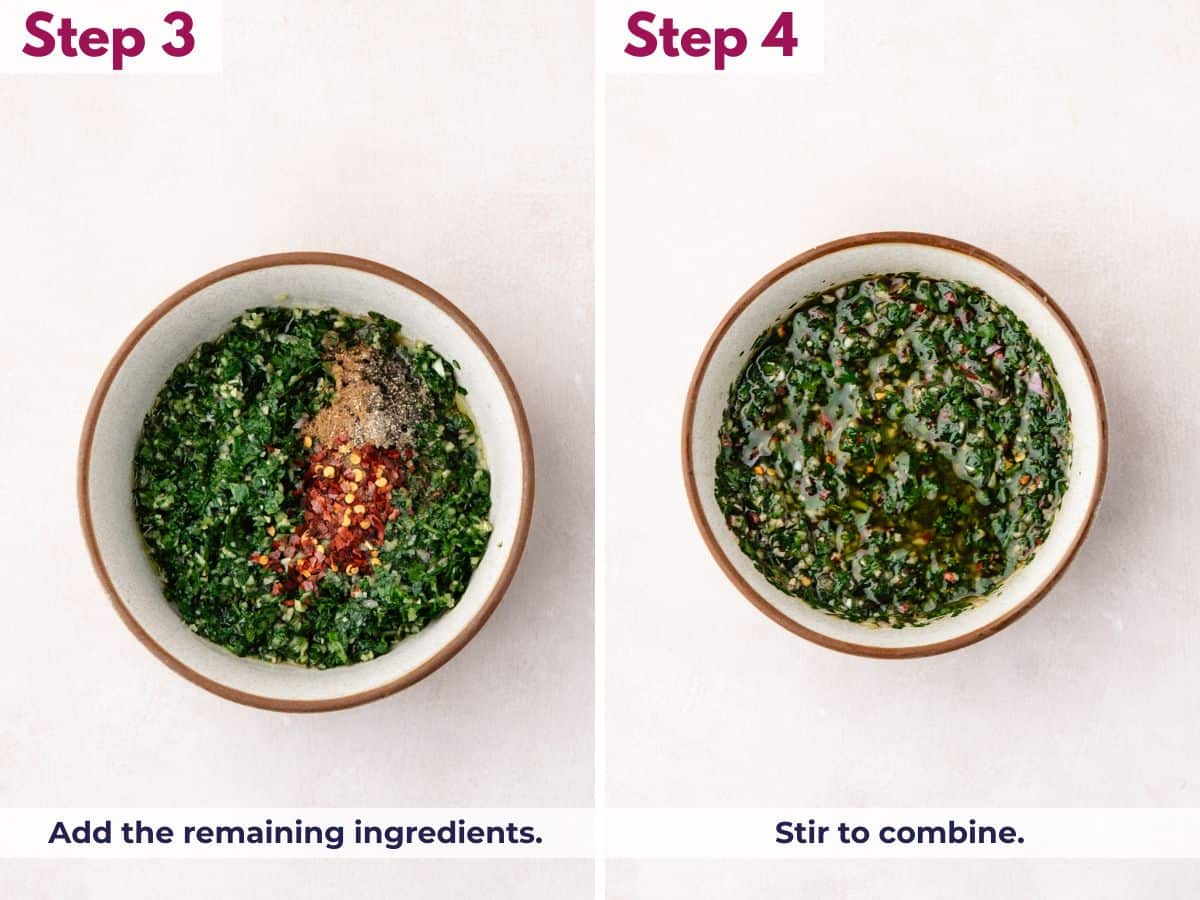
Add the dried oregano, red wine vinegar, sea salt, cumin, black pepper, and red pepper flakes. Pulse a few times to combine. Once the herbs and shallot are the size you want, add the olive oil last and pulse just a few more times to bring everything together. This helps keep the sauce loose and textured instead of blending it too much.
SAVE THIS RECIPE
Let the flavors come together
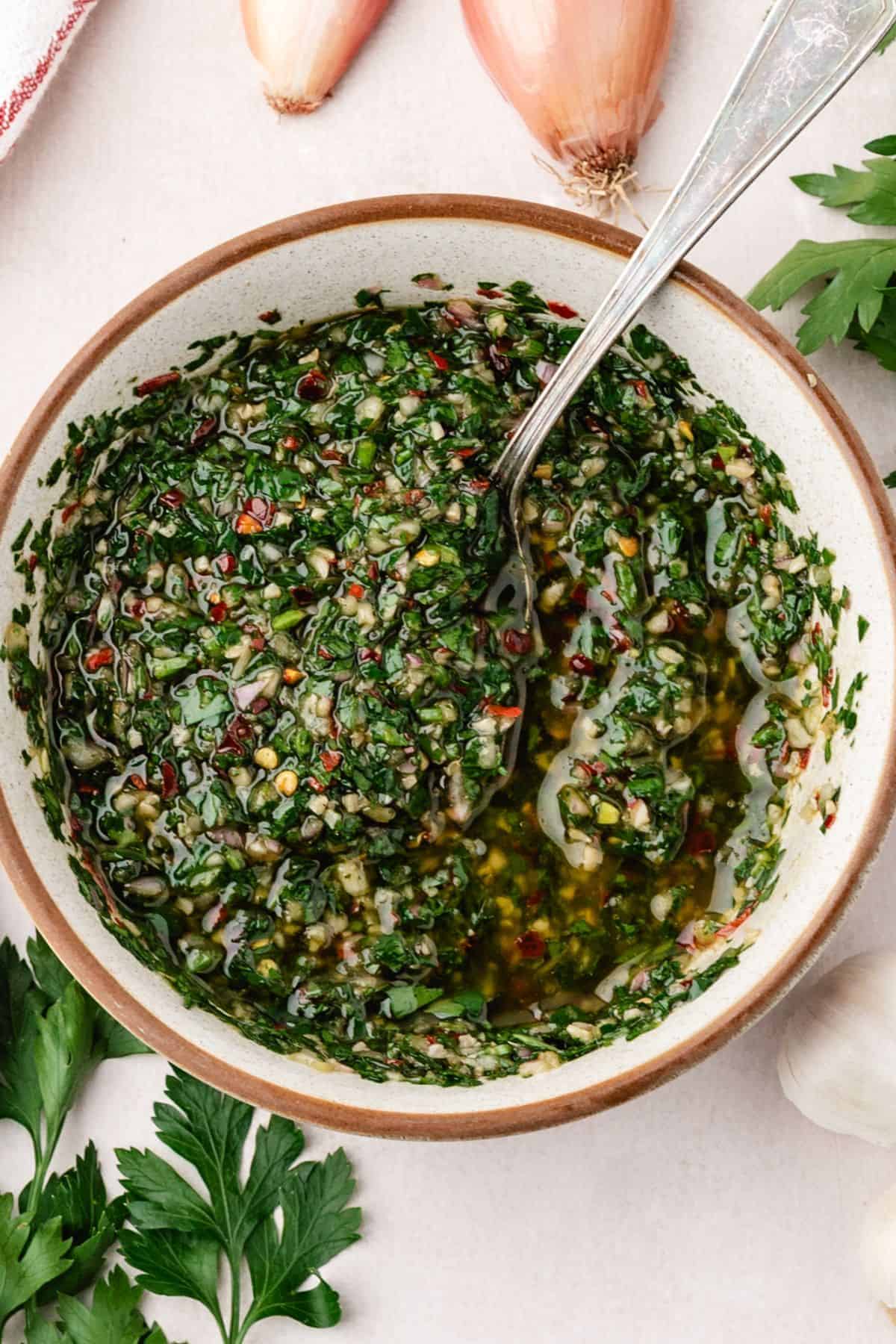
Spoon the sauce into a glass jar or airtight container. You can serve it right away, but it tastes even better after it sits for about 30 minutes so the flavors have time to blend.
What Chimichurri Sauce Tastes Like
Chimichurri sauce tastes fresh, tangy, garlicky, and savory with a little heat. The vinegar keeps it bright, while the olive oil smooths everything out. In this version, the parsley and cilantro give it a bold herb flavor that feels especially good with grilled or seared proteins.
Ways to Use Chimichurri Sauce
One of the best things about this chimichurri sauce recipe is how many different ways you can use it. While it’s most often paired with steak, it works with so much more.
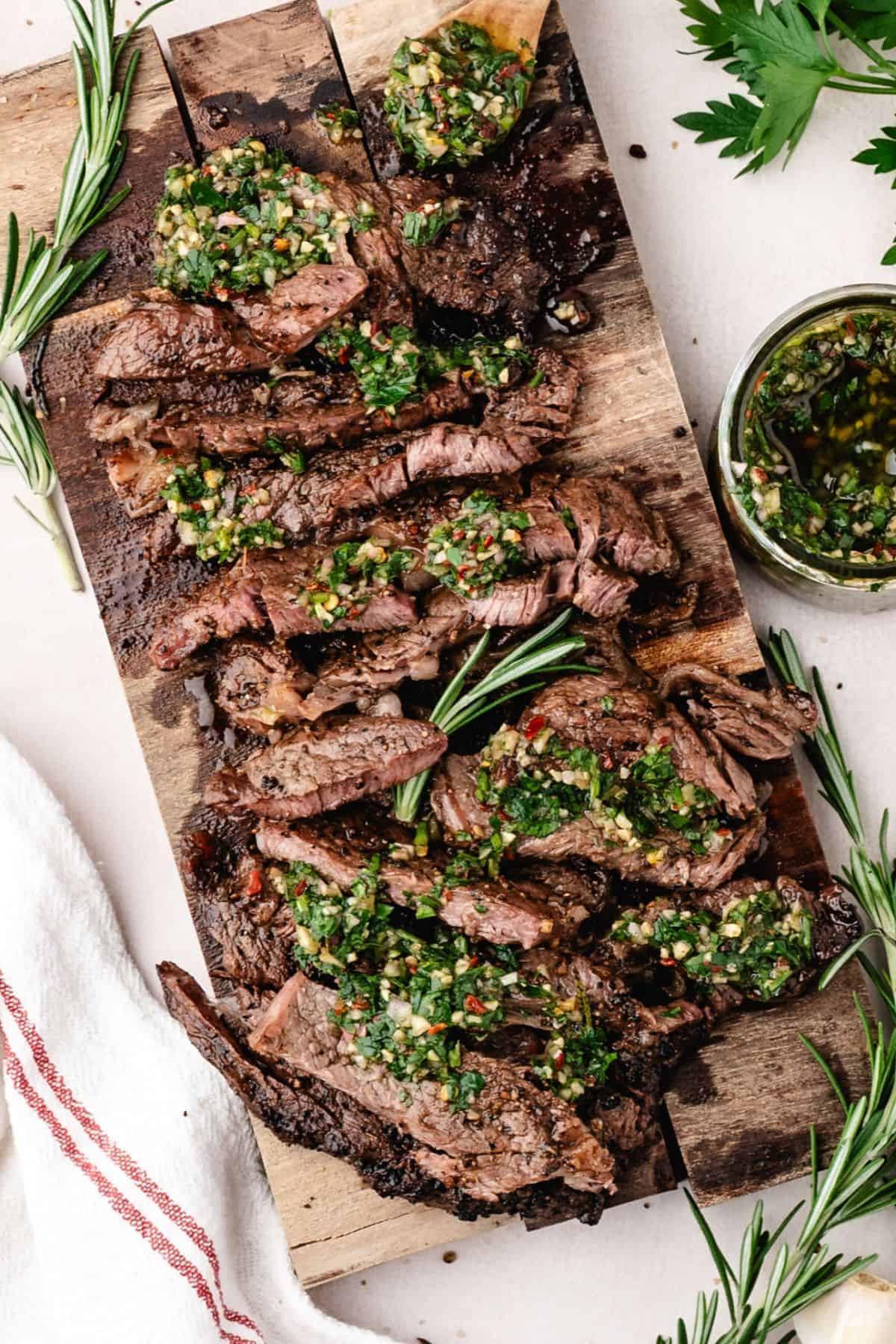
Spoon it over sliced steak, grilled chicken, shrimp, salmon, or pork. Add it to grain bowls, roasted potatoes, fries, or simple vegetables. It also works well as a quick finishing sauce for meals that need a little extra freshness right before serving.
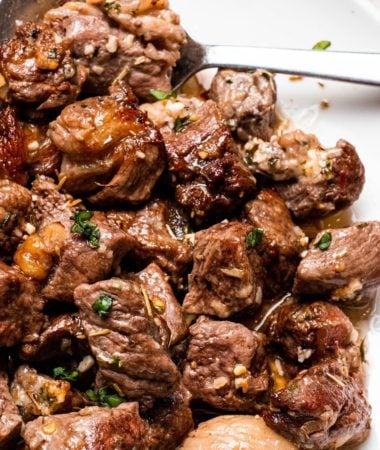
For steak dinners, try it with Steak Bites, Steak Bites and Potatoes, or a marinated steak dinner. It also pairs really well with seafood recipes like Blackened Salmon, Air Fryer Tilapia, Air Fryer Lobster Tails, or simple Seared Shrimp when you want something fresh to balance a rich or smoky main dish.
What to Serve with Chimichurri Sauce
If you’re wondering how to use chimichurri sauce, start with proteins and sides that benefit from a fresh, bold finish.
- Steak: Spoon it over Air Fryer Steak, Boneless New York Strip Steak, Steak Bites, or Steak Bites and Potatoes for a bright contrast to rich beef.
- Chicken: Use it to wake up grilled or air fried chicken thighs, chicken breasts, or skewers. It would fit especially well with something like Air Fryer Chicken Thighs, Seared Chicken Breasts, or Air Fryer Chicken Breasts.
- Seafood: It pairs especially well with salmon, shrimp, or scallops. Try it with Blackened Salmon, Easy Pan-Seared Halibut, Pan Seared Shrimp (Cast Iron Shrimp), or Seared Scallops.
- Potatoes and fries: Try it with roasted potatoes, crispy fries, or even yuca fries when you want something fresh and herby on the side.
- Vegetables: It adds great flavor to simple vegetable sides like Air Fryer Asparagus or sautéed green beans.
Recipe Tips
- Pulse, don’t puree: Chimichurri should have texture. You want the herbs finely chopped, not blended into a smooth sauce.
- Add the olive oil last: Pulse the herbs and shallot to the texture you want first, then add the oil and pulse briefly so the sauce stays loose and spoonable.
- Let it sit before serving: Even 30 minutes helps the garlic, vinegar, and herbs come together.
- Use fresh herbs: Since herbs are the base of the sauce, fresh parsley and cilantro make the biggest difference here.
- Adjust the heat to taste: Add a little less red pepper flakes for a milder sauce or a little more if you want extra kick.
- Store it in a jar: A glass jar or airtight container makes it easy to store and spoon over meals throughout the week.
- Let it come to room temperature after storing: The olive oil will firm up in the fridge, so let the chimichurri sit out for a bit before serving the next day. Once it warms up, stir it and the sauce will loosen back up.
Chimichurri Sauce FAQs
Chimichurri sauce is usually made with fresh herbs, garlic, oil, vinegar, and seasonings. This version uses parsley, cilantro, garlic, shallot, olive oil, red wine vinegar, oregano, cumin, salt, pepper, and red pepper flakes.
Yes. While some versions use mostly parsley, using both parsley and cilantro gives the sauce a fresh, bold flavor that works well with steak, chicken, and seafood. That’s why I prefer the combo in this recipe.
Chimichurri usually has a little heat, but it is not typically very spicy. The red pepper flakes in this recipe add a gentle kick.
Stored in an airtight container in the refrigerator, chimichurri sauce is best enjoyed within a few days while the herbs still taste fresh.
The olive oil will firm up when it gets cold, so the sauce will thicken in the fridge. Let it sit at room temperature for a bit, then stir before serving and it will loosen back up again.
Chimichurri Sauce Recipe
Use DRDAVINAHS at checkout to save on some equipment & ingredients!
Recommended Equipment
Ingredients
- 1 cup parsley, about ½ bunch
- ½ cup Cilantro, about ¼ bunch
- 5 cloves Garlic
- 1 Shallot, cut in half or quarters for easier chopping
- 2 tsp dried oregano
- ⅔ cup Olive Oil
- ¼ cup Red Wine Vinegar
- 1 tsp Natural Ancient Sea Salt
- ¼ tsp Ground Cumin
- ¼ teaspoon Black Pepper
- ½ teaspoon Red Pepper Flakes, optional
Instructions
- Add the parsley, cilantro, garlic cloves, and shallot to a food processor or blender.
- Pulse until they form bits. You can leave the mixture in the blender cup or transfer the mixture to a small bowl or glass jar
- Add the remaining ingredients to the blender cup, bowl or jar.
- Stir to combine. You want to avoid high speed blending after adding the oil since the sauce will emulsify (or turn into a smooth sauce).
- Store in a glass jar or another airtight container to serve
SAVE THIS RECIPE
Recipe Notes
- Pulse, don’t puree: Chimichurri should have texture. You want the herbs finely chopped, not blended into a smooth sauce.
- Add the olive oil last: Pulse the herbs and shallot to the texture you want first, then add the oil and pulse briefly so the sauce stays loose and spoonable.
- Let it sit before serving: Even 30 minutes helps the garlic, vinegar, and herbs come together.
- Let it come to room temperature: The olive oil will firm up in the fridge, so let the chimichurri sit out for a bit before serving the next day. Once it warms up, stir it and the sauce will loosen back up.
- Use fresh herbs: Since herbs are the base of the sauce, fresh parsley and cilantro make the biggest difference here.
- Adjust the heat to taste: Add a little less red pepper flakes for a milder sauce or a little more if you want extra kick.
Nutrition Details
The nutrition facts come from entering the recipe ingredients into a database of food ingredients. They may vary for any recipe based on the exact product used.












Leave a Reply