
This post may contain affiliate links to products I use and highly recommend. You can read my full disclosure . As an Amazon Associate I earn from qualifying purchases.
Pan seared steak is a simple main dish with a browned crust, juicy center, and a buttery rosemary finish. I use this recipe primarily with ribeye or New York strip steak, but your favorite steak works too. Here, I share my top tips to make a steakhouse-style main dish at home.
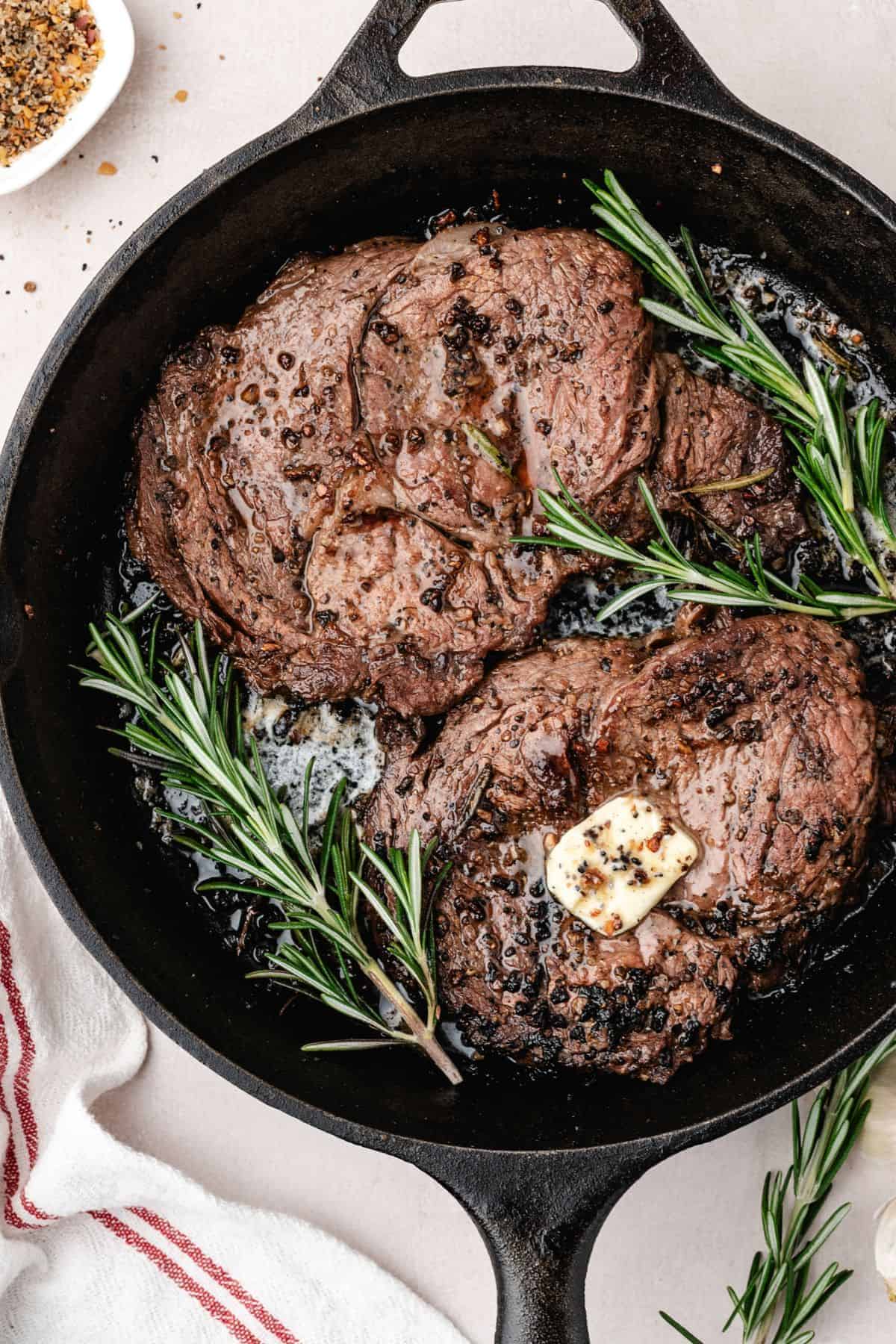
This cast iron pan seared steak is great as a main dish with sides like Baked Asparagus, but it also works well as part of other meals. Add it to steak pasta when you’re craving pasta tossed in a creamy Alfredo sauce with perfectly cooked steak on top. Or, make it as part of surf and turf with my shrimp scampi dripped over it.
Why You’ll Love This Recipe
- Steakhouse-style flavor at home: You get a browned crust, juicy center, and buttery rosemary finish without a complicated ingredient list.
- Doneness is easier to control: Before you start, choose your preferred temperature from the guide. That way, you’ll know whether the steak can finish on the stovetop or needs a quick oven finish after searing.
- Use the steak you enjoy most: I usually make this with ribeye or New York strip, but filet mignon, sirloin, or another favorite steak can work too.
- Plenty of ways to serve it: Keep it simple as the main dish with sides, or slice it for steak pasta, surf and turf, tacos, quesadillas, steak salad, or steak bowls.
Ingredients You’ll Need
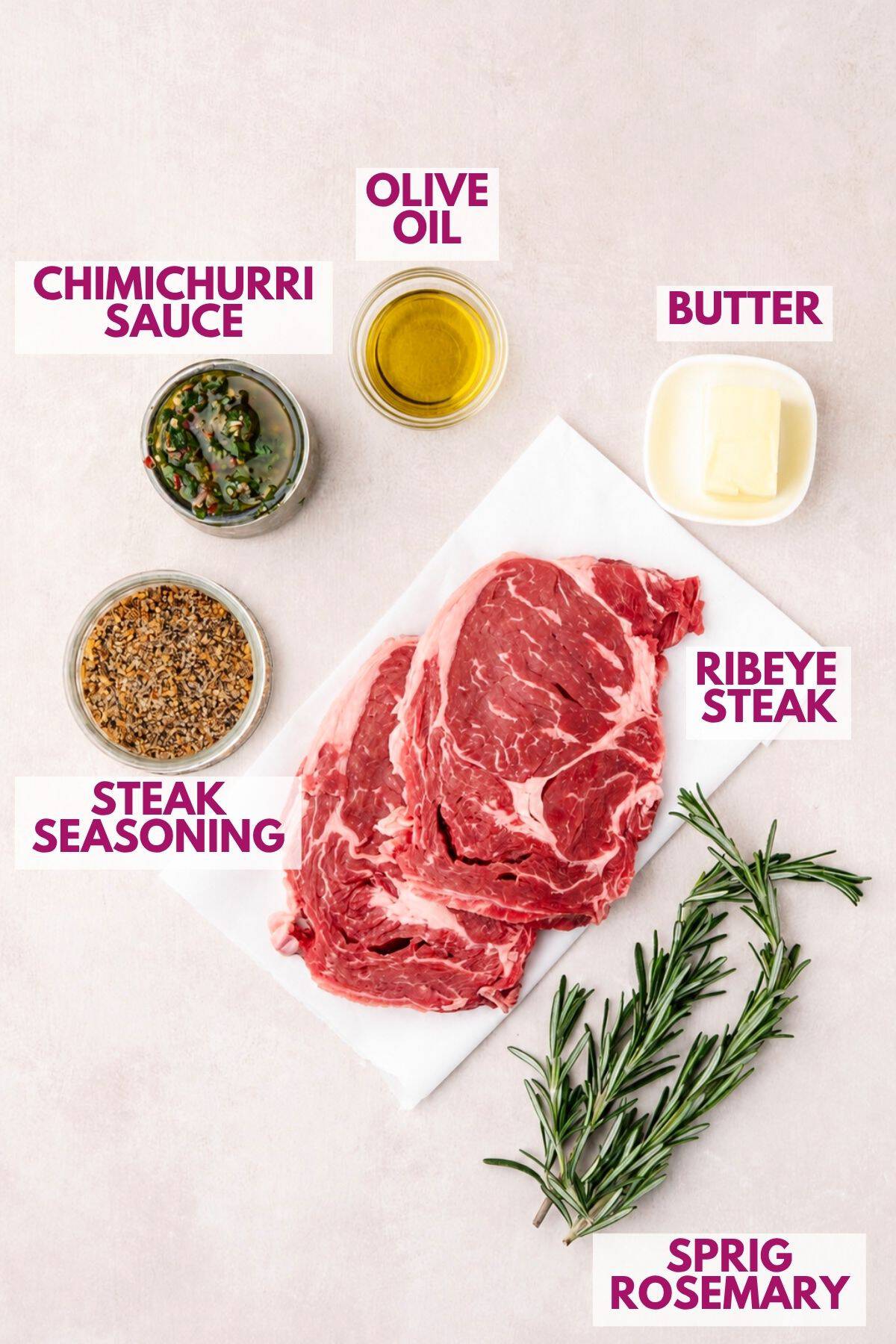
- Ribeye steak or New York strip steak: Choose a boneless steak that is about 1 to 1½ inches thick. Thinner steaks cook quickly and are easier to overcook. Thicker steaks give you more room to build a crust.
- Olive oil or avocado oil: Use oil for the sear because it handles the hot skillet better than butter.
- Steak seasoning: I use my homemade steak seasoning. Season both sides and the edges so every bite has flavor.
- Salted butter: Add this near the end for a rich finish.
- Fresh rosemary: Optional, but it flavors the butter as it melts. Thyme also works.
- Chimichurri sauce: Optional for serving. It adds a fresh, garlicky finish that balances the rich steak.
Best Steak Cuts for Pan Searing
- Ribeye is the easiest choice when you want a juicy steak with rich flavor. The extra marbling gives you more forgiveness if the steak cooks a little longer than planned.
- New York strip is a little leaner than ribeye, but it still gives you a good crust and juicy center. Since it has less marbling, watch the temperature closely so the middle does not overcook.
- Filet mignon works well when you want a very tender steak. Since it is leaner, I like finishing it with regular butter, chimichurri, or one of my compound butters.
- Sirloin is a more budget-friendly option. It is leaner, so watch the temperature closely and slice it thinly against the grain.
For skirt steak, flank steak, or a taco-style marinade, cook them like I do in steak tacos. Those cuts are thinner and work better when sliced across the grain for tacos, a steak quesadilla, and bowls.
How to Make Pan Seared Steak
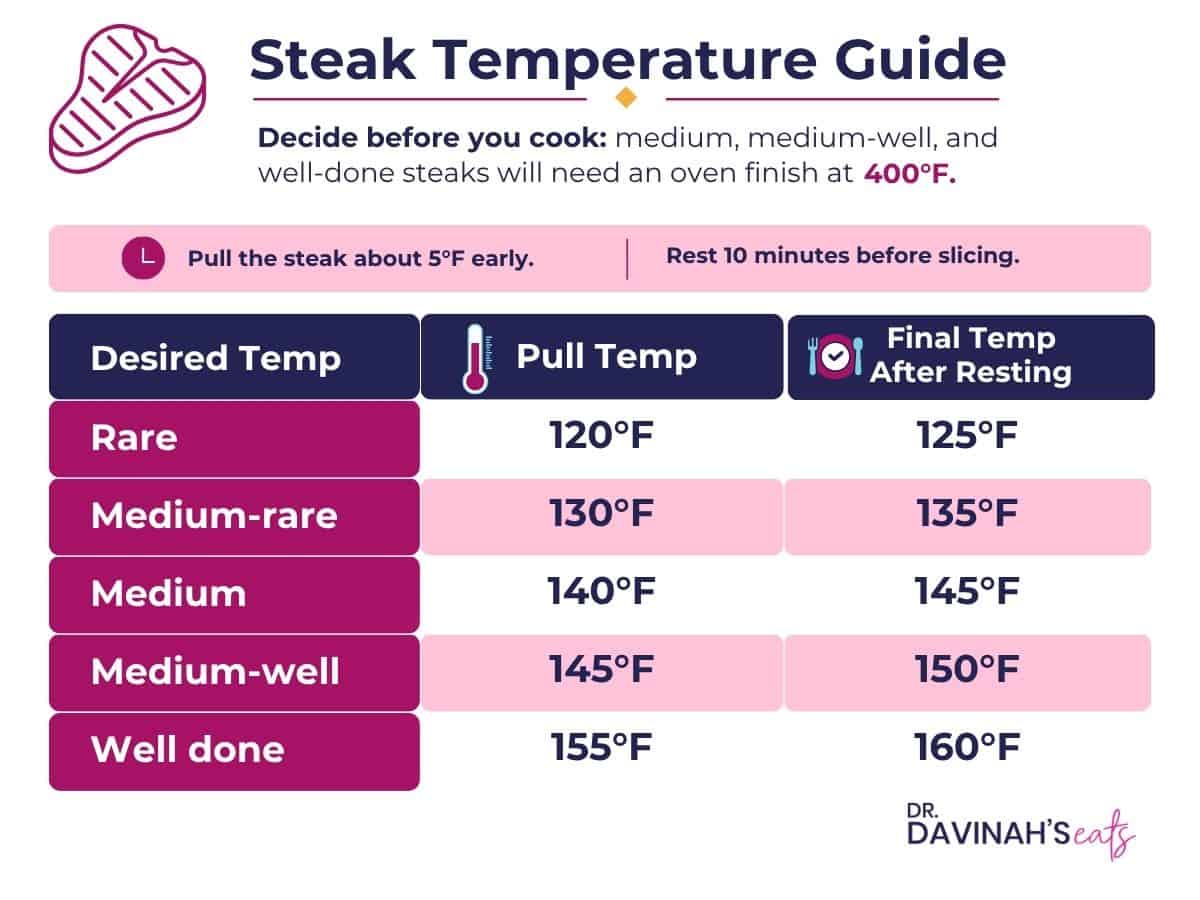
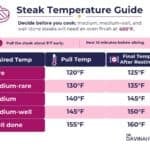
Before you start cooking, use the steak temperature guide below to choose your preferred doneness. If you want rare or medium-rare, you can usually finish the steak on the stovetop. If you want medium, medium-well, or well done, preheat the oven to 400°F before searing so you can finish the steak in the oven after the crust forms.
Prep the steak
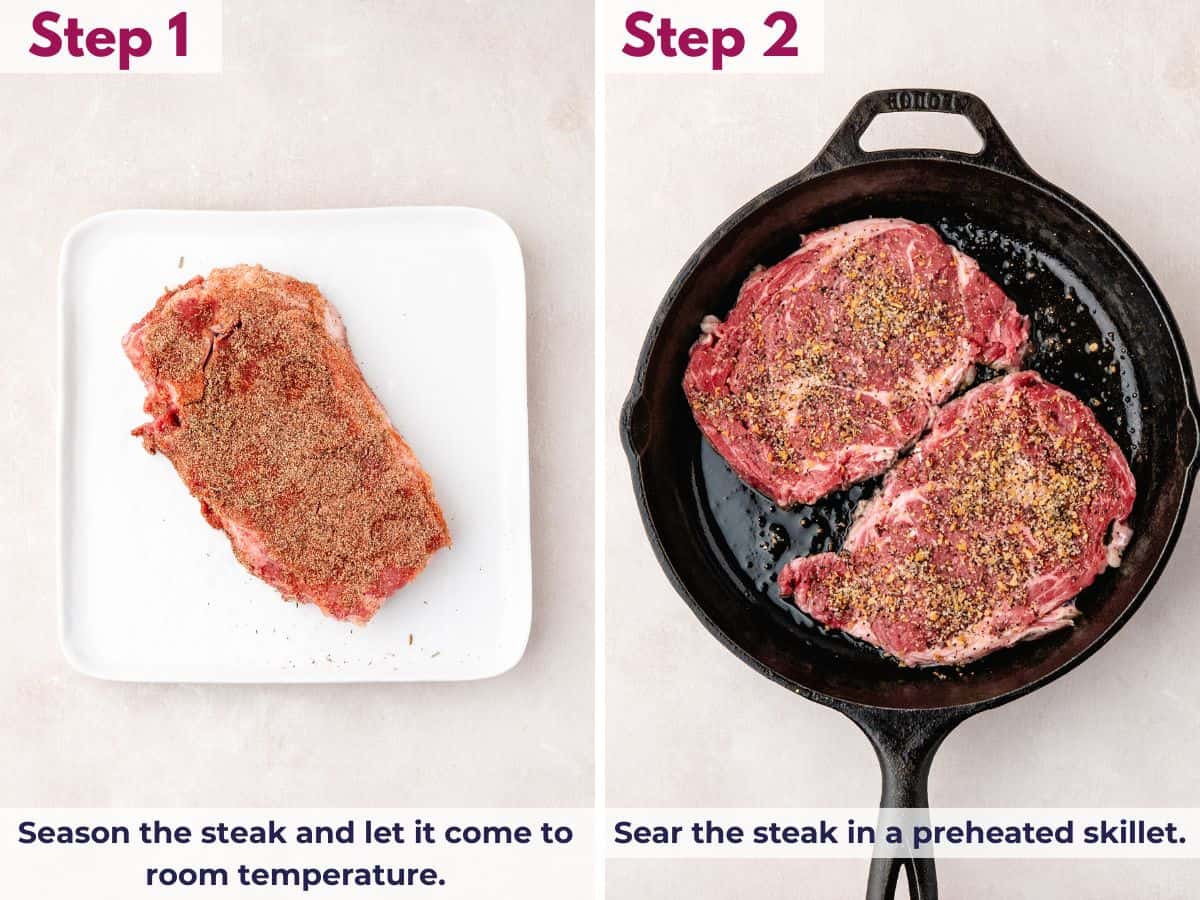
The steak should look dry before it goes into the skillet. Pat away any surface moisture, then season the top, bottom, and edges so the crust has flavor in every bite. If your steak is thinner than 1 inch, start checking the temperature earlier because they will cook quicker.
Sear the steak
Preheat the cast iron skillet over medium-high heat until very hot, about 3 to 5 minutes. The steak should sizzle as soon as it touches the pan. If it does not sizzle right away, remove the steak, let the skillet heat a little longer, then add the steak back to the pan.
Add the butter
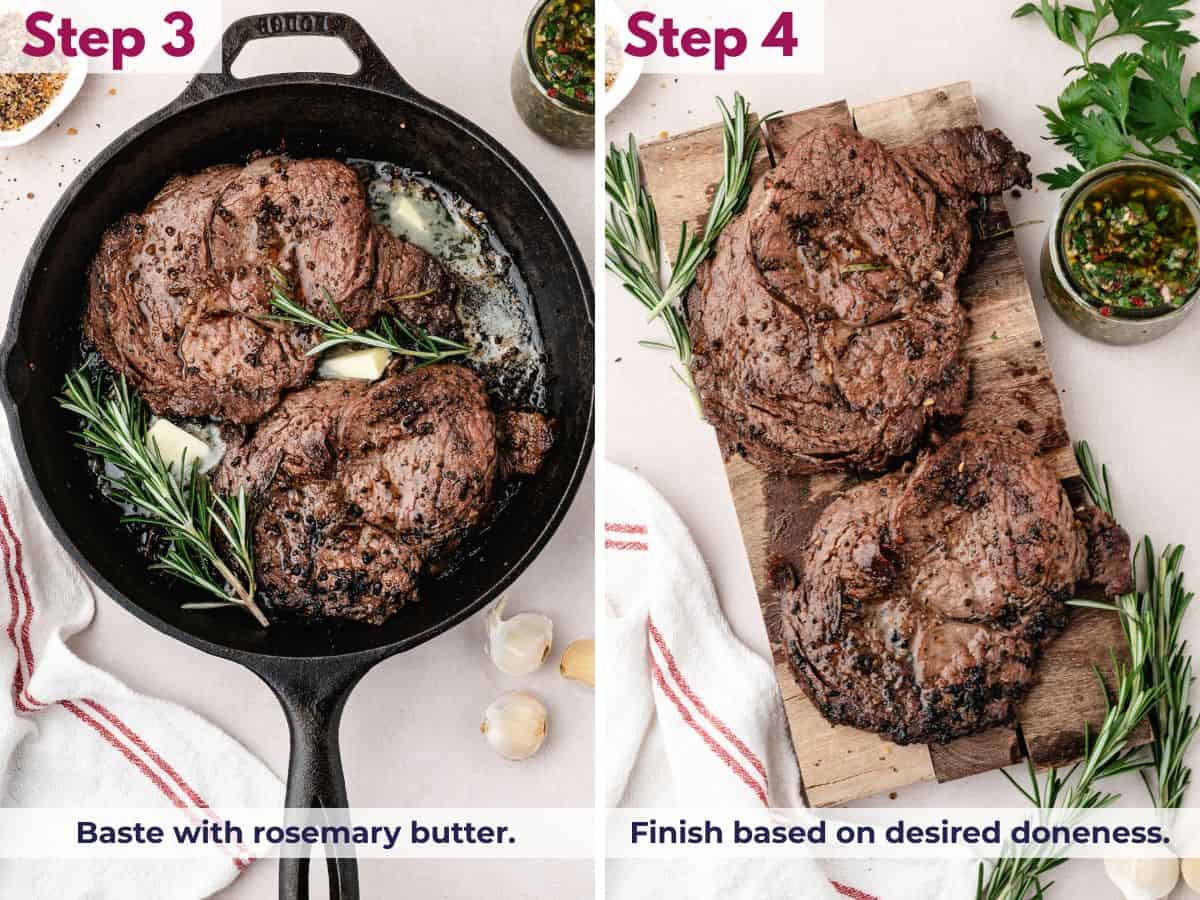
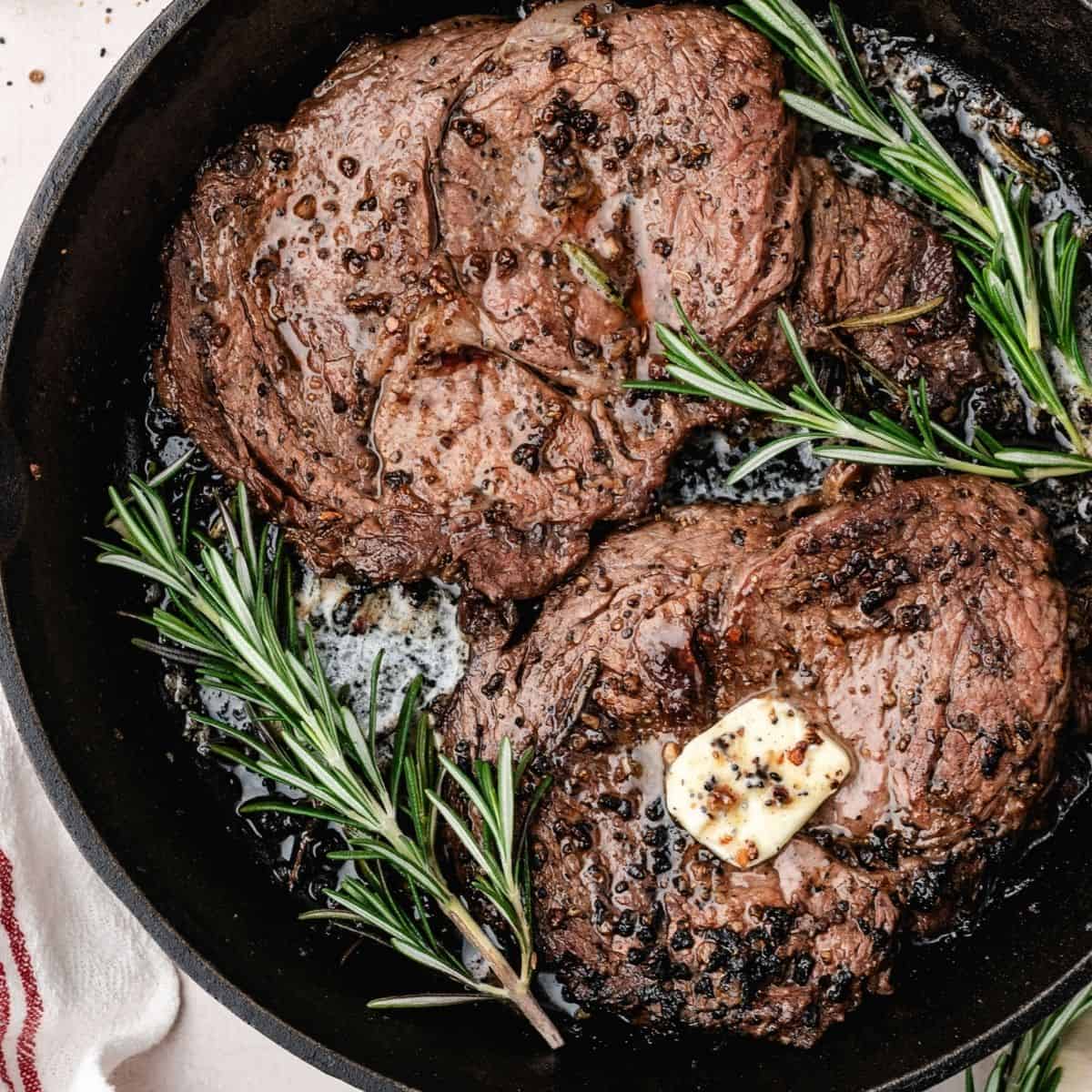
Once both sides have color, add the butter and rosemary. Spoon the melted butter over the steak so it coats the crust. If the butter darkens too quickly, lower the heat a little.
Check the temperature
Check the thickest part of the steak with an instant-read thermometer. Insert it from the side when possible so the tip reaches the center. If the steak has a good crust but is not at your pull temperature yet, move the skillet to the oven to finish.
Rest and slice
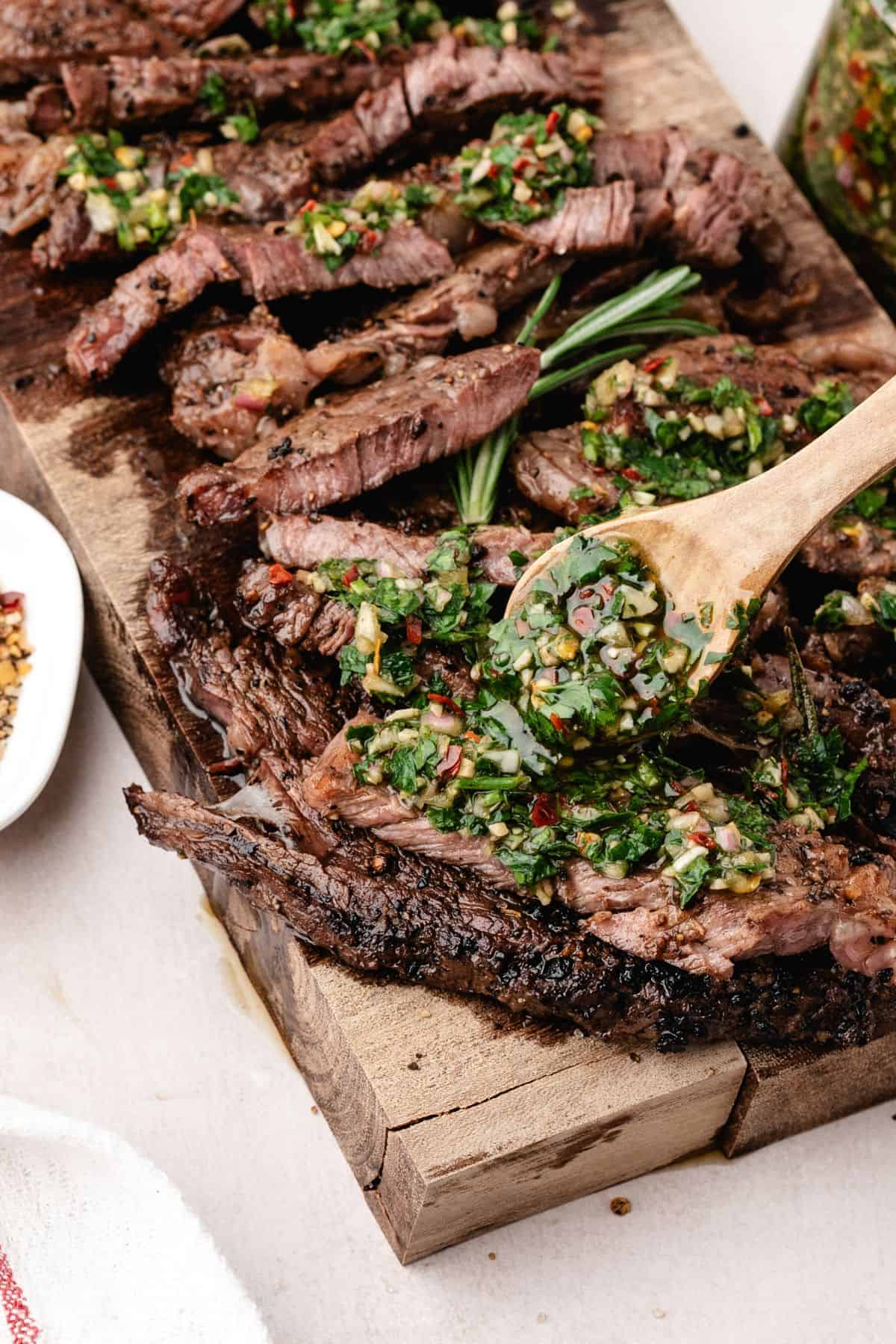
Move the steak to a cutting board once it reaches your pull temperature. Let it rest before slicing, then cut thicker slices for a main dish or thinner slices for tacos, quesadillas, pasta, steak salad, or steak bowls.
Tips for a Better Crust and Juicy Center
- Cook one or two steaks at a time: Crowding the skillet traps moisture and makes browning harder.
- Add smashed garlic: Minced garlic can burn quickly in a hot skillet. So, if you want to add some garlic flavor to the rosemary butter, simply add a smashed clove to the pan when you add the rosemary and butter.
- Add cooked steak near the end of other recipes: This keeps sliced steak tender when using it in pasta, quesadillas, bowls, or leftovers.
- Slice based on how you plan to use the meat: Thicker slices work well as the main protein. Thin slices are better when you want to fold the steak into another recipe.
SAVE THIS RECIPE
Troubleshooting
Use these tips if your pan seared steak is not browning well, the butter burns, or the steak cooks unevenly.
The skillet may not have been hot enough, the steak may have been too wet, or the pan may have been crowded. Preheat the skillet over medium-high heat for about 3 to 5 minutes, pat the steak dry, and cook in batches if needed so the steak sears instead of steams.
Butter burns faster than oil in a hot skillet. Sear the steak with oil first, then add the butter after the crust forms.
The steak may be overcooked, sliced with the grain, or too lean for the doneness you chose. Use the temperature guide, pull the steak at the right temperature, let it rest, then slice against the grain. If you are using a leaner cut like sirloin, thinner slices help each bite feel more tender.
The steak may need an oven finish after searing. Once the crust is browned, move the skillet to the oven so the center can reach your preferred doneness without over-browning the outside.
Yes. Use a heavy stainless steel skillet and let it preheat well. Avoid thin pans because they lose heat quickly.
No. Covering the pan traps steam, which makes it harder for the steak to brown.
Yes, but it will cook faster and can overcook more easily. Start checking the temperature earlier so the center does not pass your target.
Ways to Use Pan Seared Steak
Once the steak rests, slice it based on how you plan to serve it. Thicker slices work well as a main protein with sides. Thin slices are better for tacos, quesadillas, pasta, salads, and bowls.
Make steak tacos
Slice the steak thinly and tuck it into warm tortillas with pico de gallo, onions, guacamole, or avocado cream sauce. For a full taco recipe with marinated skirt steak, see my steak tacos.
Make steak quesadillas
Use thin slices of pan seared steak in crispy tortillas with cheese and sautéed peppers or onions. Leftover steak works well in a steak quesadilla because you only need to warm it through while the cheese melts.
Make steak pasta
Slice the steak and add it to steak pasta after the sauce is finished so the meat stays tender. This works with Alfredo-style pasta, garlic butter pasta, or creamy Cajun pasta.
Make surf and turf
Use this pan seared steak as the base for surf and turf with shrimp scampi and mushroom cauliflower rice risotto.
Make steak bowls
Add sliced steak to steak bowls with cauliflower rice, garlic butter rice, cilantro lime rice, roasted vegetables, pico de gallo, or avocado cream sauce.
Make steak salad
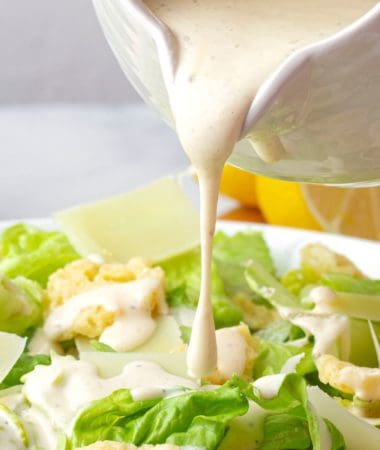
Use cold or gently warmed sliced steak over steak salad with crisp greens, avocado, tomatoes, onions, and a creamy dressing or chimichurri sauce.
Swaps & Variations
- Use stainless steel: A heavy stainless steel skillet can work if you do not have cast iron. Let it preheat well before adding the steak.
- Change the herb: Rosemary adds a classic steakhouse flavor, but thyme also works.
- Make it garlicky: Add a smashed garlic clove to the butter while basting.
- Finish with compound butter: Try garlic parmesan herb butter for steaks, blue cheese butter, roasted garlic butter, or Cajun garlic butter sauce.
- Make it low-carb: Pair the steak with mushroom cauliflower rice risotto, cauliflower mash, creamed spinach, baked asparagus, steak salad, or steak bowls with cauliflower rice.
More Steak Recipes to Try
- For another easy steak method, make my air fryer steak. It is a good option when you want a juicy steak without standing over the skillet.
- For bite-sized steak, try garlic butter steak bites. If you want steak with a built-in side, steak bites and potatoes gives you crispy potatoes, tender steak, and garlic butter in one pan.
- For more beef main dishes, browse my easy beef recipes.
What to Serve With Pan Seared Steak
Use these sides and sauces to round out the plate based on what you want with the steak.
- Creamy low-carb sides: Mushroom cauliflower rice risotto, cauliflower mash, and creamed spinach.
- Vegetables: Baked asparagus, air fryer mushrooms, green beans with bacon, sautéed green beans, Brussels sprouts with bacon, or a simple salad.
- Sauces and butters: Chimichurri sauce, blue cheese butter, garlic parmesan herb butter for steaks, roasted garlic butter, or Cajun garlic butter sauce.
- Heartier add-ons: Garlic butter rice, cilantro lime rice, brown butter mashed potatoes, mashed potatoes with cheese, Lemon Orzo Pasta, steak pasta, or steak quesadillas.
Storage & Reheating
- Store: Keep leftover steak in an airtight container in the refrigerator for 3 to 4 days.
- Freeze: Freeze cooked steak for up to 2 to 3 months. Wrap it well to help prevent freezer burn.
- Reheat: Warm leftovers gently in a skillet over low heat with a little butter, or microwave sliced steak at reduced power just until warm.
- Use leftovers: Add sliced steak to tacos, quesadillas, steak pasta, surf and turf, steak salad, steak bowls, eggs, wraps, or salads.
Pan Seared Steak
Use DRDAVINAHS at checkout to save on some equipment & ingredients!
Ingredients
- 1 ½ lb Boneless Ribeye Steak, or New York strip steak
- 1 tbsp Olive Oil, or avocado oil
- 1 tbsp Steak Seasoning, click for recipe
- 1 tbsp Butter, salted
- 1 sprig Rosemary, optional
- Chimichurri sauce, optional for serving, click for recipe
Instructions
- Decide how you want your steak cooked: If you like your steak rare or medium-rare, you can usually cook it completely on the stovetop. If you want your steak cooked to medium, medium-well, or well done, preheat the oven to 400°F before you start searing so it is ready if you need it.

- Season the steak and let it come to room temperature: Pat the steak dry with paper towels. Rub both sides with olive oil, then season with steak seasoning. Let the steak sit at room temperature for about 20 minutes.
- Sear the steak in a preheated skillet: Heat a cast iron skillet over medium-high heat until very hot, about 3 to 5 minutes. Carefully add the steak and sear for 4 to 5 minutes per side, depending on thickness.
- Baste with rosemary butter: During the final minute of searing, add the butter and rosemary sprigs to the pan. As the butter melts, spoon it over the steak. The rosemary flavors the butter as it melts, which adds richness to the steak.
- Finish based on desired doneness: If the steak reaches your preferred doneness while searing, transfer it straight to a cutting board. If you want the steak cooked more and the outside is already well browned, transfer the cast iron skillet to the preheated oven. Bake until the steak reaches your preferred doneness. I usually check every 5 minutes.
- Rest and slice: Move the steak to a cutting board and rest for 10 minutes before slicing. Slice against the grain into thin strips. Serve with chimichurri sauce or one of my garlic butter recipes like blue cheese butter or garlic parmesan butter for steak.
SAVE THIS RECIPE
Recipe Notes
- Choose your doneness before you start: If you want your pan seared steak cooked to medium, medium-well, or well done, preheat the oven to 400°F before searing. Rare and medium-rare steaks can usually finish on the stovetop.
- Use a meat thermometer: Steak thickness can change the cooking time. For the best results, use an instant-read thermometer instead of relying on time alone.
- Pull the steak early: The steak will continue to cook as it rests, so remove it from the skillet or oven about 5°F before your final target temperature.
- Pat the steak dry: A dry surface helps the steak brown and form a better crust in the pan.
- Preheat the skillet well: Let the cast iron skillet get very hot before adding the steak. This helps sear the outside instead of steaming it.
- Use rosemary if you have it: The rosemary is optional, but it flavors the butter as it melts and adds extra richness to the steak.
- Rest before slicing: Let the steak rest for 10 minutes before slicing so the juices stay in the meat.
- Slice against the grain: Cutting against the grain makes each bite more tender.
Nutrition Details
The nutrition facts come from entering the recipe ingredients into a database of food ingredients. They may vary for any recipe based on the exact product used.









Leave a Reply